

Millions of Americans long for a lost sense of community reminiscent of the 1950s, often seen as a golden age. However, the rebellions of the 1960s and the nostalgia of the 1980s have distorted our understanding of that era. In this exploration, the author delves into the vibrant life of America forty years ago, focusing on three neighborhoods in Chicago. In St. Nicholas of Tolentine parish, the local Catholic church emerged as the moral and social heart of the community. In Bronzeville, the center of the black South Side, civic leaders provided hope and role models amidst poverty and segregation. Meanwhile, Elmhurst, a burgeoning commuter suburb, showcased the culture of middle-class conformity, where both children and adults adhered to societal norms. Through compelling narratives and sharp analysis, the author reveals that the cohesion of these neighborhoods stemmed from an unspoken social compact, where individuals accepted limits and respected authority. This compact began to unravel with the baby boomers' rejection of authority in the 1960s, leading to a prevailing belief in personal choice as the highest value. The author contends that to balance modern life's demands with a sense of community, we must learn from the “limited” lifestyle of the 1950s. This work uncovers the cost of restoring community today and the values necessary for such a revival.
Alan Ehrenhalt Bücher
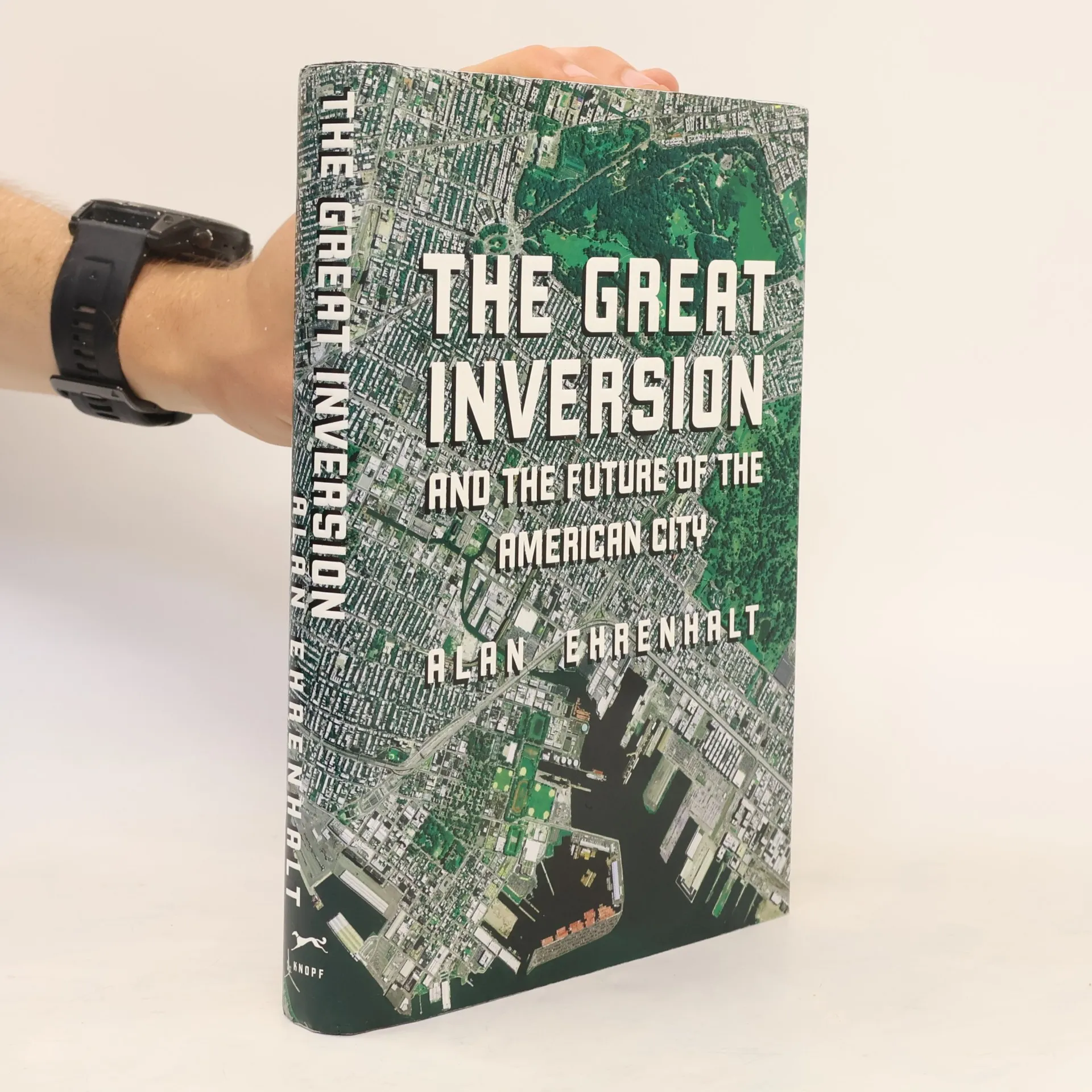

The Great Inversion and the Future of the American City
- 288 Seiten
- 11 Lesestunden
In The Great Inversion and the Future of the American City we travel the nation with Alan Ehrenhalt, one of our leading urbanists, as he explains how America’s cities are changing, what makes them succeed or fail, and what this means for our future. Just a couple of decades ago, we took it for granted that inner cities were the preserve of immigrants and the poor, and that suburbs were the chosen destination of those who could afford them. Today, a demographic inversion is taking place: Central cities increasingly are where the affluent want to live, while suburbs are becoming home to poorer people and those who come to America from other parts of the world. Highly educated members of the emerging millennial generation are showing a decided preference for urban life and are being joined in many places by a new class of affluent retirees. Ehrenhalt shows us how the commercial canyons of lower Manhattan are becoming residential neighborhoods, and how mass transit has revitalized inner-city communities in Chicago and Brooklyn. He explains why car-dominated cities like Phoenix and Charlotte have sought to build twenty-first-century downtowns from scratch, while sprawling postwar suburbs are seeking to attract young people with their own form of urbanized experience. The Great Inversion is an eye-opening and thoroughly engaging look at our urban society and its future.