

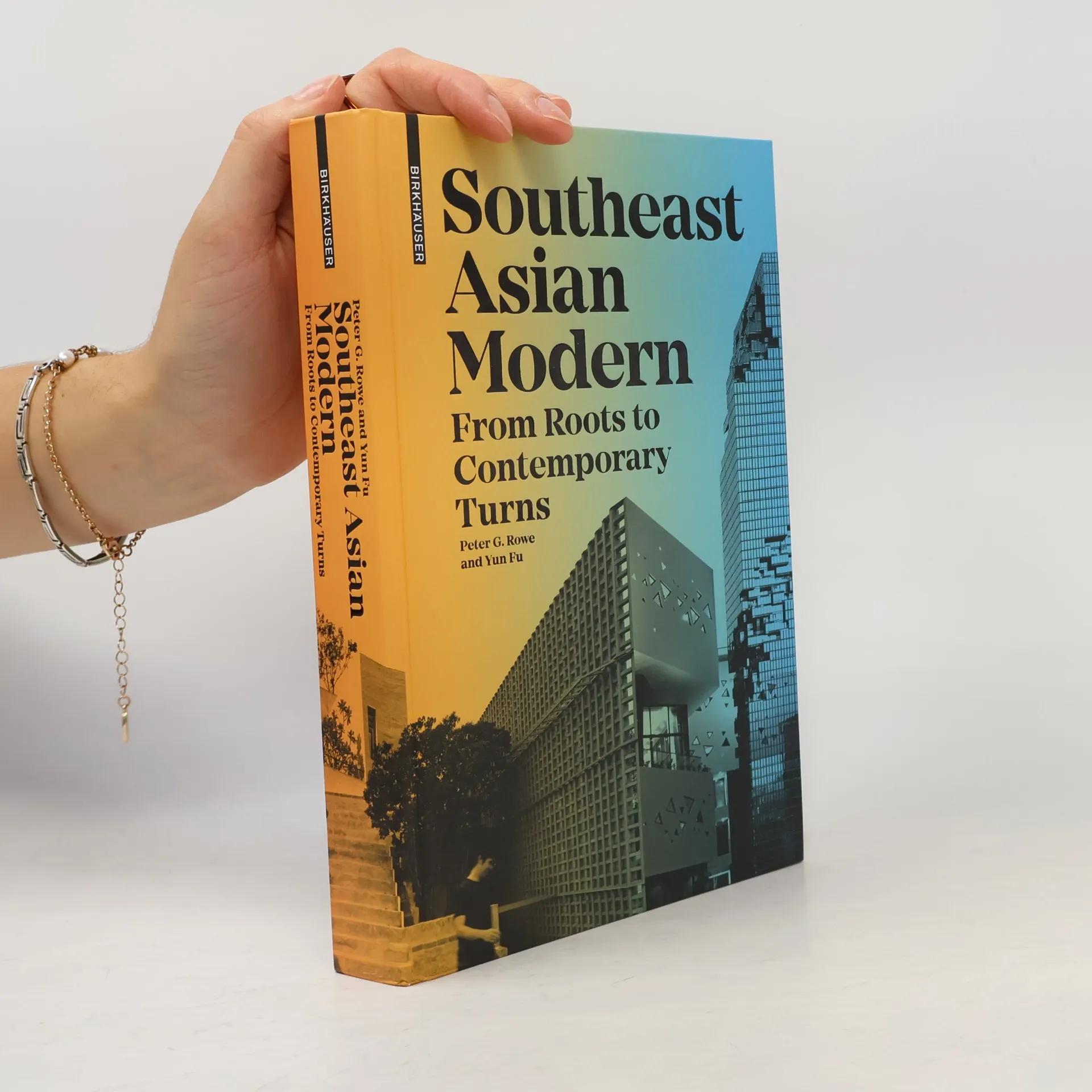
Peter Rowe and Yun Fu's second volume on the modernization of architecture in the Far East deals with Southeast Asia and Austronesia, including the 12 nation states of Vietnam, Cambodia, Laos, Myanmar, Thailand, Malaysia, Singapore, Indonesia, Brunei, East Timor, Philippines and Taiwan, as well as the ocean peoples of Polynesia, Melanesia and Micronesia. The modern architecture of these culturally and nationally heterogenous regions echoes local vernacular traditions and colonial as well as postcolonial hegemonies from both the East and the West. The book tells the stories of these separate roots and their culmination into contemporary architectural production, analyzing the distinctiveness and quality of approx. 65 building projects that have emerged in the past half century.
Peter G. Rowe Bücher

Making a Middle Landscape
- 336 Seiten
- 12 Lesestunden
Today's suburban development of single-family homes, shopping centers, corporate offices, and roadway systems represents what Peter Rowe describes as a "middle landscape" between urban and rural areas. While previous analyses have approached this topic from sociological or cultural geographical perspectives, Rowe focuses on suburban America through the lens of design and physical planning. He advocates for a new vision of suburbia, supported by theoretical foundations and design principles. Rowe explores how suburban expansion has reshaped the land, creating a new spatio-cultural mosaic that replaces the traditional city. He investigates four key cultural artifacts: the house and its garden, the retail landscape of franchises and malls, the modern workplace in office parks, and the roadways that connect them. Throughout, he highlights a narrative of technical planning and mass production, where rational excesses are often masked by romantic imagery. In his conclusion, Rowe proposes a concept of "modern pastoralism," contrasting the simplicity and values of an arcadian ideal with contemporary technical approaches, illustrated through various examples. This fresh perspective aims to redefine how we perceive and design suburban environments.