

Questo Culture Companion è organizzato in quattro parti, ciascuna su un argomento di civiltà collegato alle quattro stagioni del corso base. Ogni parte offre agli alunni esercizi utili, canzoni divertenti e piacevoli attività manuali, da svolgere sia a scuola sia a casa. Gli argomenti sono: I compleanni, collegato all'autunno; Il Natale, collegato all'inverno; La scuola, collegato alla primavera; I cuccioli, collegato all'estate.
Andy Hunt Reihenfolge der Bücher (Chronologisch)

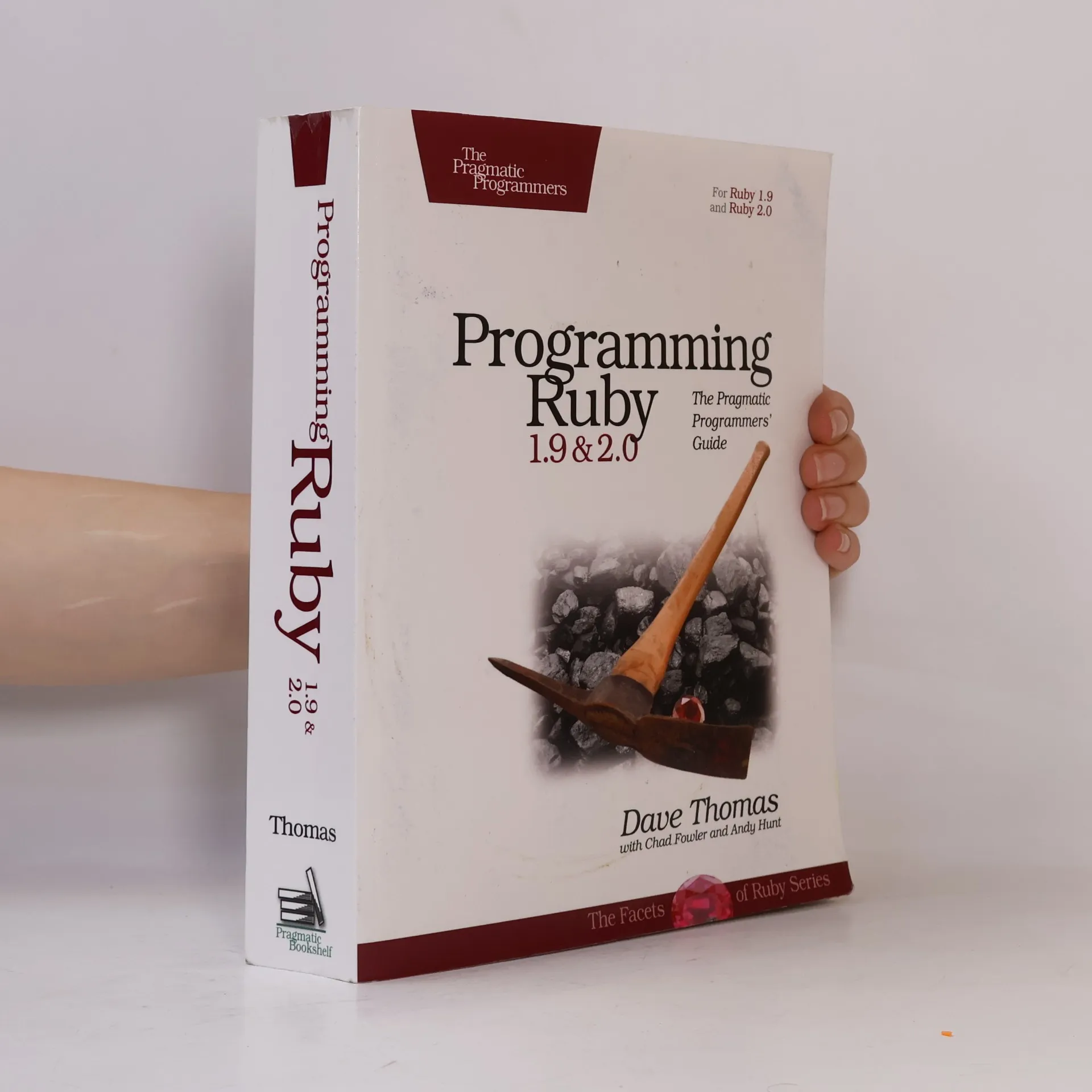
Would you like to go from first idea to working code much faster? Do you spend more time satisfying the compiler instead of your clients or end users? Are you frustrated with languages that hinder your progress? If you’re using Rails and want to explore Ruby more deeply, this is the language for you! Ruby is a fully object-oriented language, similar to Smalltalk, but with the conveniences of modern scripting languages like Perl and Python. This combination makes Ruby a favorite among forward-thinking programmers. The book features four major sections: an acclaimed tutorial on Ruby, a definitive reference to the language, complete documentation of all built-in classes, modules, and methods, and thorough descriptions of all 97 standard libraries. It serves as the reference manual for Ruby, detailing all standard library modules and providing a complete reference to built-in classes and modules, including updates from Ruby versions 1.9, 1.9.2, 1.9.3, and 2.0. It covers new syntax and semantics introduced since Ruby 1.8, such as new parameter passing rules, local variable scoping in blocks, fibers, and new block declaration syntax. Dive into Ruby and enhance your programming efficiency!
Pragmatic Unit Testing in Java with JUnit
- 176 Seiten
- 7 Lesestunden
Enhance your Java coding skills through unit testing, a technique primarily for programmers that boosts confidence in code, aids in meeting deadlines, and reduces debugging time. This resource not only teaches you how to write tests but also provides actionable advice on what to test, focusing on common pitfalls in programming. Learn to identify tricky areas where bugs can hide and how to catch them using the JUnit framework. The book offers helpful mnemonics and a tip sheet available on the pragmaticprogrammer.com website to aid your memory. You will learn to write better code more efficiently, discover where bugs are likely to occur, and think critically about potential issues. It enables you to test individual code pieces without needing the entire project and promotes effective teamwork in testing. Topics include using Mock Objects, crafting high-quality test code, and leveraging unit testing to enhance design skills. Frequent "gotchas" and their solutions are highlighted to save time when challenges arise. Importantly, you don’t need a complete overhaul of your team or processes to benefit from unit testing. You can implement these practices pragmatically and immediately, reaping the advantages without adopting extreme methodologies.