
Bookbot

Edward James

    14. Mai 1947
    Frankové
    Le vie della civiltà: I barbari
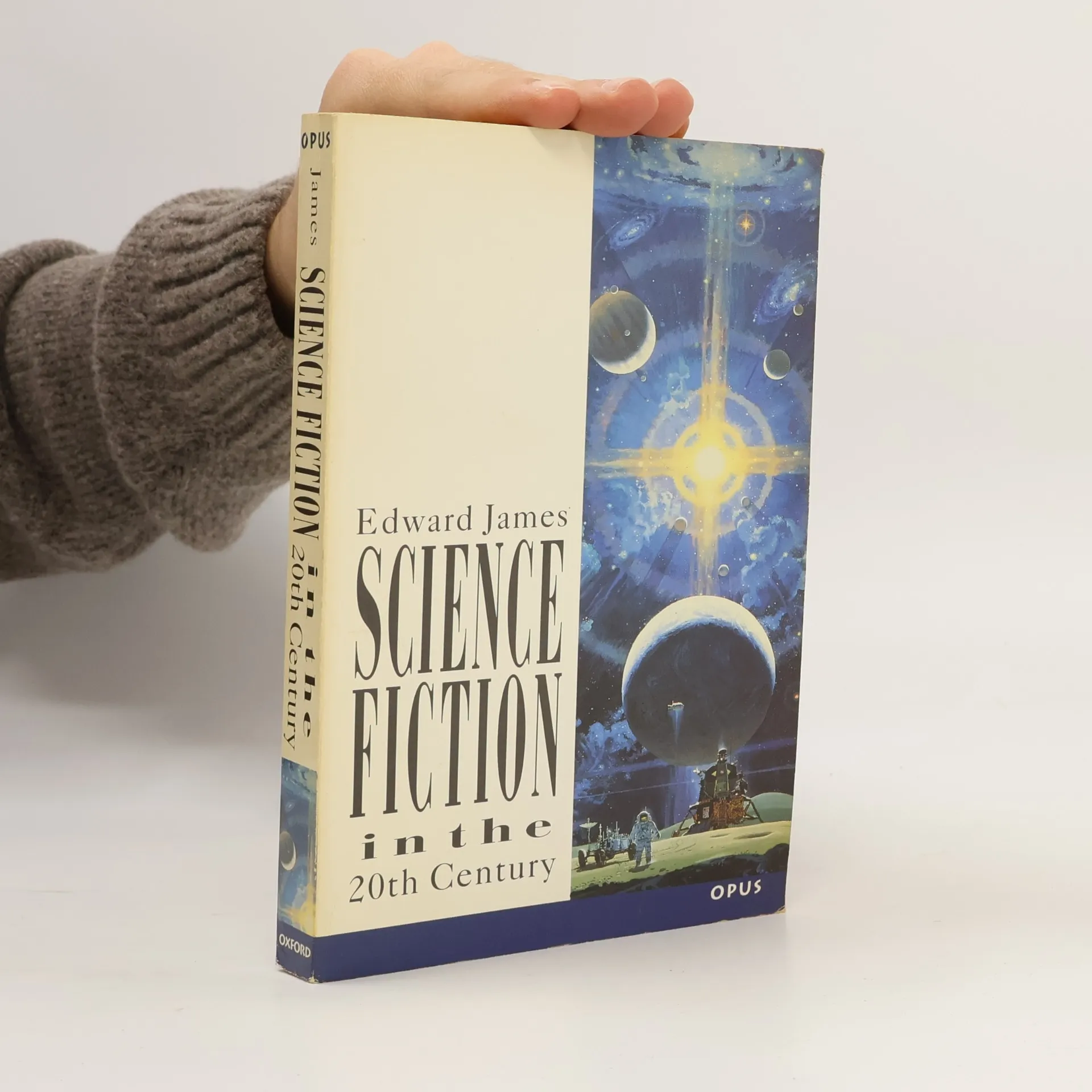
    Science Fiction in the Twentieth Century
    The Gardener Who Saw God
    The Cambridge Companion to Fantasy Literature
    Adventures in Stationery
    • Adventures in Stationery

      • 279 Seiten
      • 10 Lesestunden

      We are surrounded by stationery: half-chewed Cristal Bics and bent paper clips, rubber bands to fiddle with or ping, blunt pencils, rubbers and Tipp-ex are integral parts of our everyday environment. So much so that we never think about where they come from, why they are the way they are - or what stories they might have to tell. But luckily, James Ward does and he's here to tell you all about the secret pull stationery exerts on our lives. After all, who remains unmoved by the sight of a pristine blu-tak slab, or the first unmarked sheet of a brand new notepad? And which of humanity's brightest ideas didn't start life on a scrap of paper, a Post-it, or in the margins of a notebook? Exploring the stories behind these everyday objects, Ward reveals tales of invention - accidental and brilliant - and bitter rivalry. He also asks the questions you never thought you had: Who is Mr Pritt? What does shatter-proof resistant mean? How many pens does Argos use? And what does design evolutions in desk organisers mean for society?This witty and entertaining book, packed with fascinating facts, will change the way you look at your desk, pencil case or stationery cupboard forever.

      Adventures in Stationery
      4,2
    • Since Tolkien, Pratchett, Rowling, Pullman and Meyer, fantasy literature has become one of the most popular genres in the English-speaking world. This book puts this publishing phenomenon in a historical context, suggests different ways of reading and appreciating this literature, and examines some of its varieties and subgenres.

      The Cambridge Companion to Fantasy Literature
      3,9
    • Science Fiction in the Twentieth Century is the first book to challenge the traditional approach to science fiction as a series of texts and authors. Science fiction is identified as a cultural phenomenon whose ideas and imagery, through books, films, television, computer games, and children's toys, have become part of the everyday language of the late twentieth century.Edward James traces the development of science fiction as a distinct genre from 1895, the year of publication of H. G. Wells's The Time Machine, through the growing American domination of the field in the 1930s and 1940s, to the emergence of cyberpunk in the 1980s.A peculiarly twentieth-century genre, science fiction has tried to make sense of the rapidity of technological change and the impact which science and technology have made on our society. By imagining other worlds and possible futures, the genre allows us to view our present-day situation with greater detachment and perspective.

      Science Fiction in the Twentieth Century
    • Publikace přibližuje přerod Franků na Francouze, přerod barbarů z bažinatých nížin severně a východně od rýnské hranice římského impéria v nejmocnější a nejstabilnější stát v období bezprostředně následujícím po pádu zápodořímské říše v 5. století.

      Frankové
      3,9