Gratis Versand in ganz Österreich
Bookbot

Philip S. Jowett

    1. Jänner 1961
    The Battle for Burma, 1942-1945
    Chiang Kai-Shek versus Tse-Tung
    The Japanese Home Front 1937-45
    Rays of the Rising Sun Volume 1
    Abyssinian Conquest
    China and Japan at War 1937 - 1945
    • Abyssinian Conquest

      The Illustrated History of the Second Italo-Ethiopian War, 1935-1936

      • 320 Seiten
      • 12 Lesestunden
      4,4(3)Abgeben

      Featuring over 600 photographs, this extensive collection vividly captures the essence of a lesser-known yet significant colonial conflict of the 20th century. The images provide a powerful visual narrative, shedding light on the war's impact and the experiences of those involved, making it an essential resource for understanding this historical event.

      Abyssinian Conquest
    • The Japanese Home Front 1937-45

      • 64 Seiten
      • 3 Lesestunden
      4,0(2)Abgeben

      "From the beginning of the Second Sino-Japanese War in 1937 until the Japanese surrender in August 1945, a multitude of military and civil-defense forces strove to support the Japanese war effort and latterly prepared to defend the Home Islands against invasion. During World War II, Japan was the world's most militarized society and by 1945 nearly every Japanese male over the age of 10 wore some kind of military attire, as did the majority of women and girls. In this volume, Philip Jowett reveals the many military and civil-defense organizations active in wartime Japan, while specially commissioned artwork and carefully chosen archive photographs depict the appearance of the men, women, and children involved in the Japanese war effort in the Home Islands throughout World War II." --Amazon.com

      The Japanese Home Front 1937-45
    • Chiang Kai-Shek versus Tse-Tung

      • 192 Seiten
      • 7 Lesestunden
      4,0(4)Abgeben

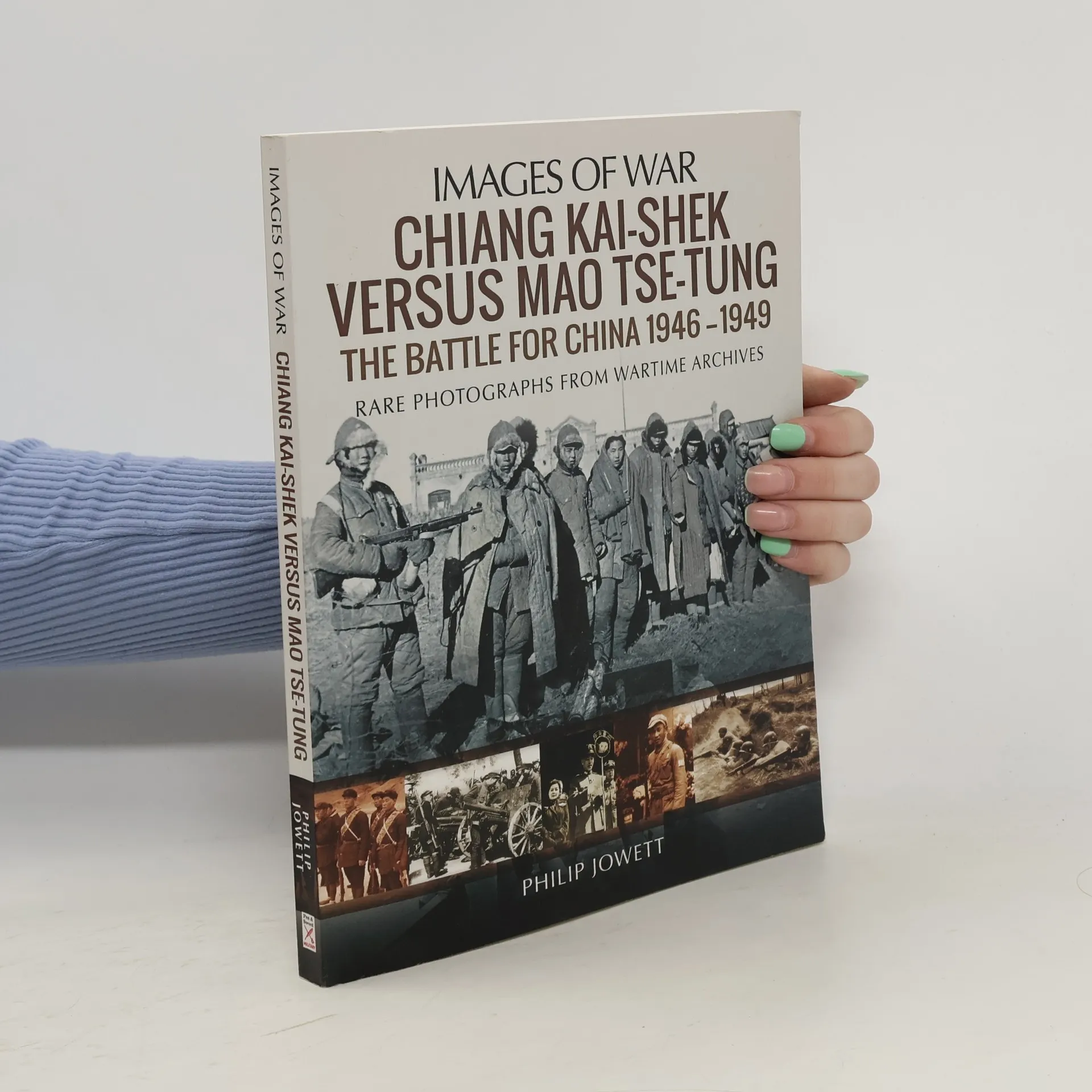
      Over 200 archive photographs showing the war between the Nationalists and Communists in China in the late 1940s. A graphic record of the experience of the soldiers and civilians who were caught up in the country-wide conflict

      Chiang Kai-Shek versus Tse-Tung
    • "This study explores the organization, history and uniforms of the Soviet Red Army during the 20 years between its victory in the Civil War and the invasion of the USSR by Germany in 1941. The two decades following the Bolshevik victory over the 'Whites' in the Russian Civil War saw widespread and fundamental developments for the Red Army. Nevertheless, these still left it largely unready to face Germany's Operation Barbarossa in June 1941. Having been reduced in size and planning for modernization, the Red Army of the 1920s was employed to ruthlessly crush anti-Bolshevik opposition (real or suspected) in several regions of the USSR, notably Ukraine and Central Asia, and to fight a brief border war against Chinese Manchuria. During the 1930s, Stalin virtually 'beheaded' the army by a needless series of murderous purges of the officer class; despite this, the Red Army was victorious in clashes against Imperial Japan in the Nomonhan region in 1938-39, where General Zhukov earned his spurs. Simultaneously, the Soviet Union sent instructors and pilots to fight for the Republicans in the Spanish Civil War (1936-39). The non-aggression pact with Nazi Germany allowed Stalin to take over half of Poland in September 1939; but a few months later his 'Winter War' against Finland demonstrated serious inadequacies in the Red Army's readiness for modern warfare, which would be shockingly confirmed in the first days of Operation Barbarossa. Using rare photos and detailed colour artwork, this study explores the interwar history of the Red Army, describing its campaigns, organization and uniforms, and focusing on the 20 years between its victory in the Civil War and the invasion of the USSR by Germany in 1941."--Amazon.com

      The Red Army 1922-41
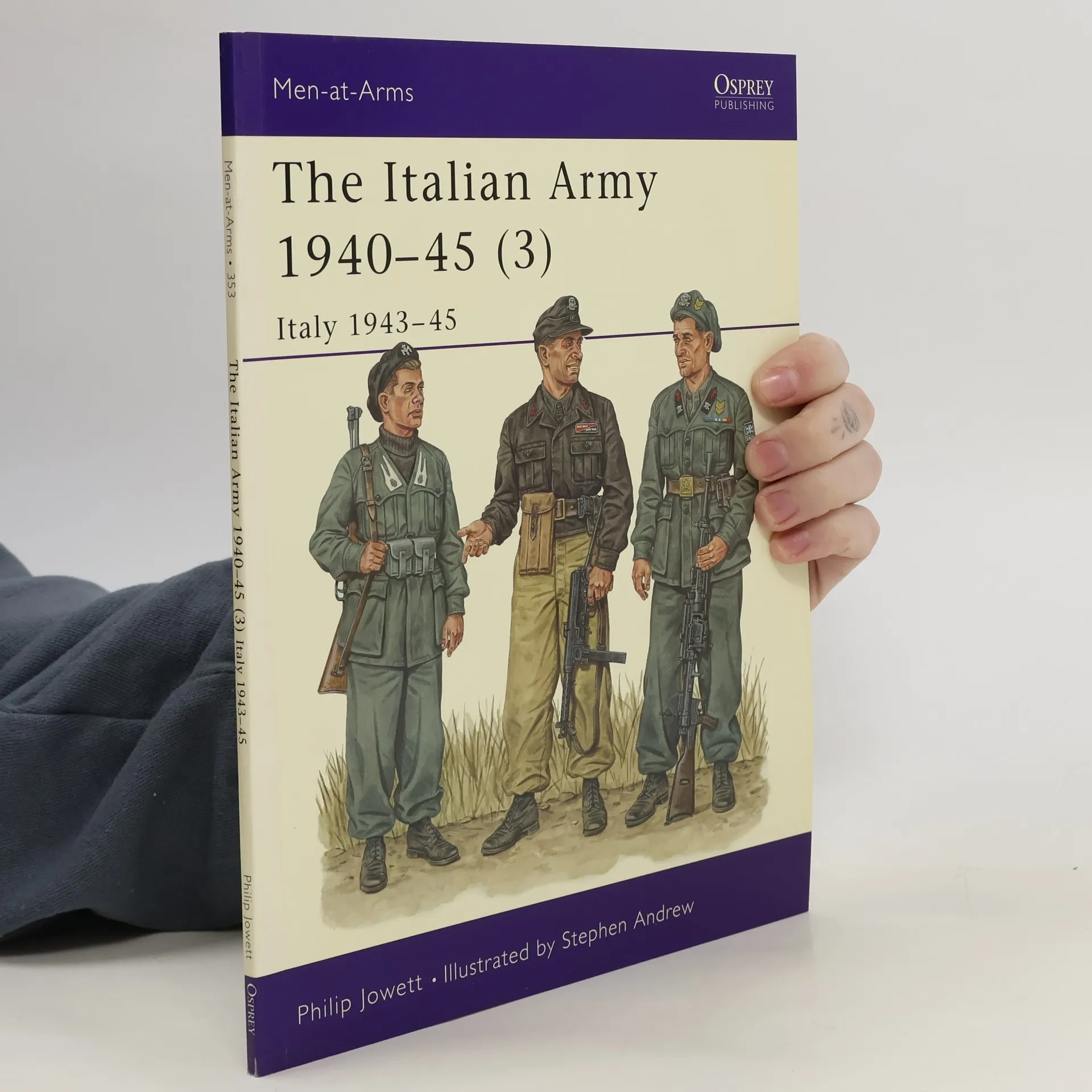
    • Immediately after the Allied invasion of Italy in September 1943, Mussolini was deposed and the new Italian government switched sides. The German occupying forces swiftly freed Il Duce and ruthlessly disarmed the Italian Army; and from then until the end of the war in April 1945 Italian troops fought on both sides - with the forces of the new Fascist 'Salo Republic', in the Allied 'Co-Belligerent Forces', and in the Partisan movement. This period of bitter struggle saw the appearance of many new units and a wide range of interesting uniforms, described and illustrated in this final part of Philip Jowett's comprehensive three-volume series.

      The Italian Army 1940–45 (3)
    • Armies of the Balkan Wars 1912-13

      • 48 Seiten
      • 2 Lesestunden
      3,8(29)Abgeben

      In 1912, the Balkan states formed an alliance in an effort to break free from the crumbling Ottoman Empire. Forming an army of some 645,000 troops from Greece, Bulgaria, Serbia and Montenego, they took on a force of 400,000 Turkish soldiers. This book looks at the diverse and sometimes colourful uniforms worn by both sides.

      Armies of the Balkan Wars 1912-13
    • At its peak the Italian Army contributed 2.5 million troops to the Axis war effort during World War II (1939-1945). In addition to its major role in North Africa, Italy's army invaded, and later bore the main burden of occupying, the Balkan countries. Italy also sent 250,000 men to fight on the Russian Front. In this second book of a three-part study Philip Jowett covers the organisation, uniforms and insignia of the Italian troops committed to both the North African campaign, and the often neglected East African fighting of 1940-41, including the colourful colonial units. Stephen Andrew's meticulous colour plates illustrate a wide range of uniforms.

      The Italian Army 1940–45 (2). Africa 1940-43