




Bookbot

Donald A. MacKenzie

    Notizbuch der Angst
    Fliehende Ziele
    Auf Messers Schneide
    Fünf Drachen aus Jade
    Ravens Rache
    Mörder ohne Gesicht
    • Mörder ohne Gesicht

      • 334 Seiten
      • 12 Lesestunden

      Ein altes Bauernpaar ist auf seinem Hof brutal ermordet worden. Kurz vor ihrem Tod hatte die Bäuerin noch einen letzten seltsamen Hinweis gegeben … Wallanders erster Fall. Kurt Wallander stieß die Tür mit dem Fuß auf. Es war schlimmer, als er es sich vorgestellt hatte. Viel schlimmer. Später würde er sagen, daß es das Schlimmste war, was er je gesehen hatte. Und dabei hatte er weiß Gott schon eine Menge gesehen. Ein altes Bauernpaar ist auf seinem Hof ermordet worden. Nicht nur das Motiv der Tat liegt völlig im Dunkeln, vor allem deren furchtbare Brutalität irritiert die ermittelnden Polizisten um Kurt Wallander. Und dann hatte die alte Bäuerin, kurz bevor sie im Krankenhaus starb, den Beamten noch einen letzten, seltsamen Hinweis gegeben ... Ein raffinierter psychologischer Kriminalroman in der Tradition Sjöwall/Wahlöös. ›Mörder ohne Gesicht‹ wurde 1992 als bester Thriller Skandinaviens ausgezeichnt.


      Mörder ohne Gesicht
      3,8
    • Ein Polizist, der krumme Dinger dreht, hält sich für besonders clever. Soviel Cleverness bricht ihm den Hals...

      Die Diamanten-Falle
    • Der verlorene Verlierer

      • 173 Seiten
      • 7 Lesestunden

      Geld macht zwar nicht glücklich, aber es beruhigt ungemein. Diese Überzeugung macht die drei Männer zu Komplizen. Sie sind bereit, jeden Preis dafür zu zahlen.Aber ihre Rechnung geht nicht auf. Denn daß Geld auch den Charakter verderben kann, das haben sie nicht einkalkuliert. Und für diesen Fehler müssen sie teuer bezahlen ... (Dieser Text bezieht sich auf eine frühere Ausgabe.)

      Der verlorene Verlierer
    • Freiwild für Hyänen - bk687; Scherz Verlag; Donald MacKenzie; pocket_book; 1970

      Freiwild für Hyänen
    • Mechanizing Proof

      • 439 Seiten
      • 16 Lesestunden

      Most aspects of our private and social lives—our safety, the integrity of the financial system, the functioning of utilities and other services, and national security—now depend on computing. But how can we know that this computing is trustworthy? In Mechanizing Proof , Donald MacKenzie addresses this key issue by investigating the interrelations of computing, risk, and mathematical proof over the last half century from the perspectives of history and sociology. His discussion draws on the technical literature of computer science and artificial intelligence and on extensive interviews with participants. MacKenzie argues that our culture now contains two ideals of proof as traditionally conducted by human mathematicians, and formal, mechanized proof. He describes the systems constructed by those committed to the latter ideal and the many questions those systems raise about the nature of proof. He looks at the primary social influence on the development of automated proof—the need to predict the behavior of the computer systems upon which human life and security depend—and explores the involvement of powerful organizations such as the National Security Agency. He concludes that in mechanizing proof, and in pursuing dependable computer systems, we do not obviate the need for trust in our collective human judgment.

      Mechanizing Proof
      4,5
    • The Social Shaping Of Technology

      • 462 Seiten
      • 17 Lesestunden

      Technological change is often seen as something that follows its own logic - something we may welcome, or about which we may protest, but which we are unable to alter fundamentally. This reader challenges that assumption and its distinguished contributors demonstrate that technology is affected at a fundamental level by the social context in which it develops. General arguments are introduced about the relation of technology to society and different types of technology are examined: the technology of production; domestic and reproductive technology; and military technology.

      The Social Shaping Of Technology
      4,3
    • Statistics in Britain 1865-1930

      • 306 Seiten
      • 11 Lesestunden

      This rigorous and well-documented book makes a powerful and fascinating contribution to the history and sociology of Science. Its subject is the crucial period in the development of the modern theory of statistics, when the 'British School' - like Galton, Pearson, Fisher, Yule, and Gosset - turned the embryonic discipline into an established and important scientific field, introducing such concepts as regression, correlation, chi-square testing, t-test, and method of maximum likelihood. It contributes to Sociology also, because Galton to Galton, Pearson and Fisher, all convinced eugenists, statistical theory and method was envisaged as an instrument for social change. Eugenics is shown to have played an important role in motivating their work, thus reflecting the interests of the professional middle class in late Victorian and Edwardian Britain. This is given special consideration in the light of the famous controversy between the 'Biometric School' and the Mendelians.

      Statistics in Britain 1865-1930
      4,3
    • Inventing Accuracy

      • 478 Seiten
      • 17 Lesestunden

      "Mackenzie has achieved a masterful synthesis of engrossing narrative, imaginative concepts, historical perspective, and social concern." Donald MacKenzie follows one line of technology—strategic ballistic missile guidance through a succession of weapons systems to reveal the workings of a world that is neither awesome nor unstoppable. He uncovers the parameters, the pressures, and the politics that make up the complex social construction of an equally complex technology.

      Inventing Accuracy
      4,1
    • Knowing Machines

      • 350 Seiten
      • 13 Lesestunden

      Ranging from broad inquiries into the roles of economics and sociology in the explanation of technological change to an argument for the possibility of "uninventing" nuclear weapons, this selection of Donald MacKenzie's essays provides a solid introduction to the style and the substance of the sociology of technology. The essays are tied together by their explorations of connections (primarily among technology, society, and knowledge) and by their general focus on modern "high" technology. They also share an emphasis on the complexity of technological formation and fixation and on the role of belief (especially self-validating belief) in technological change. Two of the articles won major prizes on their original journal publication, and all but one date from 1991 or later. A substantial new introduction outlines the common themes underlying this body of work and places it in the context of recent debates in technology studies. Two conceptual essays are followed by seven empirical essays focusing on the laser gyroscopes that are central to modern aircraft navigation technology, supercomputers (with a particular emphasis on their use in the design of nuclear weapons), the application of mathematical proof in the design of computer systems, computer-related accidental deaths, and the nature of the knowledge that is needed to design a nuclear bomb.

      Knowing Machines
      3,6
    • Indian Myth and Legend

      • 480 Seiten
      • 17 Lesestunden

      This volume explores the myths and legends of India, preserved in the vast Sanskrit literature, and examines the development of Brahmanism, Buddhism, Jainism, and more. Readers are introduced to sacred Hindu texts, including the invocatory hymns of the four Vedas, the speculative "Forest Books," and the monumental epics, the Rámáyana and the Máhábharata, which are significantly longer than the Iliad. Indian national poets have expressed the beliefs, ideals, and traditions of their culture with remarkable depth, achieving lasting fame. Today, over two hundred million Hindus are familiar with the legendary themes and traditional beliefs imbued with rich symbolism by ancient sages and poets, serving as vehicles for profound spiritual teachings. The sacred texts hold a significance for Hindus akin to that of the Bible for Christians, with the belief that reading or hearing them ensures prosperity and salvation. For historians, ethnologists, and comparative religion scholars, these texts offer insights into the ancient Aryo-Indians' sociology, political structures, legal codes, ethical standards, and their views on God, the soul, and the universe. Understanding these works is essential for those wishing to empathetically engage with the religious beliefs of Hindu communities and their perspectives on life.

      Indian Myth and Legend
      3,8
    • Making Meaning

      • 296 Seiten
      • 11 Lesestunden

      This volume, edited by two of McKenzie's former students, brings together a wide range of his writings on bibliography, the book trade and the sociology of texts.

      Making Meaning
      3,3
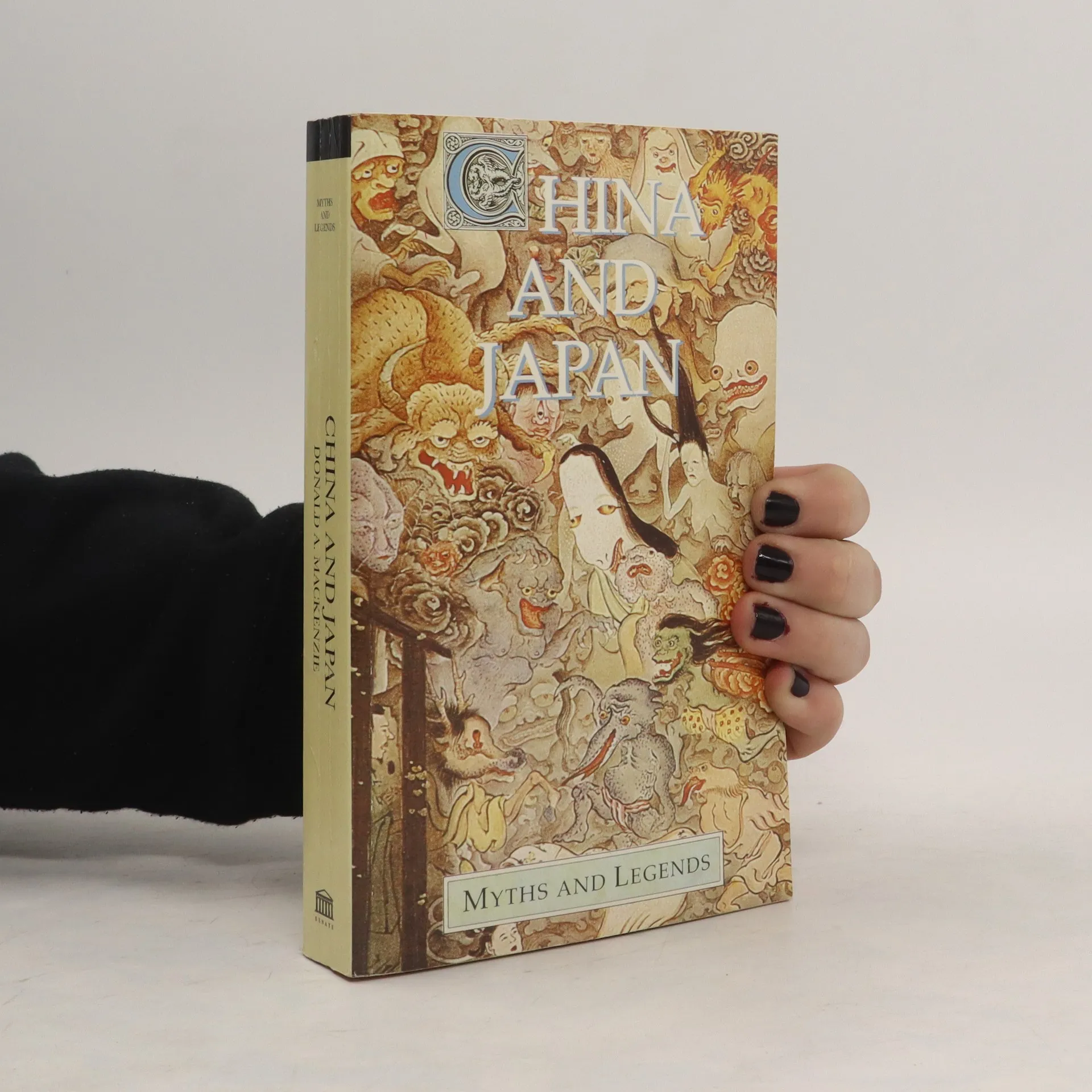
    • China and Japan

      • 464 Seiten
      • 17 Lesestunden

      In China and Japan, author Donald McKenzie traces the origins and evolution of oriental myths, and shows how stories spread from China across to Japan. Including tales from the religions of Taoism, Confucianism, Buddhism and Shinto, McKenzie dicusses the merging of history and legend in Japan, where the Mikado (emperor) claims descent from the daughter of the Dragon King of the Ocean. Illustrated with examples of oriental art and architecture. From back cover decription

      China and Japan
      3,2
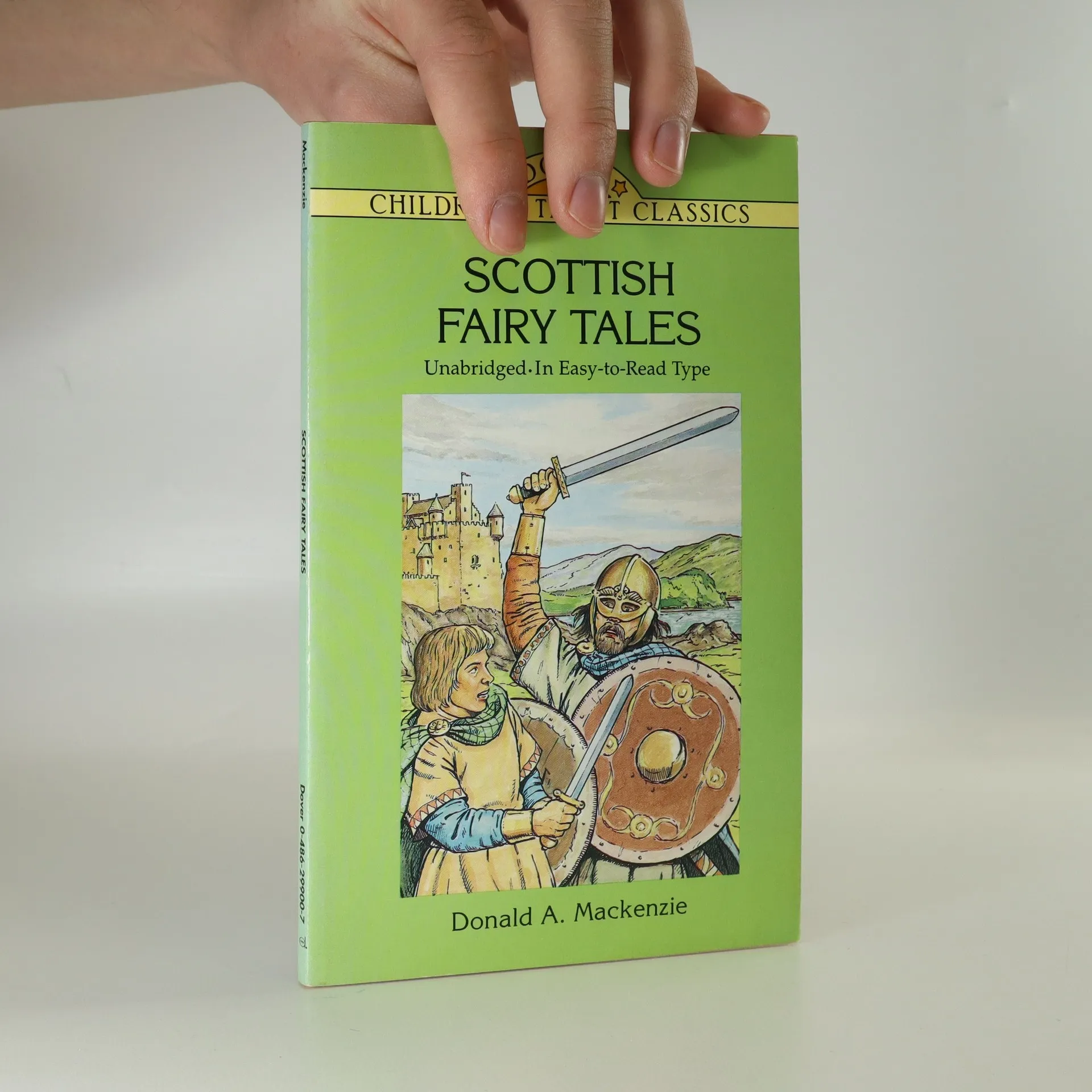
    • Colorful stories from ancient and modern Scottish sources will charm young readers with the deeds of mermaids, giants and other supernatural creatures. Includes "Battle of the Fairy Kings," "Conall and the Thunder Hag," "In the Kingdom of Seals," "The Maid-of-the-Wave," "The Land of Green Mountains," and many more. 34 illustrations.

      Wonder tales from Scottish myth & legend Scottish fairy tales
      3,7
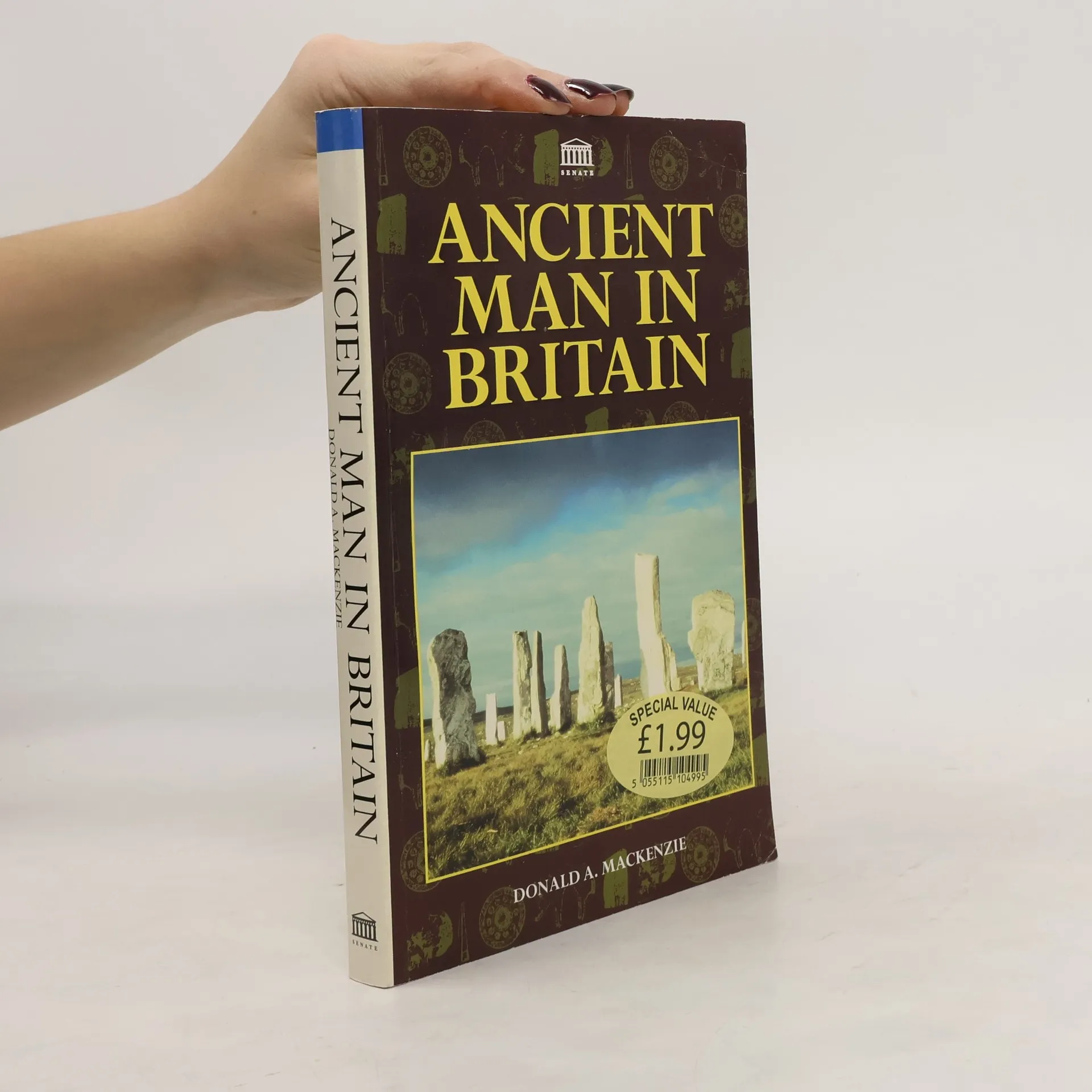
    • Ancient Man in Britain

      • 304 Seiten
      • 11 Lesestunden

      This volume deals with the history of Britain from the Ice Age till the Roman period. Evidence is gleaned from sciences usually studied apart: geology, archeology, philology, ethnology, anthropology etc. Mackenzie has set himself to tell the story of the ancients in a manner which will interest a wider circle of readers than usually reached by technical books. It hasn't been assumed that the representatives of modern humankind who 1st settled Europe were simple-minded savages. Evidence afforded by the craftsmanship, burial customs & art of the Cro-Magnon races, contemporaries of the reindeer & hairy mammoths in SW France, suggests they'd been influenced by a centre of civilization in which considerable progress had already been achieved. There's absolutely no evidence that the pioneers were lacking in intelligence or foresight. If we are to judge merely by their skeletons & the shapes and sizes of their skulls, it would appear that they were, if anything, both physically & mentally superior to average present-day inhabitants of Europe. Nor were they entirely isolated from the ancient culture area by which they had been originally influenced. Illustrated with photographs, drawings & maps.

      Ancient Man in Britain
      2,9
    • The Science Studies Reader

      • 590 Seiten
      • 21 Lesestunden

      The Reader focuses on the practices of modern and contemporary science and technology located in different national and institutional settings, with some attention to non- Western contexts. By mapping some of the open questions and points of tension likely to occupy the field for years to come, the essays in the Reader cast fresh light on what "science" means at the end of the twentieth century.

      The Science Studies Reader