Gratis Versand ab € 14,99. Mehr Infos.
Bookbot

Jack Halpern

    A Kodansha Dictionary: The Kodansha Kanji Learner's Dictionary
    South Africa's hostages : Basutoland, Bechuanaland and Swaziland
    The Kodansha Kanji learner's course : a step-by-step guide to mastering 2300 characters
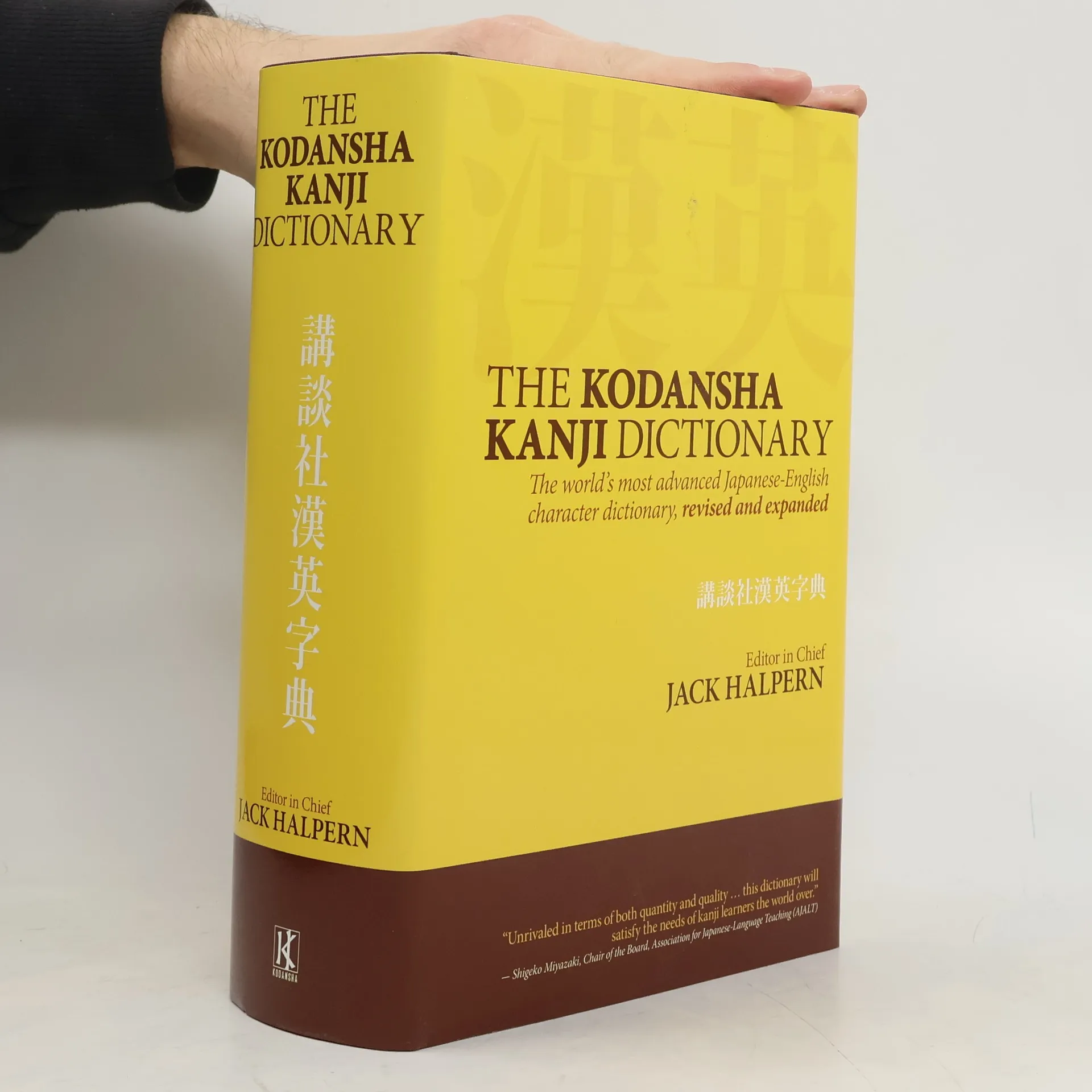
    The Kodansha Kanji Dictionary
    The Kodansha Kanji Learner's Dictionary
    • This kanji dictionary is designed for beginning and intermediate learners, offering a portable yet comprehensive resource. It aims to provide a deep understanding of kanji through instant access to essential information on meanings, readings, and compounds. A standout feature is the core meaning, a concise keyword that captures the primary sense of each character, accompanied by detailed meanings and numerous compounds that illustrate how these building blocks form various words. Additionally, the System of Kanji Indexing by Patterns (SKIP) allows users to locate characters quickly and accurately, akin to alphabetical dictionaries. This integration of modern linguistic theory and advanced technology results in a highly effective learning tool. Learners benefit from a wealth of linguistically accurate and user-friendly information tailored to their needs. Key features include 2,230 entry characters from the Joyo and Jinmei Kanji lists, 41,000 senses for 31,300 words showing character contributions to compound meanings, and 1,200 homophones with core meanings to clarify closely related characters. The dictionary also includes 386 variant forms from prewar literature, 1,945 stroke order diagrams for writing each kanji, 7,200 character readings, and over 2,000 cross-references along with five appendixes for quick access to valuable reference data.

      A Kodansha Dictionary: The Kodansha Kanji Learner's Dictionary2012
    • To read Japanese, students need to recognize over 2,000 kanji. This dictionary includes all these kanji and over 20,000 frequently used compounds formed from them. Unlike traditional kanji dictionaries, it is user-friendly, allowing for quicker and easier lookup using four patterns instead of 214. Kanji and their compounds are arranged by core meanings (highlighted in red), helping students understand the interrelation of individual kanji meanings and their compounds. This approach not only aids in finding English equivalents but also enhances comprehension of kanji functionality. Additionally, the dictionary offers various tools for students. There are five lookup methods, each serving a distinct purpose. Guides on the corners and margins of pages assist in locating specific kanji. Confusing kanji are cross-referenced for easy comparison. Stroke order is presented in sequential frames, and the frequency of each kanji's appearance in Japanese newspapers is noted. For digital users, JIS and Unicode numbers are also included, making this resource comprehensive and accessible for learners.

      The Kodansha Kanji Learner's Dictionary2001
      4,5