Information management and biotechnology are reshaping the basic structure of American enterprise. In this bold and innovative analysis, Davis and Davidson explain what these changes mean and how entrepreneurs and executives can preparelenges of tomorrow.
Internet-Revolution und Globalisierung machen alles dramatischer und unsicherer. Um künftig erfolgreich zu sein, müssen wir in Business, Arbeit und Privatleben immer mehr zu brillanten Risikomanagern und Investoren in uns selbst werden - oder wir verarmen. Ein faszinierendes, wegweisendes Buch. In den USA bereits ein Bestseller. Internet-Revolution und Globalisierung machen alles dramatischer und unsicherer. Um künftig erfolgreich zu sein, müssen wir in Business, Arbeit und Privatleben immer mehr zu brillanten Risikomanagern und Investoren in uns selbst werden - oder wir verarmen. Ein faszinierendes, wegweisendes Buch. In den USA bereits ein Bestseller.
Hailed as the "Book of the Decade" by bestselling author Tom Peters, Future Perfect explores the innovative business and organizational possibilities existing within the New Economy. Offering concrete models and bold examples, Davis shows how an organization can learn to manage in the future tense as a way to ensure success in the coming decades. "Packed with powerful ideas. I enjoyed it immensely".--John Sculley, Apple Computer.
Speed, intangibles, and connectivity are reshaping business behavior at its core. The old rules of mass production, segmented pricing, and rigid organizations are no longer sustainable. In this new economy, the rapid pace of change blurs the lines between buyer and seller, product and service, employee and entrepreneur. To navigate these shifts, a dynamic guide is essential.
This groundbreaking work offers more than just insights; it presents a model for thriving in the connected economy, where advantages are fleeting and nothing is fixed. By examining the practices of innovative companies like Amazon, DreamWorks, and MBNA America, the authors create a framework for delivering and capturing value, developing strategies, and managing organizations in a landscape defined by constant change.
In this world, knowledge and creativity surpass physical capital, products and services merge into "offers," and traditional transactions evolve into "exchanges." Companies like MCI and artists like David Bowie exemplify the need for adaptability, as they embrace unconventional approaches to foster creativity and monetize their talents.
This work challenges readers to rethink their assumptions about business and encourages experimentation in new territories. It outlines a revolution in business and consumer culture, urging you to either join the innovators or risk being left behind. Are you ready to explore the rules of this new economy?
Matrix management and organization are spreading in the United States and to a lesser extent in other countries. The list of well-known firms that are involved is becoming long and impressive. Davis and Lawrence provide a concise and definitive analysis of the particularly elusive organization design - the matrix organization - and elucidate clearly its forms, functions, and modes of operation. Includes case studies.
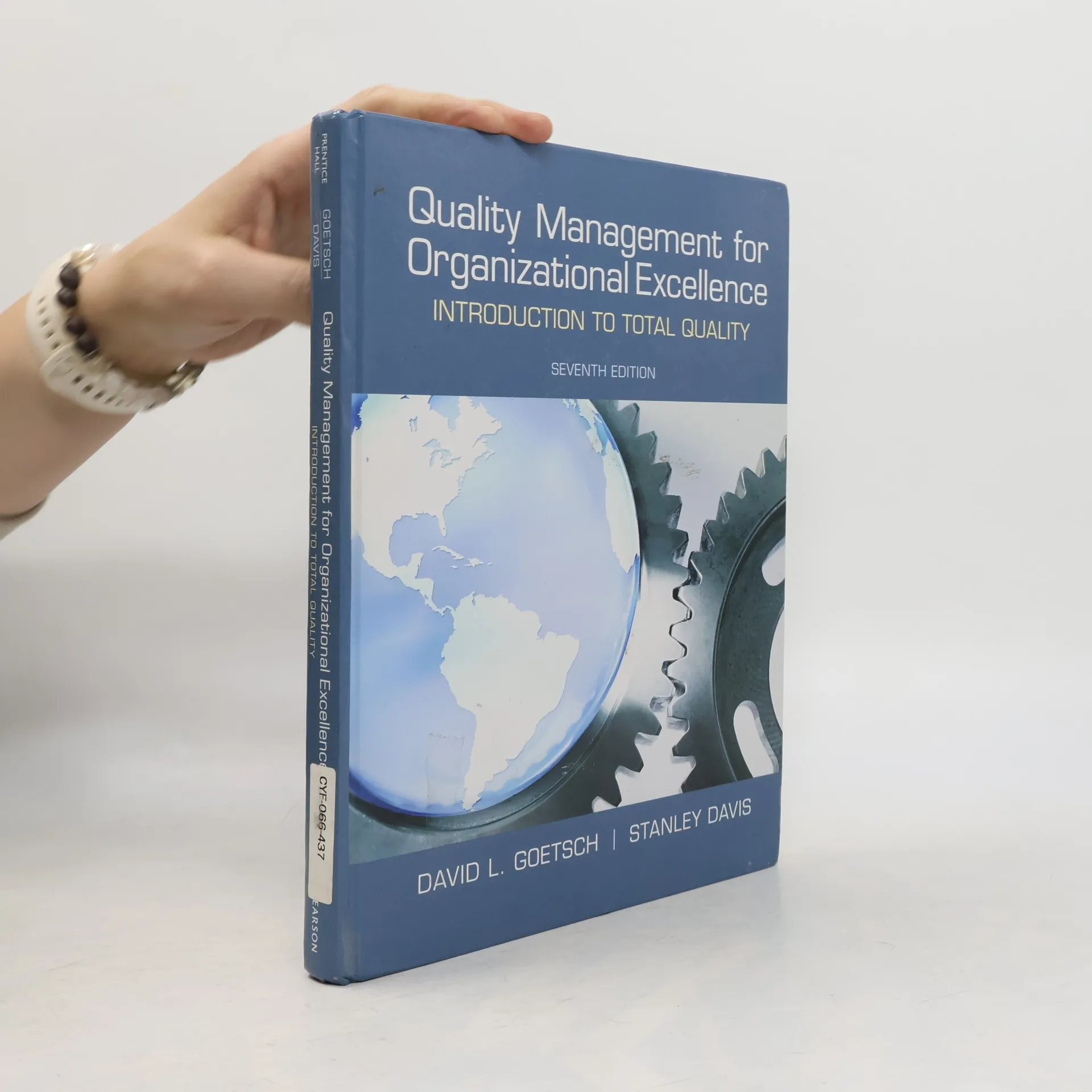
This practical, student-focused text shows how to focus all of an organization's resources on continuous and simultaneous improvement of quality and productivity -- thereby continually improving both performance and competitiveness. "QUALITY MANAGEMENT FOR ORGANIZATIONAL EXCELLENCE: INTRODUCTION TO TOTAL QUALITY, 7/e" coherently addresses all elements of quality management, including Lean, Six Sigma, Lean Six Sigma, and many topics that competitive books overlook (e.g., peak performance, partnering, manufacturing networks, culture, and crucial "people" aspects of quality). Direct and straightforward, it links "big picture" theories and principles to detailed real-world strategies and techniques. Throughout, critical thinking activities, discussion assignments, and research links promote deeper thinking and further exploration. This edition adds all-new cases, plus new information on topics ranging from supervision to certification, QFD and SPC to benchmarking and JIT.