

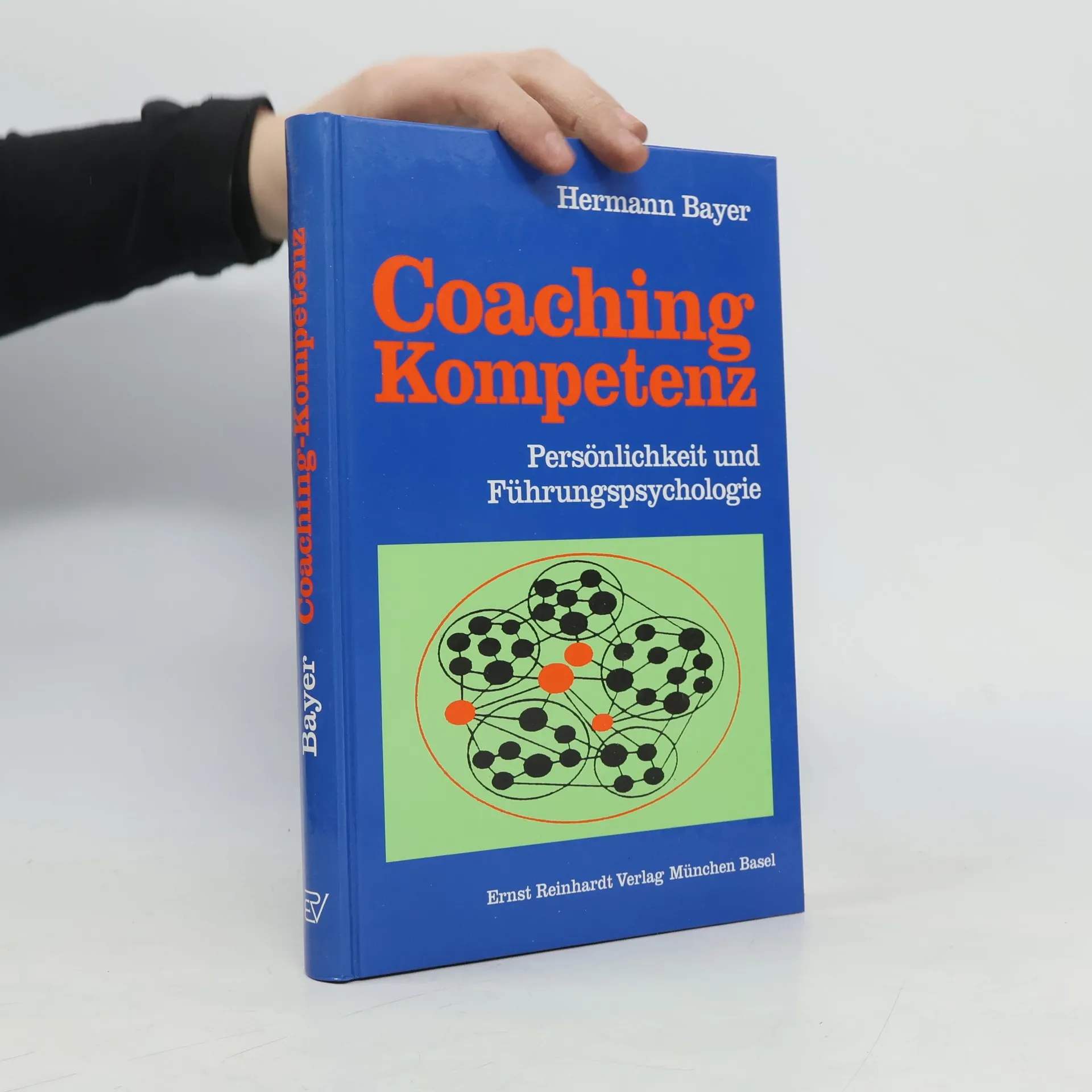
Mitarbeiter zu führen und betriebliche Veränderungen heute zu steuern, ist Schwerstarbeit und Überlebensfrage zugleich. Es erfordert persönlich-menschliche Kompetenz, Beziehungs- und Teamfähigkeit, Mut, Risikobereitschaft und konsequentes Handeln. Führungskräfte brauchen eigene Coaching-Kompetenz. Einschlägige Untersuchungen zeigen allerdings, daß sie sich oft als Techniker, Betriebswirte, Juristen etc. verstehen, nicht aber als 'Führende' oder als 'Manager' mit einer bestimmten, überfachlichen, zwischenmenschlichen Qualifikation. Coaching- Kompetenz bedeutet die Professionalisierung des Führungsberufes. Ein coachender Chef, Trainer oder Mitarbeiter weiß um die seelischen Konflikte 'hinter' einem aktuellen Konflikt, kann mit diesen angemessen umgehen und sie dauerhaft reduzieren. Diese Fähigkeit bedeutet auch, an und mit sich selbst zu arbeiten, und sie beginnt dort, wo gängige Trainings enden.
Hermann Bayer Bücher


Analysis of Genuine Karate 2
Sociocultural Development, Commercialization, and Loss of Essential Knowledge
- 220 Seiten
- 8 Lesestunden
Genuine Okinawan Karate emphasizes practical fighting techniques rooted in the unique cultural and historical context of Okinawa. It focuses on effective self-defense methods, combining traditional martial arts principles with real-world applications. The book explores the origins, philosophies, and training methods that distinguish Okinawan Karate, making it a valuable resource for practitioners seeking to deepen their understanding of this martial art.
The book explores the integration of a traditional Japanese fine arts principle into the realm of empty-hand fighting, highlighting how artistic techniques can enhance martial arts practice. It delves into the philosophical and practical applications of this unique approach, offering insights into both the mental and physical aspects of combat. Through this lens, readers are encouraged to view martial arts not just as a means of self-defense, but as a form of creative expression rooted in cultural heritage.
Analysis of Genuine Karate seeks to identify and hold to account the consequences of external changes upon the fundamentals of Okinawan karate. The author examines and clarifies the socio-cultural arguments to preserve Okinawan karate as it was originally designed, versus the Japanization, Americanization, and Commercialization of the art. Supported and illustrated by an analysis of the training variances between self-protection, self-perfection, and the never changing kata principle's role in Okinawan karate. This work provides a clear picture of the art, void of distortions put in place by people and institutions with their own agendas.