Mathematik spielt eine entscheidende Rolle bei der Lösung vielfältiger Herausforderungen, von der Herzsimulation über Wettervorhersagen bis hin zur Optimierung von Sportgeräten. Das Buch eröffnet eine faszinierende Welt, in der Gleichungen nicht nur abstrakte Konzepte sind, sondern praktische Werkzeuge zur Bewältigung alltäglicher Probleme bieten. Leser werden eingeladen, die vielseitigen Anwendungen der Mathematik zu entdecken und deren Bedeutung für verschiedene Fachgebiete zu erkennen.
Aus den Rezensionen der englischen Auflage: Dieses Lehrbuch ist eine Einführung in das Wissenschaftliche Rechnen und diskutiert Algorithmen und deren mathematischen Hintergrund. Angesprochen werden im Detail nichtlineare Gleichungen, Approximationsverfahren, numerische Integration und Differentiation, numerische Lineare Algebra, gewöhnliche Differentialgleichungen und Randwertprobleme. Zu den einzelnen Themen werden viele Beispiele und Übungsaufgaben sowie deren Lösung präsentiert, die durchweg in MATLAB formuliert sind. Der Leser findet daher nicht nur die graue Theorie sondern auch deren Umsetzung in numerischen, in MATLAB formulierten Code. MATLAB select 2003, Issue 2, p. 50. [Die Autoren] haben ein ausgezeichnetes Werk vorgelegt, das MATLAB vorstellt und eine sehr nützliche Sammlung von MATLAB Funktionen für die Lösung fortgeschrittener mathematischer und naturwissenschaftlicher Probleme bietet. [...] Die Präsentation des Stoffs ist durchgängig gut und leicht verständlich und beinhaltet Lösungen für die Übungen am Ende jedes Kapitels. Als exzellenter Neuzugang für Universitätsbibliotheken- und Buchhandlungen wird dieses Buch sowohl beim Selbststudium als auch als Ergänzung zu anderen MATLAB-basierten Büchern von großem Nutzen sein. Alles in allem: Sehr empfehlenswert. Für Studenten im Erstsemester wie für Experten gleichermassen. S.T. Karris, University of California, Berkeley, Choice 2003.
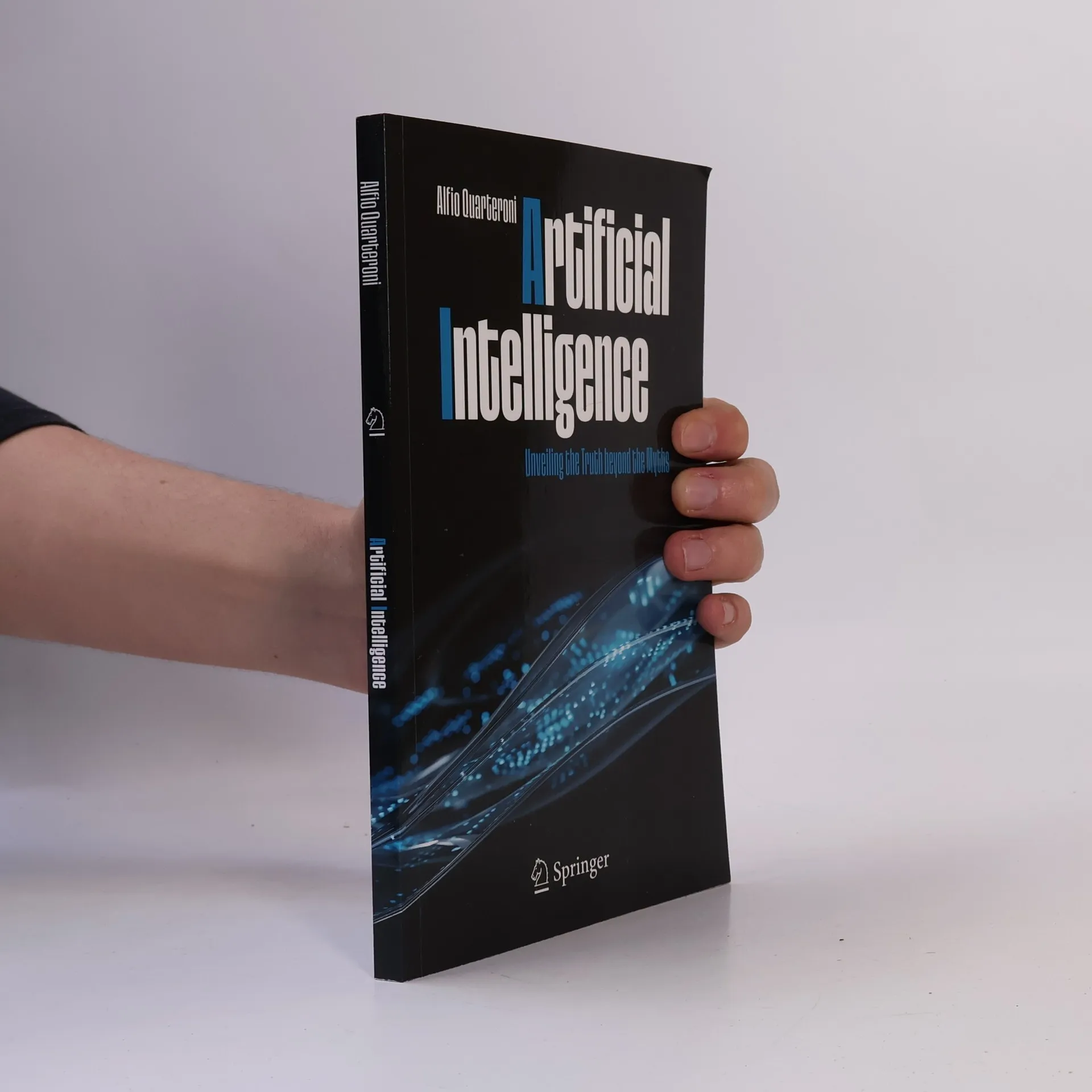
Artificial intelligence (AI) is reshaping many aspects of human life, prompting essential questions about its intelligence, capabilities, risks, and opportunities. This book seeks to clarify what AI truly is, debunking myths while providing a balanced perspective on its impact. Instead of following fleeting trends, the focus is on the core principles that define AI, tracing its evolution from early pioneers like Alan Turing to today’s advanced systems. Currently, AI operates within the realm of narrow intelligence, excelling at specific tasks but not replicating human cognition. Its capacity to process vast amounts of data, predict behaviors, and generate creative content is transforming industries such as healthcare and finance. Central to AI's advancement is machine learning, especially neural networks, which prioritize data-driven training over traditional scientific theories. However, this progress brings challenges: environmental costs, job market disruptions, ethical dilemmas, and the black box problem, which raises concerns about trust and accountability. AI's influence extends to global power dynamics, affecting governance, security, and democracy. Leading nations in AI development gain strategic advantages, but without careful regulation, AI could exacerbate inequality and surveillance. Ultimately, the goal is to provide a critical framework for understanding this technological revolution, fostering awareness to ensur
Simulating the behavior of a human heart, predicting tomorrow's weather,
optimizing the aerodynamics of a sailboat, finding the ideal cooking time for
a hamburger: to solve these problems, cardiologists, meteorologists,
sportsmen, and engineers can count on math help.