

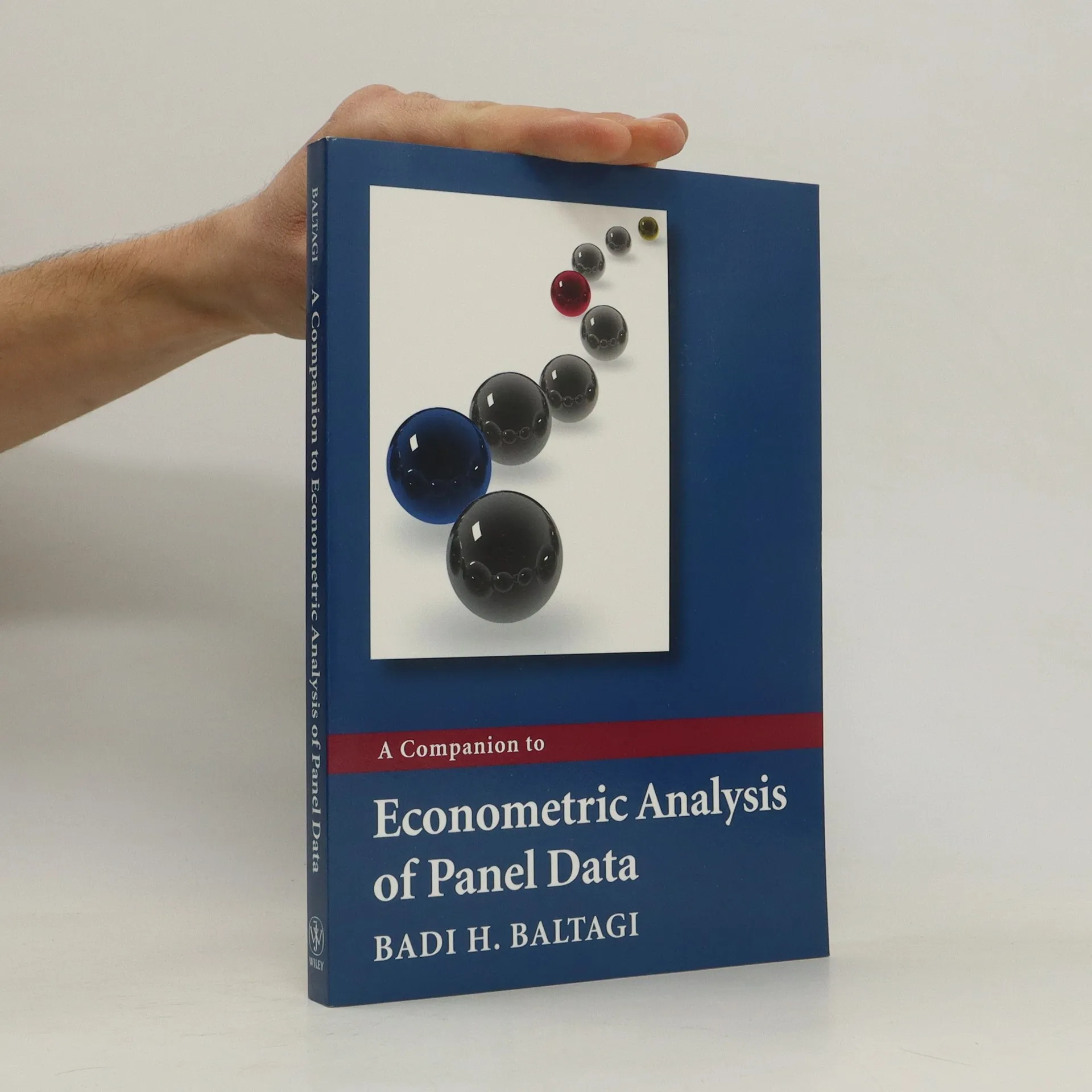
‘Econometric Analysis of Panel Data’ has become established as the leading textbook for postgraduate courses in panel data. This book is intended as a companion to the main text. The prerequisites include a good background in mathematical statistics and econometrics. The companion guide will add value to the existing textbooks on panel data by solving exercises in a logical and pedagogical manner, helping the reader understand, learn and teach panel data. These exercises are based upon those in Baltagi (2008) and are complementary to that text even though they are stand alone material and the reader can learn the basic material as they go through these exercises. The exercises in this book start by providing some background material on partitioned regressions and the Frisch-Waugh-Lovell theorem, showing the reader some applications of this material that are useful in practice. Then it goes through the basic material on fixed and random effects models in a one-way and two-way error components models, following the same outline as in Baltagi (2008). The book also provides some empirical illustrations and examples using Stata and EViews that the reader can replicate.
Badi H. Baltagi Bücher

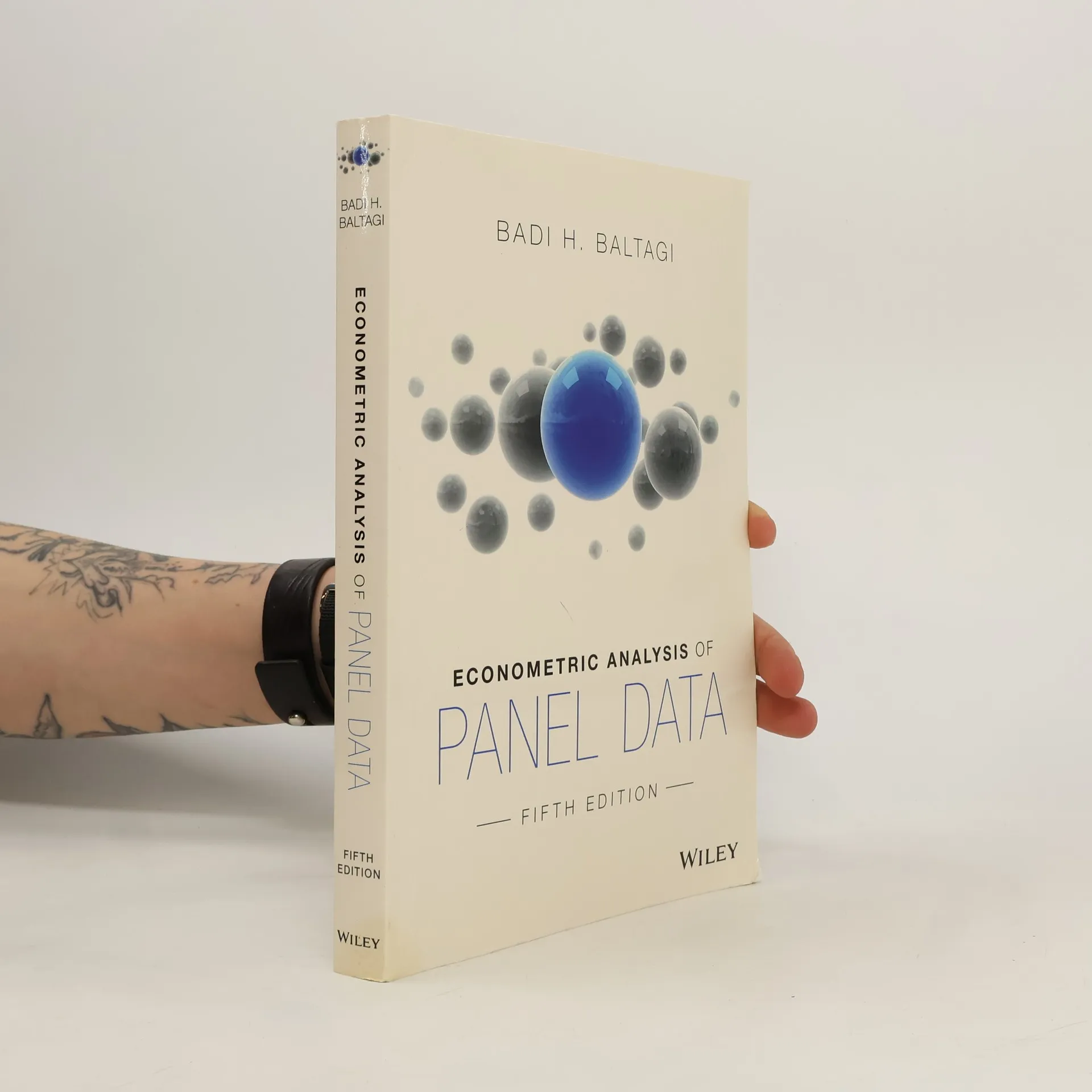
Econometric Analysis of Panel Data
- 388 Seiten
- 14 Lesestunden
Panel data econometrics has evolved rapidly over the last decade. Micro and Macro panels are increasing in numbers and availability and methods to deal with these data are in high demand from practitioners. Written by one of the world's leading researchers and writers in the field, Econometric Analysis of Panel Data has become established as the leading textbook for postgraduate courses in panel data. This new edition has been fully revised and updated and includes: A new chapter entitled Spatial Panel Data New empirical applications New material on non-stationary panels. New empirical applications using Stata and EViews. Thoroughly updated References. Additional exercises in each chapter
Econometrics
- 506 Seiten
- 18 Lesestunden
This textbook offers a comprehensive introduction to basic econometric methods and their assumptions, along with advanced topics like spatial correlation and panel data. The revised sixth edition includes new material and exercises, featuring empirical illustrations using Stata, Eviews, and SAS, enhancing the learning experience with real economic applications.