

Mehr zum Buch
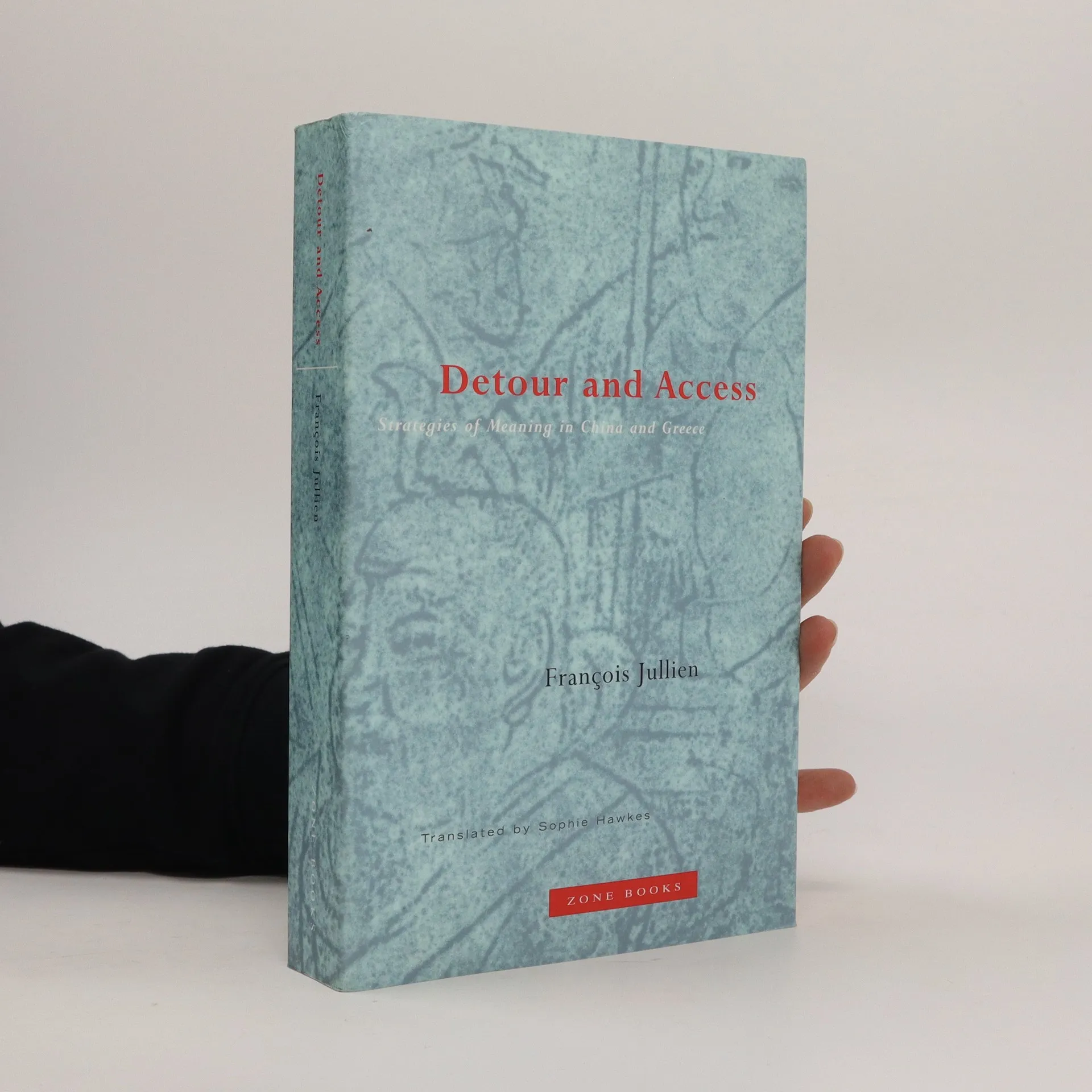
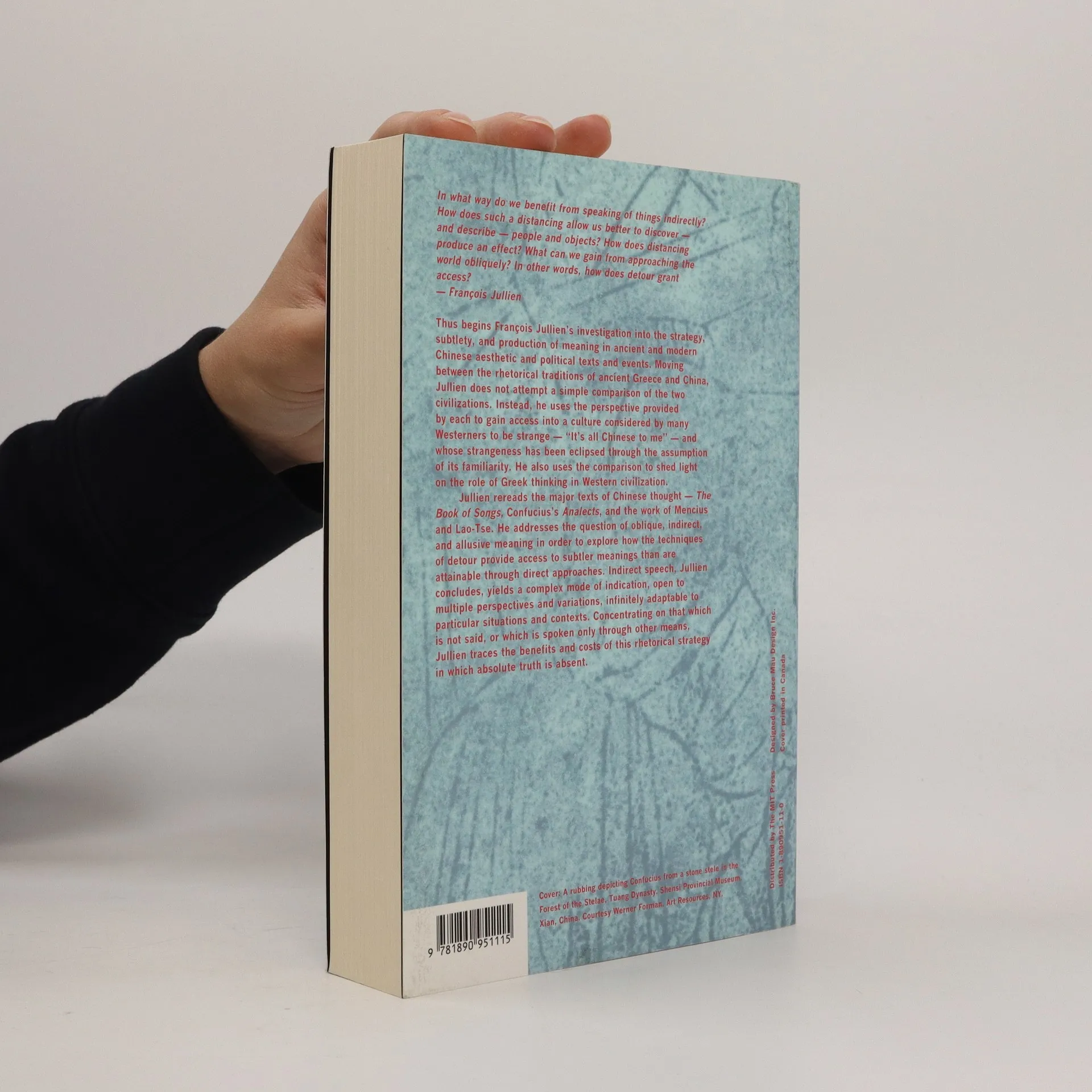
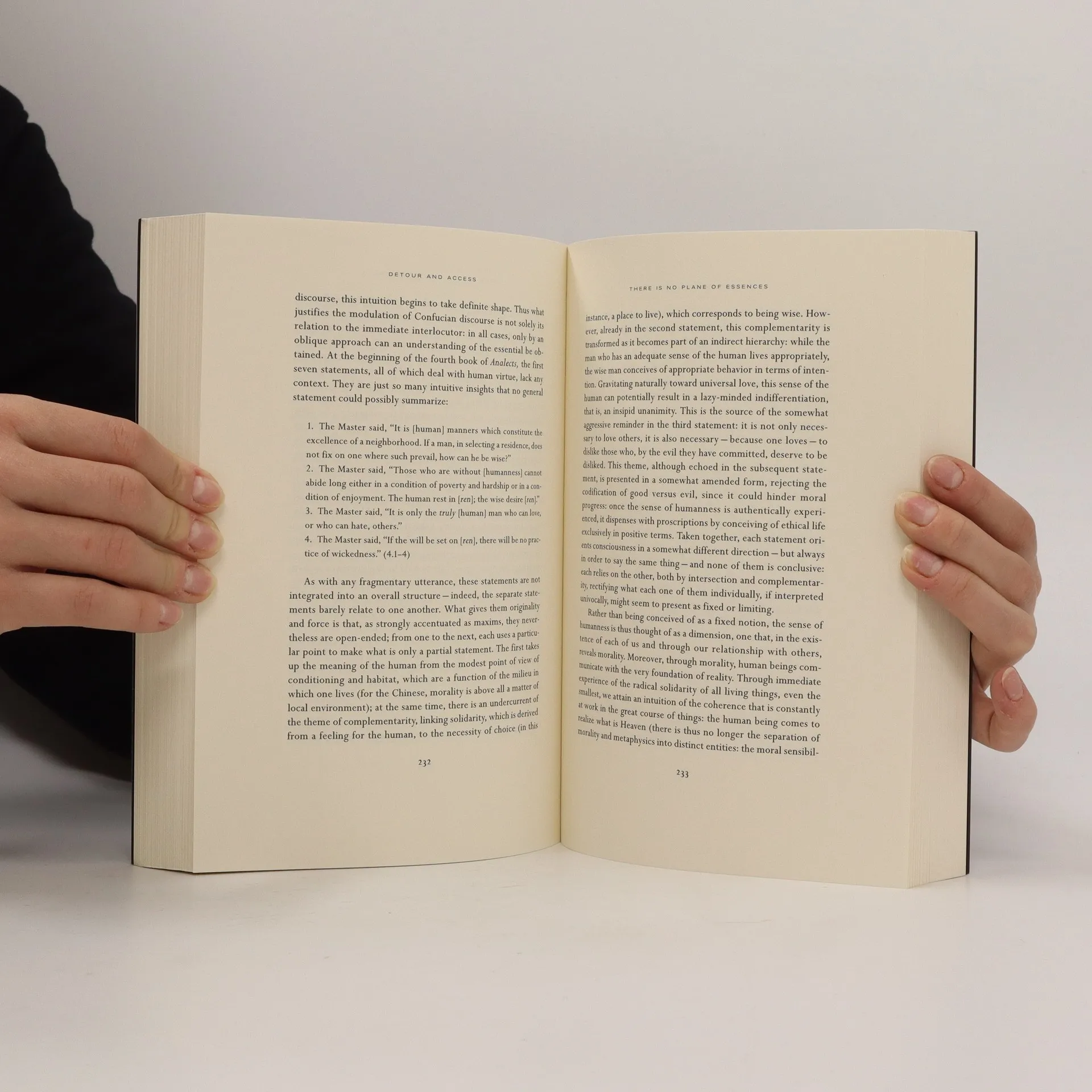
While the Western tradition, starting from Greece, has privileged a frontal approach to the world, the Chinese tradition, on the contrary, has preferred an oblique one, through a detour. This is not merely a cultural difference that could be seen as an anecdotal peculiarity without greater consequences. Instead, this book demonstrates, both in its entirety and in detail, that it is a difference that fundamentally involves how the spirit relates to reality. The author seeks to answer questions such as: "Why has that other plane—of 'essences,' of the 'spiritual'—not been established in China, which has served to structure, in the Greek tradition, the horizon of meaning? Or, if the question is posed in reverse: What are the theoretical positions—but which remain hidden—that have conditioned the very modes of interpretation to the point that they are taken as evidence, that they are confused with 'Reason'?" What this book proposes, through a journey "to the distant country of the 'subtlety' of meaning," is to trace back to the conditions of thought itself.
Buchkauf
Detour and Access, François Jullien
- Sprache

- Erscheinungsdatum
- 2000
- Einband
- (Paperback)
Hier könnte deine Bewertung stehen.
- Titel
- Detour and Access
- Sprache
- Englisch
- Autor*innen
- François Jullien
- Verlag
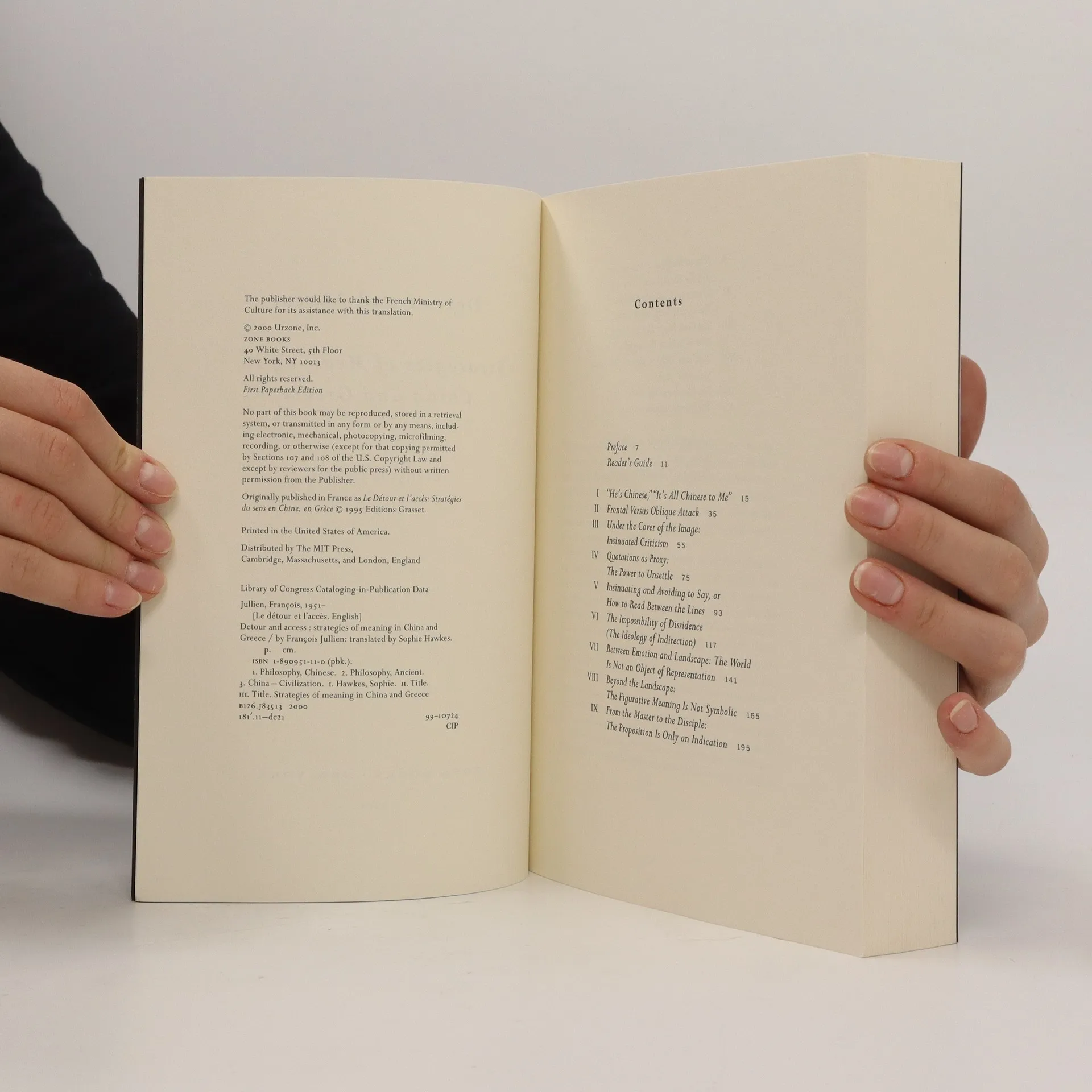
- MIT Press
- Erscheinungsdatum
- 2000
- Einband
- Paperback
- Seitenzahl
- 424
- ISBN10
- 1890951110
- ISBN13
- 9781890951115
- Reihe
- Schlagwörter
- Philosophisches Thema, China
- Originaltitel
- Le détour et l'accès
- Bewertung
- 3,95 von 5 Sternen
- Beschreibung
- While the Western tradition, starting from Greece, has privileged a frontal approach to the world, the Chinese tradition, on the contrary, has preferred an oblique one, through a detour. This is not merely a cultural difference that could be seen as an anecdotal peculiarity without greater consequences. Instead, this book demonstrates, both in its entirety and in detail, that it is a difference that fundamentally involves how the spirit relates to reality. The author seeks to answer questions such as: "Why has that other plane—of 'essences,' of the 'spiritual'—not been established in China, which has served to structure, in the Greek tradition, the horizon of meaning? Or, if the question is posed in reverse: What are the theoretical positions—but which remain hidden—that have conditioned the very modes of interpretation to the point that they are taken as evidence, that they are confused with 'Reason'?" What this book proposes, through a journey "to the distant country of the 'subtlety' of meaning," is to trace back to the conditions of thought itself.