


Mehr zum Buch
Rainer Maria Rilke: Duineser Elegien. Die Hymnen der Vögel der Seele Lesefreundlicher Großdruck in 16-pt-Schrift Großformat, 210 x 297 mm Berliner Ausgabe, 2019 Durchgesehener Neusatz bearbeitet und eingerichtet von Theodor Borken Erstdruck: Leipzig (Insel) 1923. Neuausgabe. Großformat, 210 x 297 mm Herausgegeben von Theodor Borken. Berlin 2019. Textgrundlage ist die Ausgabe: Rainer Maria Rilke: Sämtliche Werke. Herausgegeben vom Rilke-Archiv in Verbindung mit Ruth Sieber-Rilke, besorgt von Ernst Zinn, Band 1-6, Wiesbaden und Frankfurt a.M.: Insel, 1955-1966. Umschlaggestaltung von Thomas Schultz-Overhage unter Verwendung des Bildes: Heida Al Assiri, Der Engel, 2019. Gesetzt aus der Minion Pro, 16 pt. Henricus Edition Deutsche Klassik UG (haftungsbeschränkt)




Buchkauf
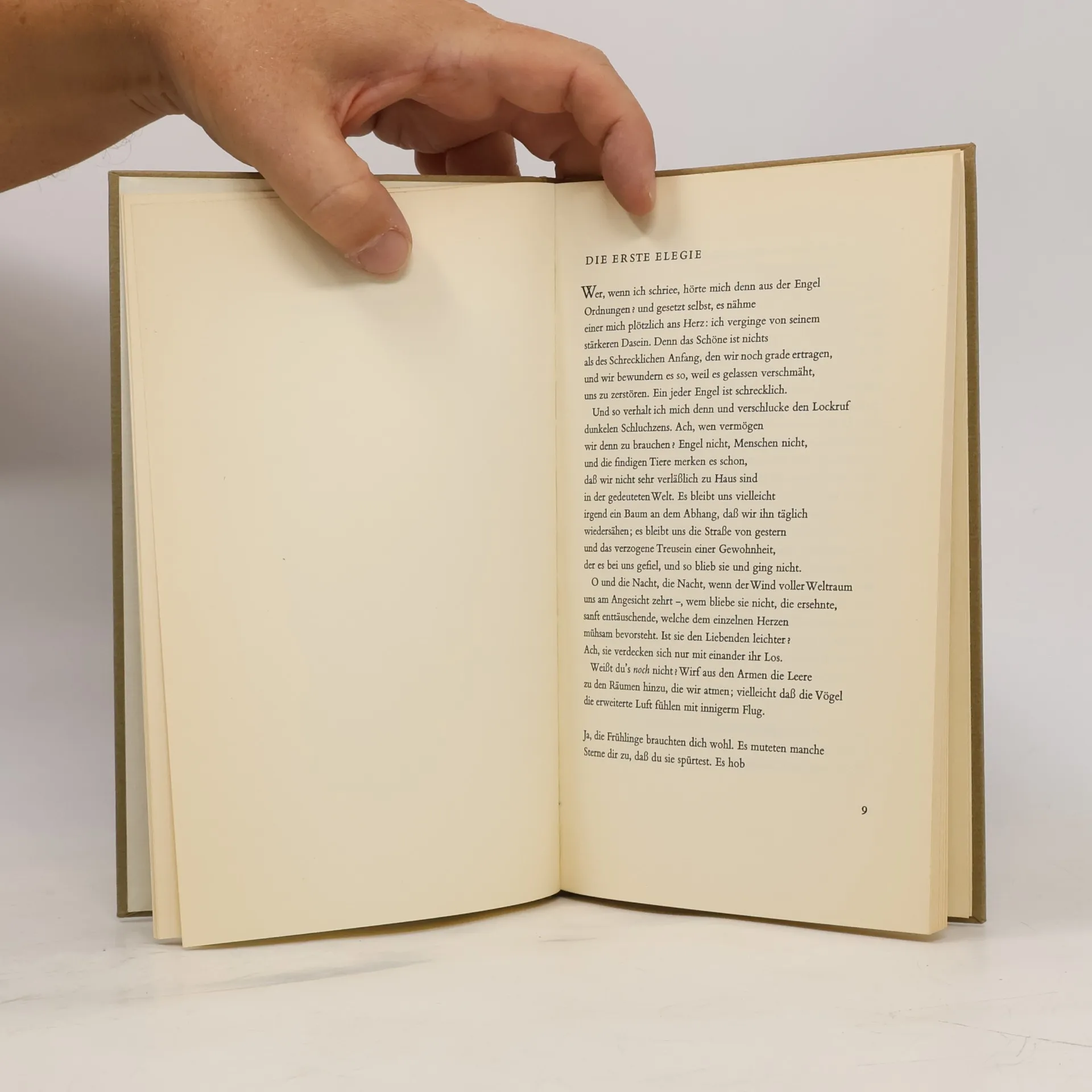
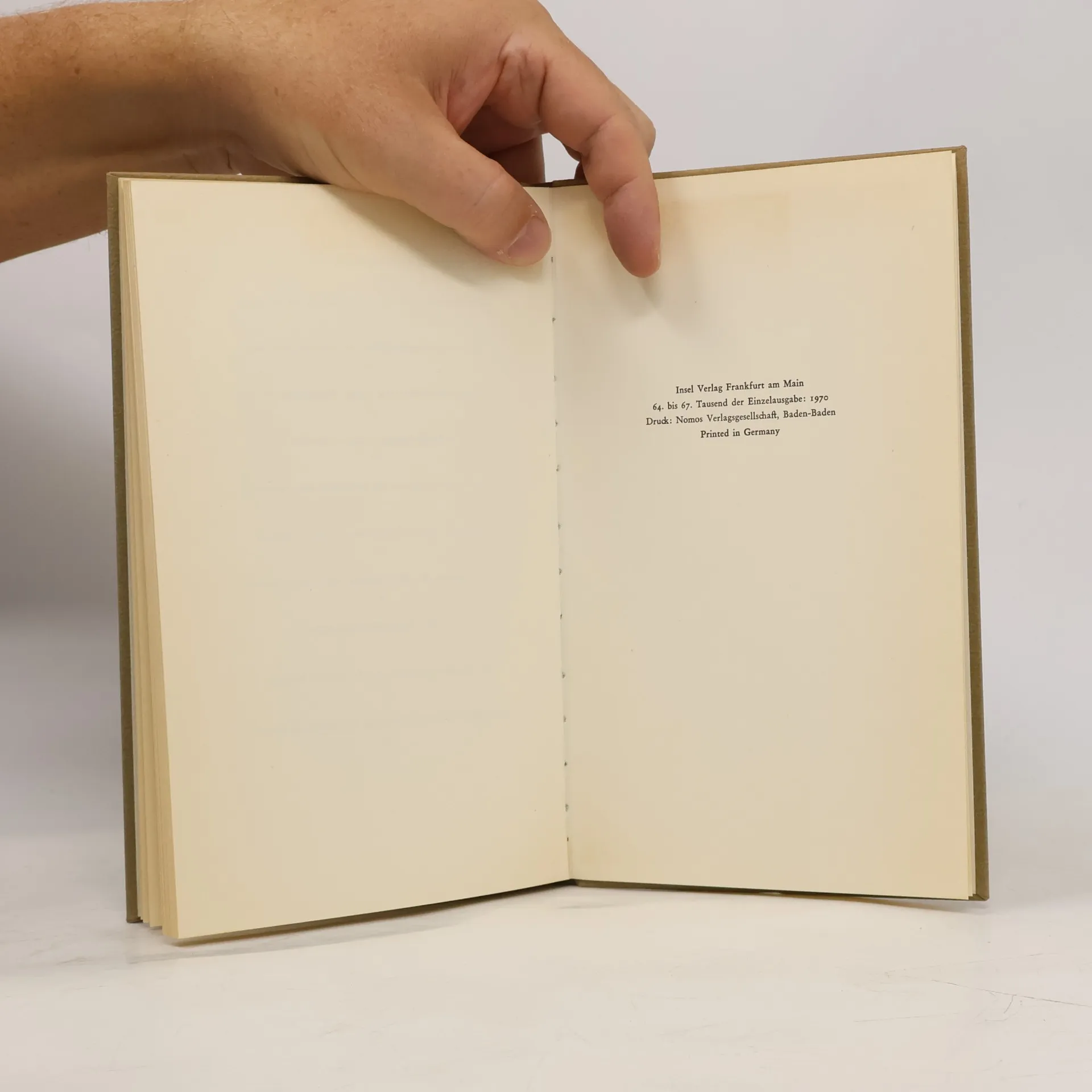
Duineser Elegien, Rainer Maria Rilke
- Sprache

- Erscheinungsdatum
- 1970
- Einband
- (Hardcover),
- Buchzustand
- Gebraucht - Gut
- Preis
- € 11,49
Hier könnte deine Bewertung stehen.
- Titel
- Duineser Elegien
- Sprache
- Deutsch
- Autor*innen
- Rainer Maria Rilke
- Verlag
- Insel Verlag
- Erscheinungsdatum
- 1970
- Einband
- Hardcover
- Reihe
- Kategorien
- Schlagwörter
- Philosophisches Thema, Deutsche Literatur, Deutschland, Lyrik
- Erstveröffentlichung
- 1922
- Originaltitel
- Duineser Elegien
- Bewertung
- 4,1 von 5 Sternen
- Beschreibung
- Rainer Maria Rilke: Duineser Elegien. Die Hymnen der Vögel der Seele Lesefreundlicher Großdruck in 16-pt-Schrift Großformat, 210 x 297 mm Berliner Ausgabe, 2019 Durchgesehener Neusatz bearbeitet und eingerichtet von Theodor Borken Erstdruck: Leipzig (Insel) 1923. Neuausgabe. Großformat, 210 x 297 mm Herausgegeben von Theodor Borken. Berlin 2019. Textgrundlage ist die Ausgabe: Rainer Maria Rilke: Sämtliche Werke. Herausgegeben vom Rilke-Archiv in Verbindung mit Ruth Sieber-Rilke, besorgt von Ernst Zinn, Band 1-6, Wiesbaden und Frankfurt a.M.: Insel, 1955-1966. Umschlaggestaltung von Thomas Schultz-Overhage unter Verwendung des Bildes: Heida Al Assiri, Der Engel, 2019. Gesetzt aus der Minion Pro, 16 pt. Henricus Edition Deutsche Klassik UG (haftungsbeschränkt)