

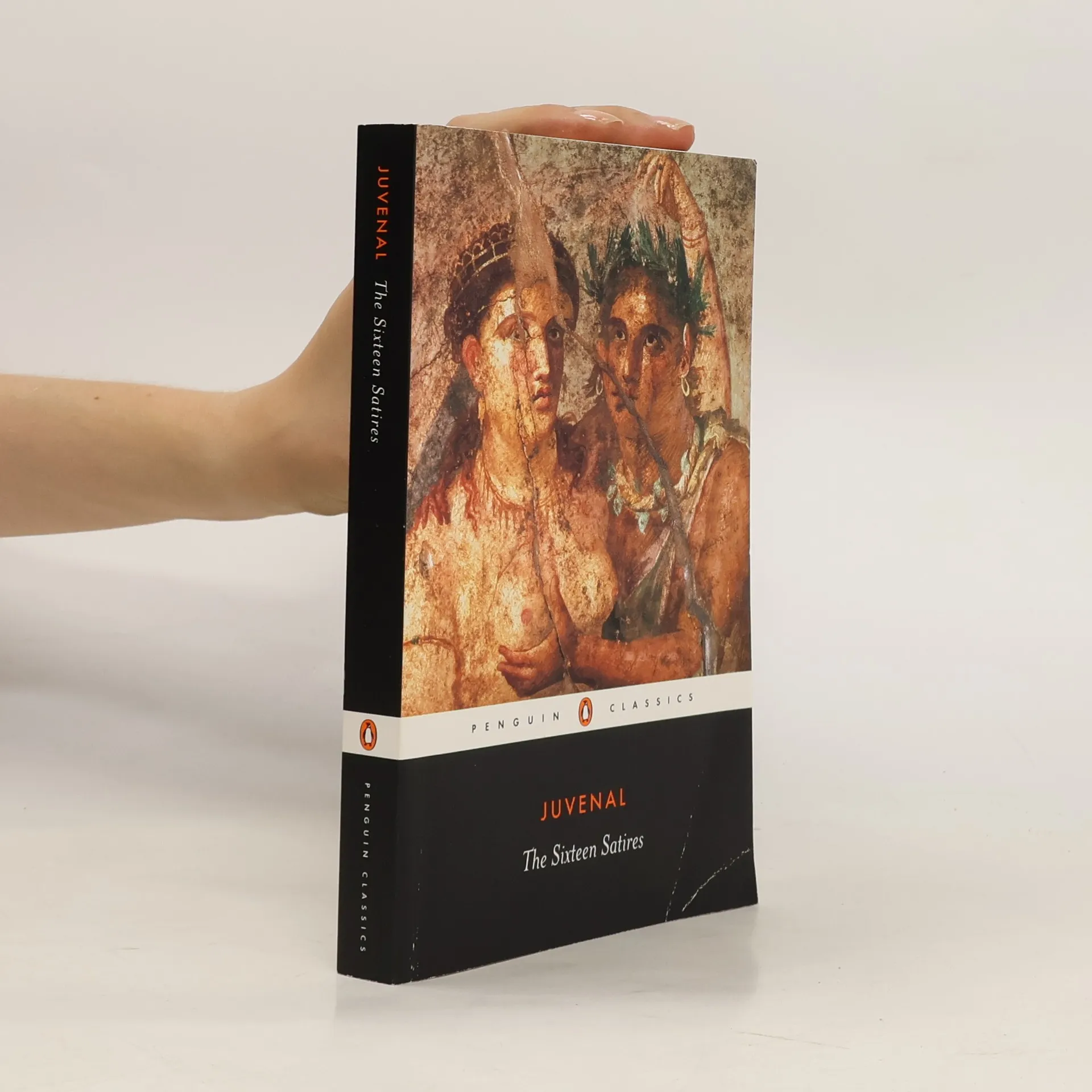


Mehr zum Buch
Juvenal's Satires create a fascinating (and immediately familiar) world of whores, fortune-tellers, boozy politicians, slick lawyers, shameless sycophants, ageing flirts and downtrodden teachers. Perhaps more than any other writer, Juvenal (c. AD 55-138) captures the splendour, the squalor and the sheer vibrant energy of everyday Roman life. A member of the traditional land-owning class, which was rapidly seeing power slip into the hands of dynamic outsiders, he offers equally savage portraits of decadent aristocrats, women interested only in 'rough trade' like actors and gladiators, and the jumped-up sons of panders and auctioneers. He constantly compares the corruption of his own generation with its stern upright forebears. And he makes us feel from within the deep humiliation of having to dance attendance on rich but odious patrons


Buchkauf
The Sixteen Satires, Juvenal
- Sprache

- Erscheinungsdatum
- 1998
- Einband
- (Paperback)
Hier könnte deine Bewertung stehen.
- Titel
- The Sixteen Satires
- Sprache
- Englisch
- Autor*innen
- Juvenal
- Verlag
- Penguin Books
- Erscheinungsdatum
- 1998
- Einband
- Paperback
- ISBN10
- 0140447040
- ISBN13
- 9780140447040
- Reihe
- Kategorien
- Schlagwörter
- Historisches Thema, Humor, Altertum
- Bewertung
- 3,9 von 5 Sternen
- Beschreibung
- Juvenal's Satires create a fascinating (and immediately familiar) world of whores, fortune-tellers, boozy politicians, slick lawyers, shameless sycophants, ageing flirts and downtrodden teachers. Perhaps more than any other writer, Juvenal (c. AD 55-138) captures the splendour, the squalor and the sheer vibrant energy of everyday Roman life. A member of the traditional land-owning class, which was rapidly seeing power slip into the hands of dynamic outsiders, he offers equally savage portraits of decadent aristocrats, women interested only in 'rough trade' like actors and gladiators, and the jumped-up sons of panders and auctioneers. He constantly compares the corruption of his own generation with its stern upright forebears. And he makes us feel from within the deep humiliation of having to dance attendance on rich but odious patrons