



Mehr zum Buch
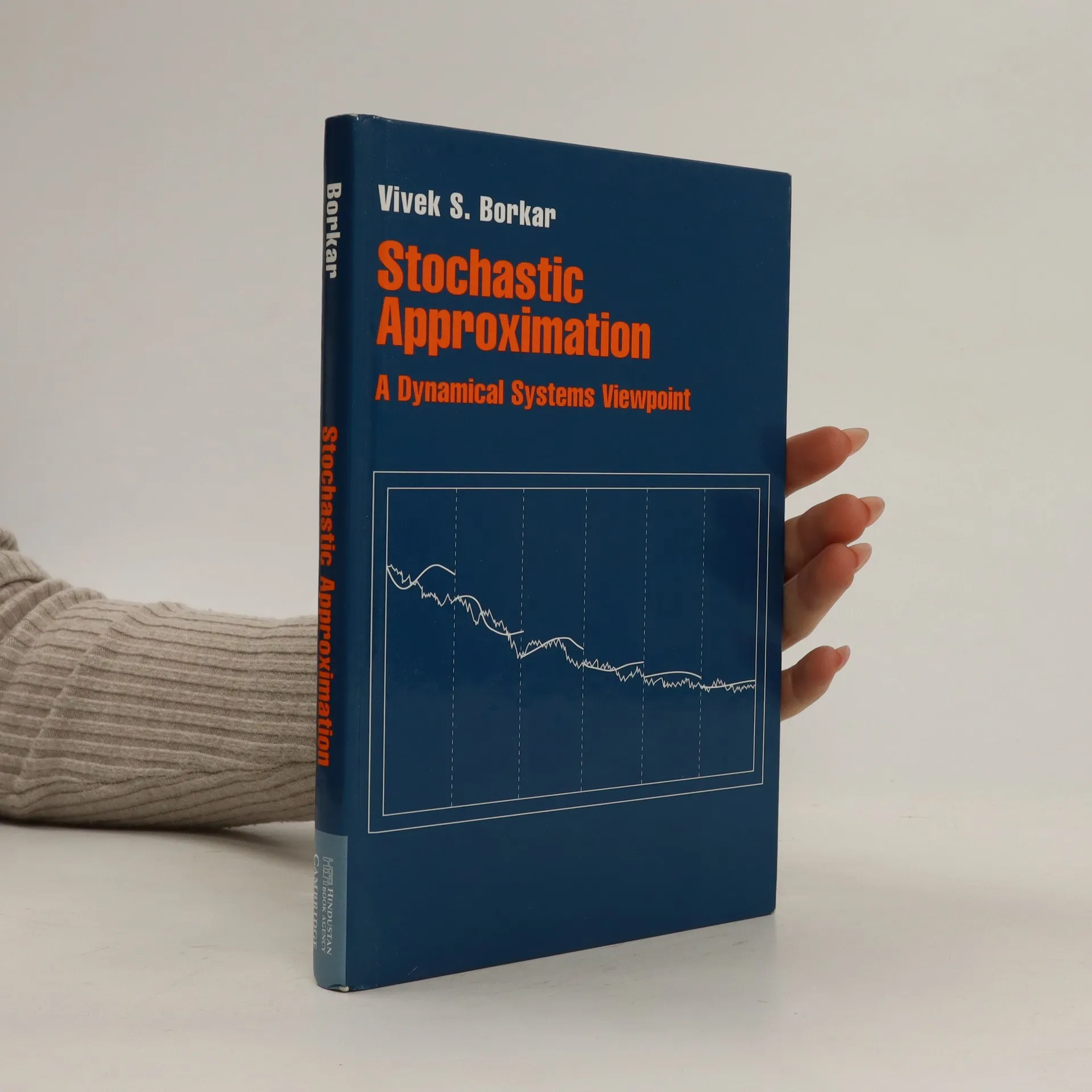
This simple, compact toolkit for designing and analyzing stochastic approximation algorithms requires only a basic understanding of probability and differential equations. Although powerful, these algorithms have applications in control and communications engineering, artificial intelligence and economic modeling. Unique topics include finite-time behavior, multiple timescales and asynchronous implementation. There is a useful plethora of applications, each with concrete examples from engineering and economics. Notably it covers variants of stochastic gradient-based optimization schemes, fixed-point solvers, which are commonplace in learning algorithms for approximate dynamic programming, and some models of collective behavior.


Buchkauf
Stochastic Approximation, Vivek S. Borkar
- Sprache

- Erscheinungsdatum
- 2008
- Einband
- (Hardcover)
Hier könnte deine Bewertung stehen.
- Titel
- Stochastic Approximation
- Sprache
- Englisch
- Autor*innen
- Vivek S. Borkar
- Erscheinungsdatum
- 2008
- Einband
- Hardcover
- Seitenzahl
- 164
- ISBN10
- 0521515920
- ISBN13
- 9780521515924
- Reihe
- Schlagwörter
- Handel
- Bewertung
- 4 von 5 Sternen
- Beschreibung
- This simple, compact toolkit for designing and analyzing stochastic approximation algorithms requires only a basic understanding of probability and differential equations. Although powerful, these algorithms have applications in control and communications engineering, artificial intelligence and economic modeling. Unique topics include finite-time behavior, multiple timescales and asynchronous implementation. There is a useful plethora of applications, each with concrete examples from engineering and economics. Notably it covers variants of stochastic gradient-based optimization schemes, fixed-point solvers, which are commonplace in learning algorithms for approximate dynamic programming, and some models of collective behavior.