

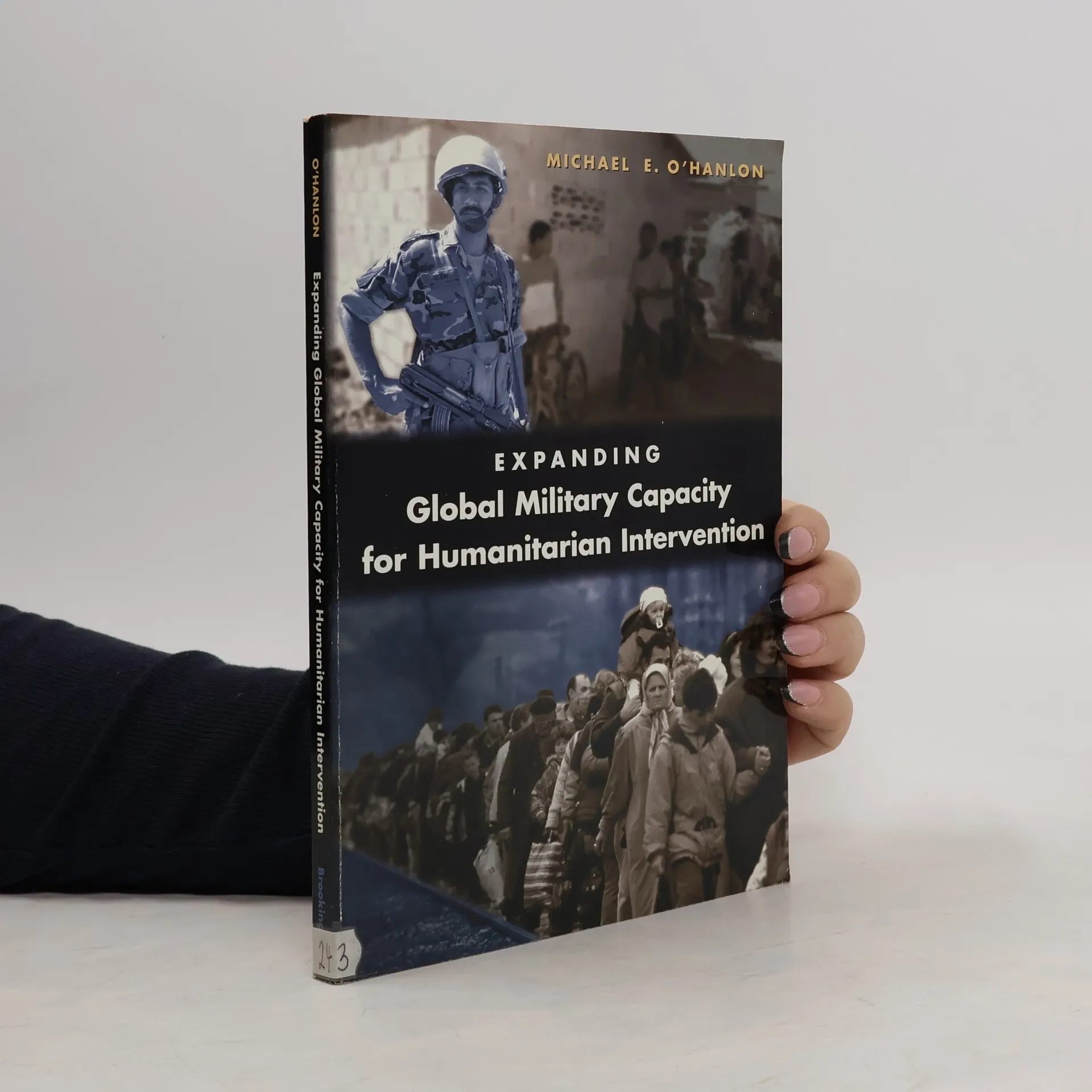


Expanding Global Military Capacity for Humanitarian Intervention
Autor*innen
Buchbewertung
Mehr zum Buch
Despite worldwide internecine ethnic and political conflict, humanitarian intervention by the international community has been effective in several high-profile cases, helping save thousands of lives in Somalia and ending genocide in Bosnia and Kosovo. However, a sufficient capacity for multilateral humanitarian intervention does not yet exist. In this volume, Michael O'Hanlon presents a blueprint for saving lives through force. He suggests new ways of spreading the responsibility for intervention forces onto regional powers. Ultimately, hecontends, individual countries must develop the aggregate capacity to react nearly simultaneously to several crises of varying scale and severity.
Buchkauf
Expanding Global Military Capacity for Humanitarian Intervention, Michael Hanlon
- Sprache

- Erscheinungsdatum
- 2003
- Einband
- (Paperback)
Hier könnte deine Bewertung stehen.
- Titel
- Expanding Global Military Capacity for Humanitarian Intervention
- Sprache
- Englisch
- Autor*innen
- Michael Hanlon
- Verlag
- Brookings Institution
- Erscheinungsdatum
- 2003
- Einband
- Paperback
- Seitenzahl
- 168
- ISBN10
- 0815764413
- ISBN13
- 9780815764410
- Reihe
- Kategorien
- Schlagwörter
- Kriegsliteratur
- Bewertung
- 3,5 von 5 Sternen
- Beschreibung
- Despite worldwide internecine ethnic and political conflict, humanitarian intervention by the international community has been effective in several high-profile cases, helping save thousands of lives in Somalia and ending genocide in Bosnia and Kosovo. However, a sufficient capacity for multilateral humanitarian intervention does not yet exist. In this volume, Michael O'Hanlon presents a blueprint for saving lives through force. He suggests new ways of spreading the responsibility for intervention forces onto regional powers. Ultimately, hecontends, individual countries must develop the aggregate capacity to react nearly simultaneously to several crises of varying scale and severity.