

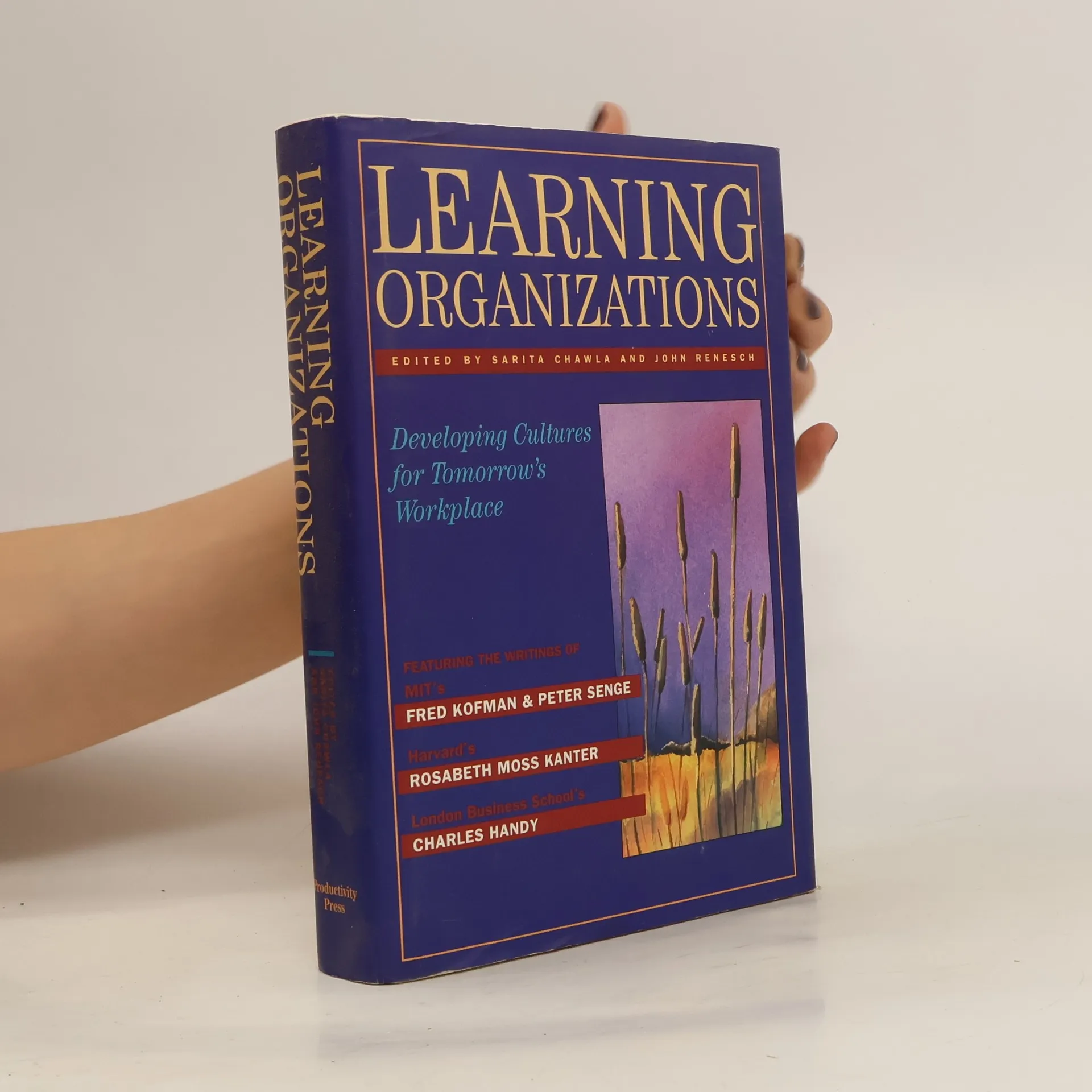


Learning Organizations
Developing Cultures for Tomorrow's Workplace
Buchbewertung
Parameter
- 571 Seiten
- 20 Lesestunden
Mehr zum Buch
What is a learning organization? What are the advantages of creating one? Why should a company want to become a learning organization? Where does one start? Learning Developing Cultures for Tomorrow's Workplace contains essays by thirty-nine of the most respected practitioners and scholars of this topic. This definitive collection of essays is rich in concept and theory as well as application and example. Lead authors include Harvard's Rosabeth Moss Kanter, London Business School's Professor Emeritus Charles Handy, and MlT's Fred Kofman and Peter Senge. The thirty-two essays in this comprehensive collection are presented in four main 1. Guiding Ideas 2. Theories/Methods/Processes 3. Infrastructure 4. Arenas of Practice
Buchkauf
Learning Organizations, Charles Handy, Fred Kofman, Peter M. Senge, Rosabeth Moss Kanter, Sarita Chawla, John Renesch
- Sprache

- Erscheinungsdatum
- 1995
- Einband
- (Hardcover)
Hier könnte deine Bewertung stehen.
- Titel
- Learning Organizations
- Untertitel
- Developing Cultures for Tomorrow's Workplace
- Sprache
- Englisch
- Autor*innen
- Charles Handy, Fred Kofman, Peter M. Senge, Rosabeth Moss Kanter, Sarita Chawla, John Renesch
- Verlag
- Productivity Press
- Erscheinungsdatum
- 1995
- Einband
- Hardcover
- Seitenzahl
- 571
- ISBN10
- 1563271109
- ISBN13
- 9781563271106
- Reihe
- Kategorien
- Bewertung
- 3 von 5 Sternen
- Beschreibung
- What is a learning organization? What are the advantages of creating one? Why should a company want to become a learning organization? Where does one start? Learning Developing Cultures for Tomorrow's Workplace contains essays by thirty-nine of the most respected practitioners and scholars of this topic. This definitive collection of essays is rich in concept and theory as well as application and example. Lead authors include Harvard's Rosabeth Moss Kanter, London Business School's Professor Emeritus Charles Handy, and MlT's Fred Kofman and Peter Senge. The thirty-two essays in this comprehensive collection are presented in four main 1. Guiding Ideas 2. Theories/Methods/Processes 3. Infrastructure 4. Arenas of Practice