

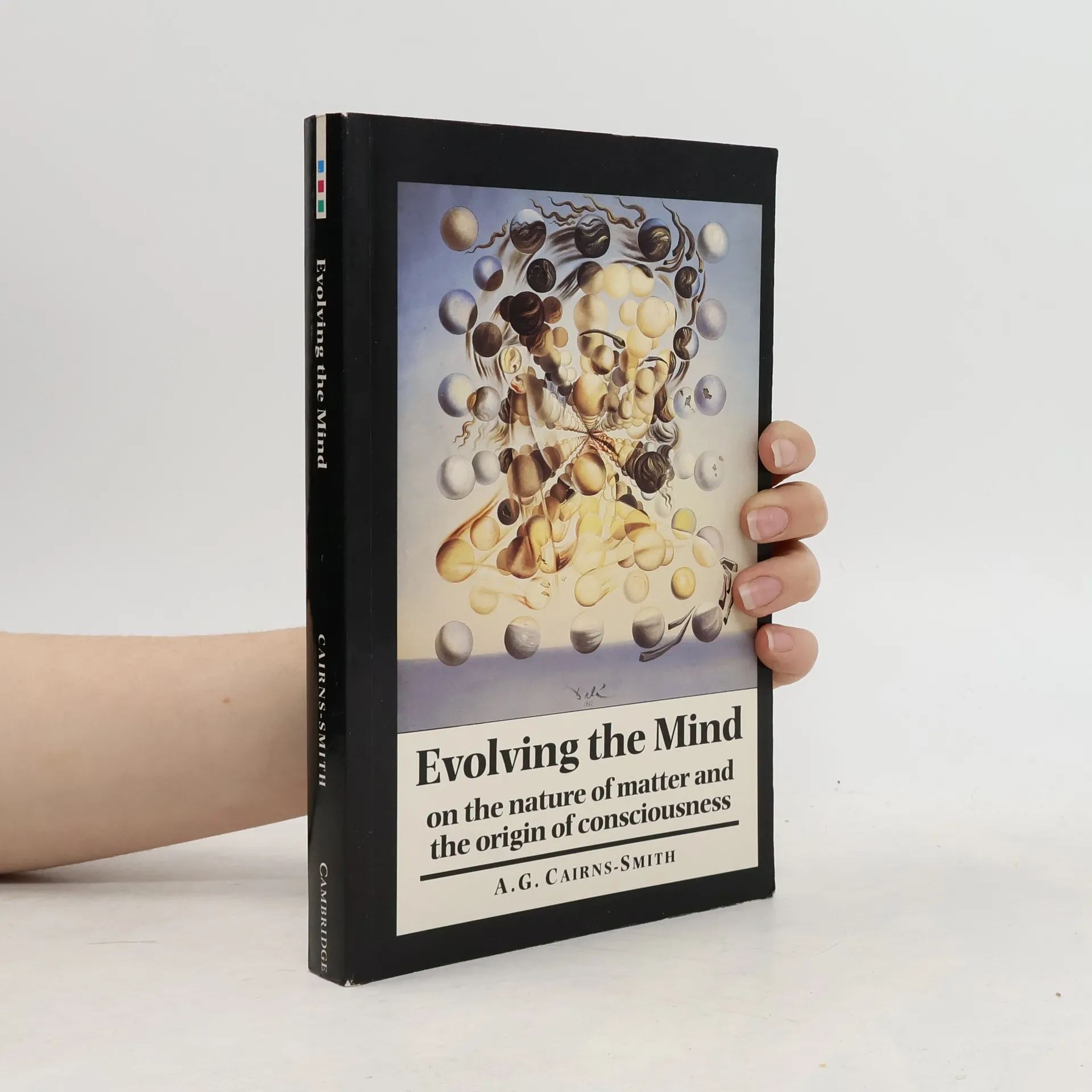

Evolving the Mind
On the Nature of Matter and the Origin of Consciousness
Autor*innen
Buchbewertung
Mehr zum Buch
The next great revolution in science will undoubtedly be the emergence of a useful theory of consciousness--a theory based on our better understanding of molecules and brains and of the nature of science itself. Evolving the Mind broaches both of these themes, covering how ideas about the mind evolved in science and how the mind itself evolved in Nature. What Cairns-Smith does that is particularly compelling is to synthesize the contributions of a wide range of scientific disciplines (physics, molecular biology, brain science, and evolution) to bring science to the brink of a unified theory of consciousness. The author thoroughly explores this complex concept in a straightforward, conversational style. Few readers will be able to resist the exciting conclusion that we are closing in on a scientific theory of consciousness.
Publikation

Buchkauf
Evolving the Mind, A. G. Cairns-Smith
- Sprache

- Erscheinungsdatum
- 1998
- Einband
- (Paperback)
Hier könnte deine Bewertung stehen.
- Titel
- Evolving the Mind
- Untertitel
- On the Nature of Matter and the Origin of Consciousness
- Sprache
- Englisch
- Autor*innen
- A. G. Cairns-Smith
- Erscheinungsdatum
- 1998
- Einband
- Paperback
- Seitenzahl
- 340
- ISBN10
- 0521637554
- ISBN13
- 9780521637558
- Reihe
- Schlagwörter
- Naturwissenschaften, Wissenschaft, Geist und Körper, Evolution, Bewusstsein
- Bewertung
- 3 von 5 Sternen
- Beschreibung
- The next great revolution in science will undoubtedly be the emergence of a useful theory of consciousness--a theory based on our better understanding of molecules and brains and of the nature of science itself. Evolving the Mind broaches both of these themes, covering how ideas about the mind evolved in science and how the mind itself evolved in Nature. What Cairns-Smith does that is particularly compelling is to synthesize the contributions of a wide range of scientific disciplines (physics, molecular biology, brain science, and evolution) to bring science to the brink of a unified theory of consciousness. The author thoroughly explores this complex concept in a straightforward, conversational style. Few readers will be able to resist the exciting conclusion that we are closing in on a scientific theory of consciousness.