

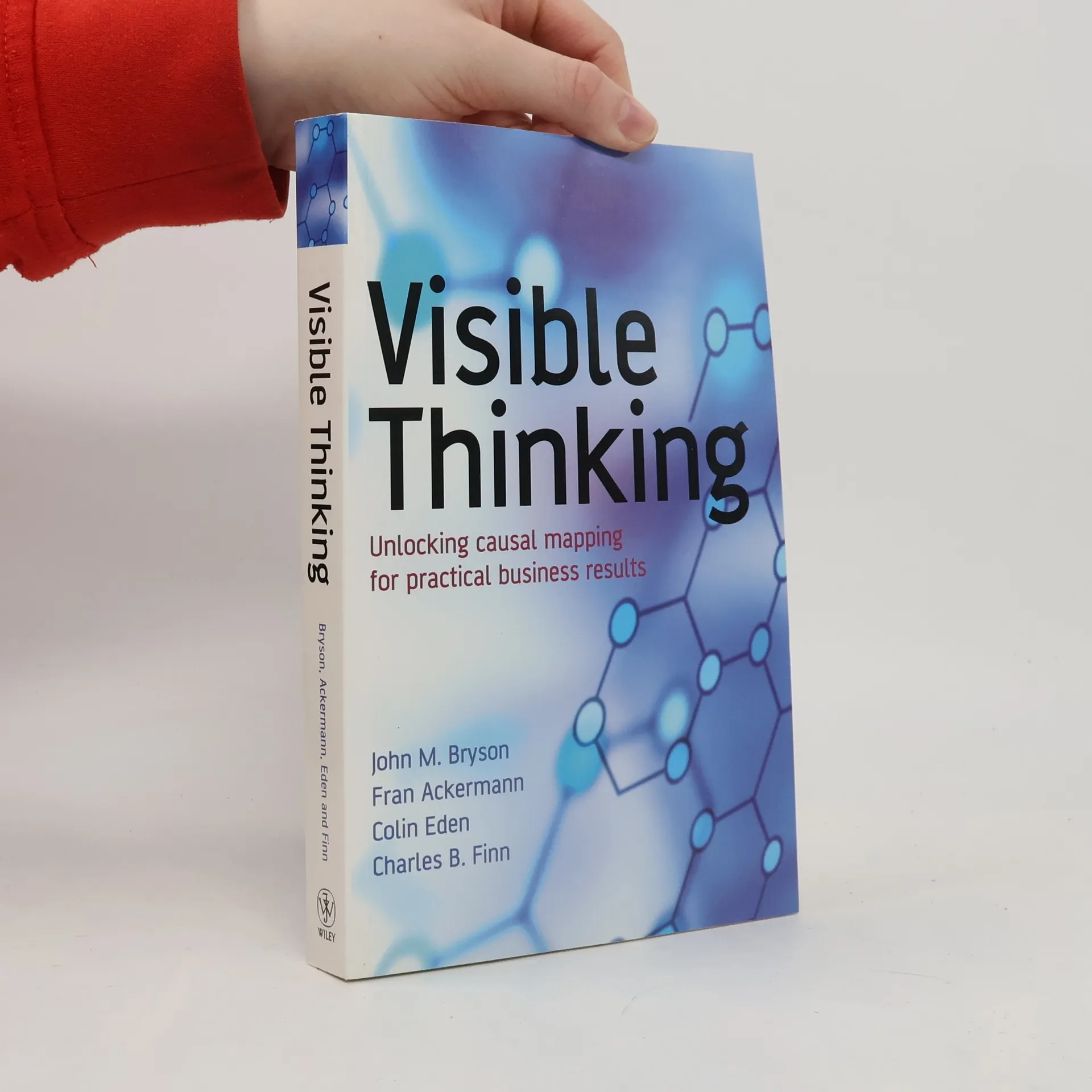
Visible Thinking
Unlocking Causal Mapping for Practical Business Results
Buchbewertung
Parameter
- 396 Seiten
- 14 Lesestunden
Mehr zum Buch
Causal mapping is a tool that enables you to make sense of challenging situations so that you can get more out of them. A causal map is a word and arrow diagram in which ideas and actions are causally linked with one another through the use of arrows. Typically, only specialists such as physical or social scientists and operations researchers know about causal mapping and the tool is therefore not widely known or its broad applicability understood. Until now there has been no guidance available on how to make use of the tool for more general purposes. This book lets managers understand the theory and practice of causal mapping in layman's terms for use in both individual and group settings. It shows managers how to develop and use action-oriented strategy maps and logic models in business decision making. The authors show how causal mapping can be used as a tool to make sense of challenging situations and develop effective business responses.
Buchkauf
Visible Thinking, Colin Eden, Fran Ackermann, John M. Bryson, Charles B. Finn
- Sprache

- Erscheinungsdatum
- 2004
- Einband
- (Paperback)
Hier könnte deine Bewertung stehen.
- Titel
- Visible Thinking
- Untertitel
- Unlocking Causal Mapping for Practical Business Results
- Sprache
- Englisch
- Autor*innen
- Colin Eden, Fran Ackermann, John M. Bryson, Charles B. Finn
- Verlag
- WILEY
- Erscheinungsdatum
- 2004
- Einband
- Paperback
- Seitenzahl
- 396
- ISBN10
- 0470869151
- ISBN13
- 9780470869154
- Reihe
- Schlagwörter
- Handel, USA, Entscheidungsfindung, Problemlösung, Labyrinth
- Bewertung
- 3,4 von 5 Sternen
- Beschreibung
- Causal mapping is a tool that enables you to make sense of challenging situations so that you can get more out of them. A causal map is a word and arrow diagram in which ideas and actions are causally linked with one another through the use of arrows. Typically, only specialists such as physical or social scientists and operations researchers know about causal mapping and the tool is therefore not widely known or its broad applicability understood. Until now there has been no guidance available on how to make use of the tool for more general purposes. This book lets managers understand the theory and practice of causal mapping in layman's terms for use in both individual and group settings. It shows managers how to develop and use action-oriented strategy maps and logic models in business decision making. The authors show how causal mapping can be used as a tool to make sense of challenging situations and develop effective business responses.