

Mehr zum Buch
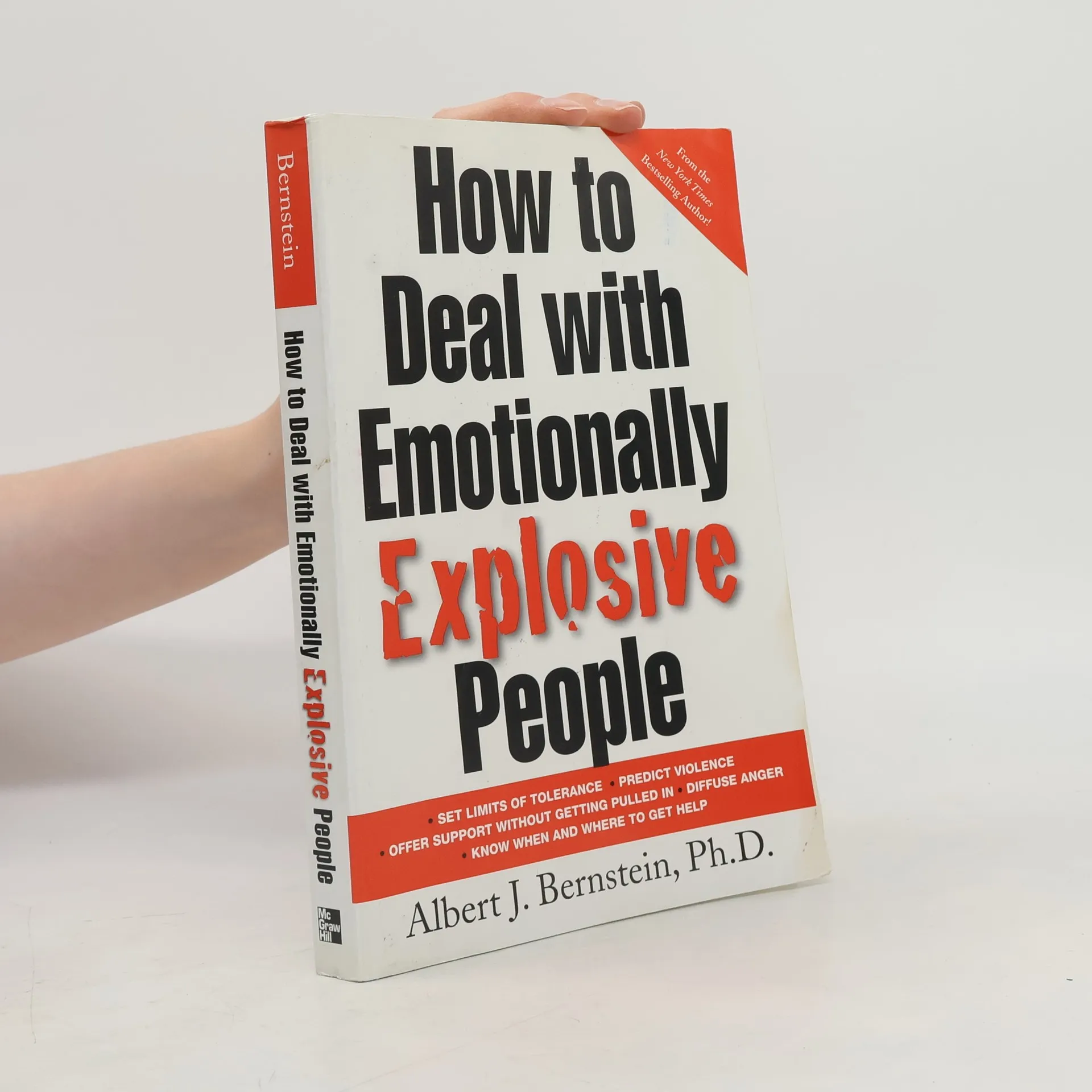
In his international bestseller, Dinosaur Brains , psychologist Albert J. Bernstein told readers how to deal with difficult people at work. Now, in a groundbreaking new book, Bernstein tackles a more serious problem that profoundly affects the lives of millions of walking time bombs. How do you help a friend who explodes into panic attacks? What do you say when a depressed family member bursts into tears? How do you protect yourself when a stranger blows up in your face? Too often, our choices make matters worse. But it isn't our fault. All that we feel, and much of what we hear directs us to defend the fearful, comfort the sad, and talk sense to the angry, regardless of the utter futility of these well-meaning actions. Moment to moment, people with mental disorders stand at the crossroads between getting better and getting worse. For disorders to heal, medicine, psychotherapy, the encouragement of friends, and the kindness of strangers must all point explosive people toward a single direction.
Buchkauf
How to Deal with Emotionally Explosive People, Albert J. Bernstein
- Sprache

- Erscheinungsdatum
- 2002
- Einband
- (Paperback)
Hier könnte deine Bewertung stehen.
- Titel
- How to Deal with Emotionally Explosive People
- Sprache
- Englisch
- Autor*innen
- Albert J. Bernstein
- Verlag
- McGraw-Hill
- Erscheinungsdatum
- 2002
- Einband
- Paperback
- ISBN10
- 007138569X
- ISBN13
- 9780071385695
- Reihe
- Schlagwörter
- Handel, Beziehungen, Psychische Gesundheit, Emotionen
- Bewertung
- 3,85 von 5 Sternen
- Beschreibung
- In his international bestseller, Dinosaur Brains , psychologist Albert J. Bernstein told readers how to deal with difficult people at work. Now, in a groundbreaking new book, Bernstein tackles a more serious problem that profoundly affects the lives of millions of walking time bombs. How do you help a friend who explodes into panic attacks? What do you say when a depressed family member bursts into tears? How do you protect yourself when a stranger blows up in your face? Too often, our choices make matters worse. But it isn't our fault. All that we feel, and much of what we hear directs us to defend the fearful, comfort the sad, and talk sense to the angry, regardless of the utter futility of these well-meaning actions. Moment to moment, people with mental disorders stand at the crossroads between getting better and getting worse. For disorders to heal, medicine, psychotherapy, the encouragement of friends, and the kindness of strangers must all point explosive people toward a single direction.