

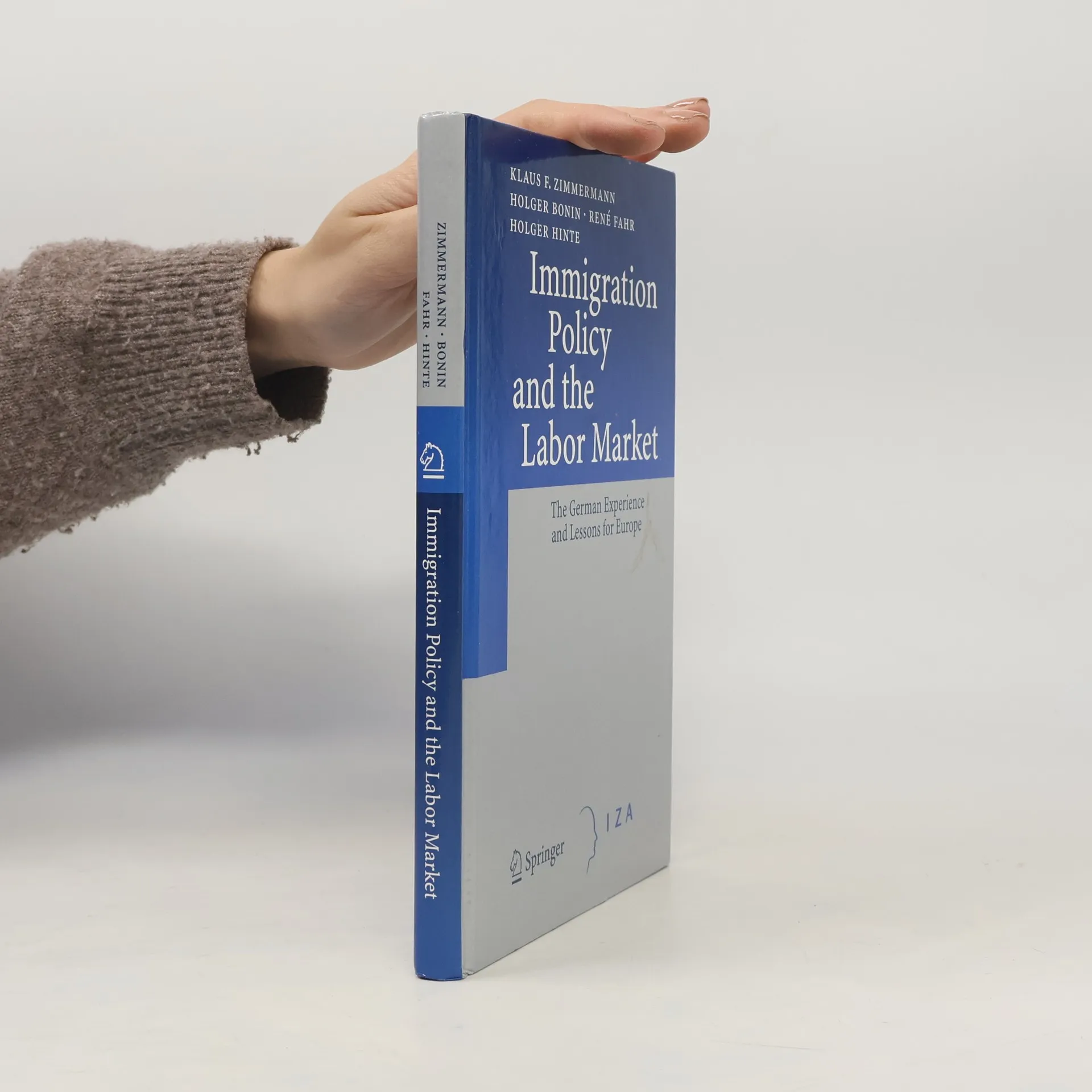
Immigration Policy and the Labor Market
The German Experience and Lessons for Europe
Mehr zum Buch
German and European immigration policies have only recently begun to cope with the inevitable: growing labor demand in the face of high unemployment and a shrinking labor force due to demographic change. Despite the implementation of Germany's first immigration act and several European initiatives towards legal harmonization at the EU level, an actively controlling immigration policy, which would be needed to master the challenges ahead, is not yet in sight. Against this background, the book draws conclusions from the German history of immigration policy. It analyzes the country's future demand for immigration and develops an economic model for the effective selection and integration of labor migrants that could provide the foundation for a joint European immigration strategy.
Buchkauf
Immigration Policy and the Labor Market, Klaus F. Zimmermann, Holger Bonin, Holger Hinte, René Fahr
- Sprache

- Erscheinungsdatum
- 2007
- Einband
- (Hardcover)
Keiner hat bisher bewertet.
- Titel
- Immigration Policy and the Labor Market
- Untertitel
- The German Experience and Lessons for Europe
- Sprache
- Englisch
- Autor*innen
- Klaus F. Zimmermann, Holger Bonin, Holger Hinte, René Fahr
- Verlag
- Springer
- Erscheinungsdatum
- 2007
- Einband
- Hardcover
- Seitenzahl
- 209
- ISBN10
- 354068381X
- ISBN13
- 9783540683810
- Reihe
- Schlagwörter
- Handel
- Beschreibung
- German and European immigration policies have only recently begun to cope with the inevitable: growing labor demand in the face of high unemployment and a shrinking labor force due to demographic change. Despite the implementation of Germany's first immigration act and several European initiatives towards legal harmonization at the EU level, an actively controlling immigration policy, which would be needed to master the challenges ahead, is not yet in sight. Against this background, the book draws conclusions from the German history of immigration policy. It analyzes the country's future demand for immigration and develops an economic model for the effective selection and integration of labor migrants that could provide the foundation for a joint European immigration strategy.