



Mehr zum Buch
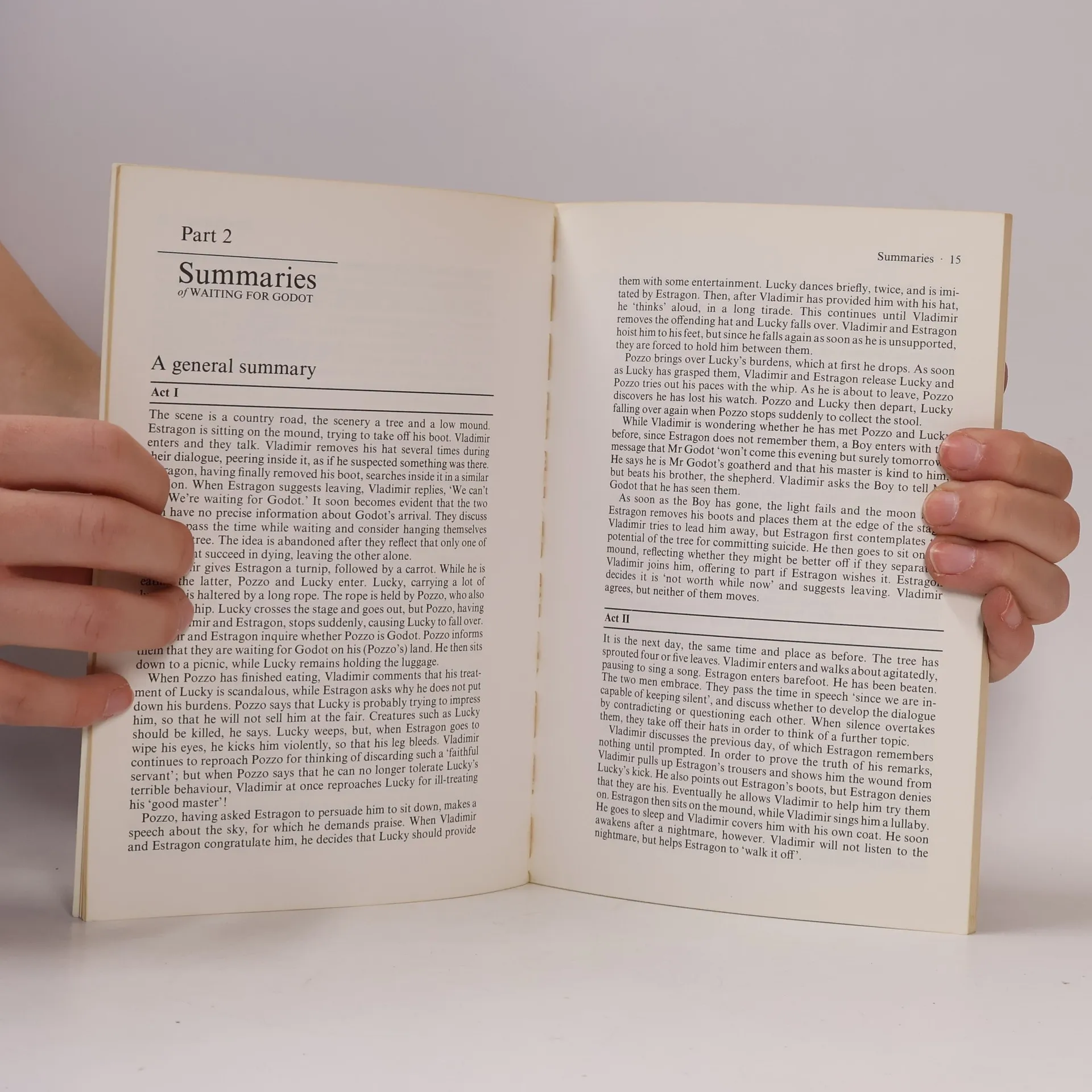
A seminal work of twentieth-century drama, Waiting for Godot was Samuel Beckett's first professionally produced play. It opened in Paris in 1953 at the tiny Left Bank Theatre de Babylone, and has since become a cornerstone of twentieth-century theater. The story line revolves around two seemingly homeless men waiting for someone-or something-named Godot. Vladimir and Estragon wait near a tree on a barren stretch of road, inhabiting a drama spun from their own consciousness. The result is a comical wordplay of poetry, dreamscapes, and nonsense, which has been interpreted as a somber summation of mankind's inexhaustible search for meaning. Beckett's language pioneered an expressionistic minimalism that captured the existentialism of post-World War II Europe. His play remains one of the most magical and beautiful allegories of our time.
Buchkauf
York Notes on Waiting for Godot by Samuel Beckett, S. Bushurui, A. Norman Jeffares, Nicholas Zurbrugg, Rosemary Pountney, Samuel Beckett
- Sprache

- Erscheinungsdatum
- 1988
- Einband
- (Paperback)
Keiner hat bisher bewertet.
- Titel
- York Notes on Waiting for Godot by Samuel Beckett
- Sprache
- Englisch
- Verlag
- York Press
- Erscheinungsdatum
- 1988
- Einband
- Paperback
- Seitenzahl
- 72
- ISBN10
- 0582023181
- ISBN13
- 9780582023185
- Reihe
- Kategorien
- Schlagwörter
- Theater, Existenzialismus
- Beschreibung
- A seminal work of twentieth-century drama, Waiting for Godot was Samuel Beckett's first professionally produced play. It opened in Paris in 1953 at the tiny Left Bank Theatre de Babylone, and has since become a cornerstone of twentieth-century theater. The story line revolves around two seemingly homeless men waiting for someone-or something-named Godot. Vladimir and Estragon wait near a tree on a barren stretch of road, inhabiting a drama spun from their own consciousness. The result is a comical wordplay of poetry, dreamscapes, and nonsense, which has been interpreted as a somber summation of mankind's inexhaustible search for meaning. Beckett's language pioneered an expressionistic minimalism that captured the existentialism of post-World War II Europe. His play remains one of the most magical and beautiful allegories of our time.