

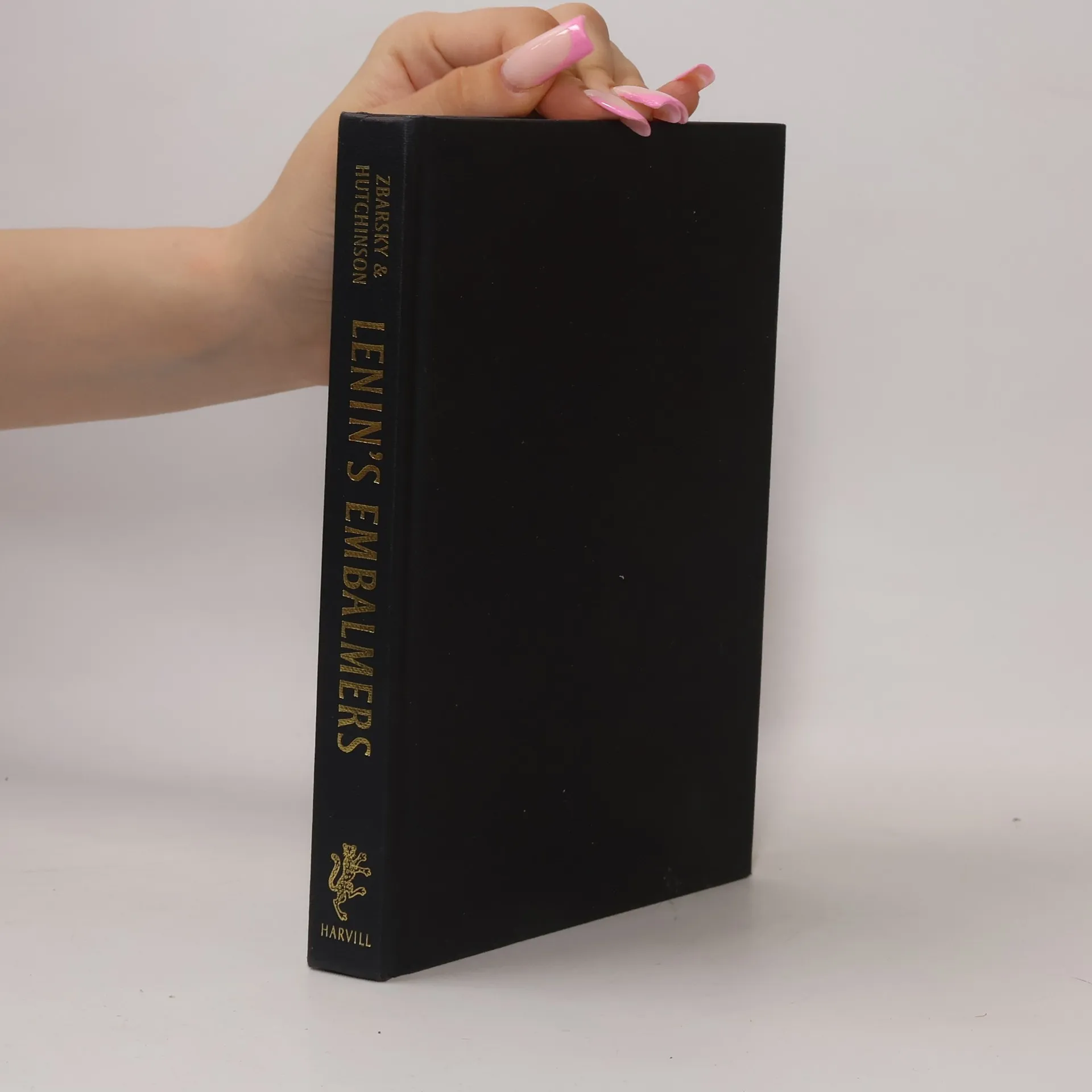
Lenin's Embalmers
Mehr zum Buch
Professor Ilya Zbarski mummified Lenin two months after his death to maintain the Soviet founder's body in perpetuity. Between 1924 and the fall of communism in 1991, hundreds of millions of visitors paid their respects to the embalmed bodies of Lenin and later, Stalin. This text reveals the story of Zbarski, his family and of those who worked in the mausoleum laboratory. Lenin's body was plunged into a secret solution based on glycerine and potassium acetate. This story, unthinkable except in a totalitarian regime, is also that of the burgeoning Soviet Union and those who, disregarding Stalin and his growing antisemitic paranoia, believed that working in the shadows of the mausoleum would protect them forever. Abandoned by the State since 1991, the laboratory can only survive through the patronage of the "nouveaux riches" and the Russian mafia dynasties. The text includes both archival and contemporary photographs.
Buchkauf
Lenin's Embalmers, Barbara Bray, Samuel Hutchinson, I. B. Zbarskiĭ, Ilya Zbarsky
- Sprache

- Erscheinungsdatum
- 1997
- Einband
- (Hardcover)
Keiner hat bisher bewertet.
- Titel
- Lenin's Embalmers
- Sprache
- Englisch
- Autor*innen
- Barbara Bray, Samuel Hutchinson, I. B. Zbarskiĭ, Ilya Zbarsky
- Verlag
- Harvill Press
- Erscheinungsdatum
- 1997
- Einband
- Hardcover
- Seitenzahl
- 215
- ISBN10
- 1860465153
- ISBN13
- 9781860465154
- Reihe
- Kategorien
- Schlagwörter
- Tod, Russland, Russische Geschichte
- Beschreibung
- Professor Ilya Zbarski mummified Lenin two months after his death to maintain the Soviet founder's body in perpetuity. Between 1924 and the fall of communism in 1991, hundreds of millions of visitors paid their respects to the embalmed bodies of Lenin and later, Stalin. This text reveals the story of Zbarski, his family and of those who worked in the mausoleum laboratory. Lenin's body was plunged into a secret solution based on glycerine and potassium acetate. This story, unthinkable except in a totalitarian regime, is also that of the burgeoning Soviet Union and those who, disregarding Stalin and his growing antisemitic paranoia, believed that working in the shadows of the mausoleum would protect them forever. Abandoned by the State since 1991, the laboratory can only survive through the patronage of the "nouveaux riches" and the Russian mafia dynasties. The text includes both archival and contemporary photographs.