



Parameter
- 700 Seiten
- 25 Lesestunden
Mehr zum Buch
The world's first scheduled air service began before World War I with flying boats in Florida, marking the U.S. as a pioneer in air transport using heavier-than-air craft. After the Great War, the U.S. initially lagged behind Europe in commercial air services but eventually established transcontinental air mail routes. From the mid-1920s, passenger airlines emerged, supported by remarkable aircraft like the Ford Tri-Motor, Boeing 247, and Douglas DC-3, solidifying the U.S. as a leader in global air transport. This narrative traces the evolution of U.S. airlines from 1914 to the present, highlighting their role in carrying nearly half of the world's air passengers. Key developments include the exploratory days before the Air Mail Act of 1925, the 1934 Air Mail Scandal, and the impact of the Civil Aeronautics Act of 1938 on the airline industry's framework. It covers various airline categories, including Trunks, Local Service, and International airlines, while detailing the historical development of routes and fleets without excessive statistics. Numerous tables, maps, and charts provide reference, and an essay on airline deregulation, written in 1982, remains relevant today. The interplay of individual initiative, government regulation, competition, and public opinion is explored, alongside the evolution of modern airliners like the Boeing 747, all illustrated by nearly 500 photographs.
Buchkauf
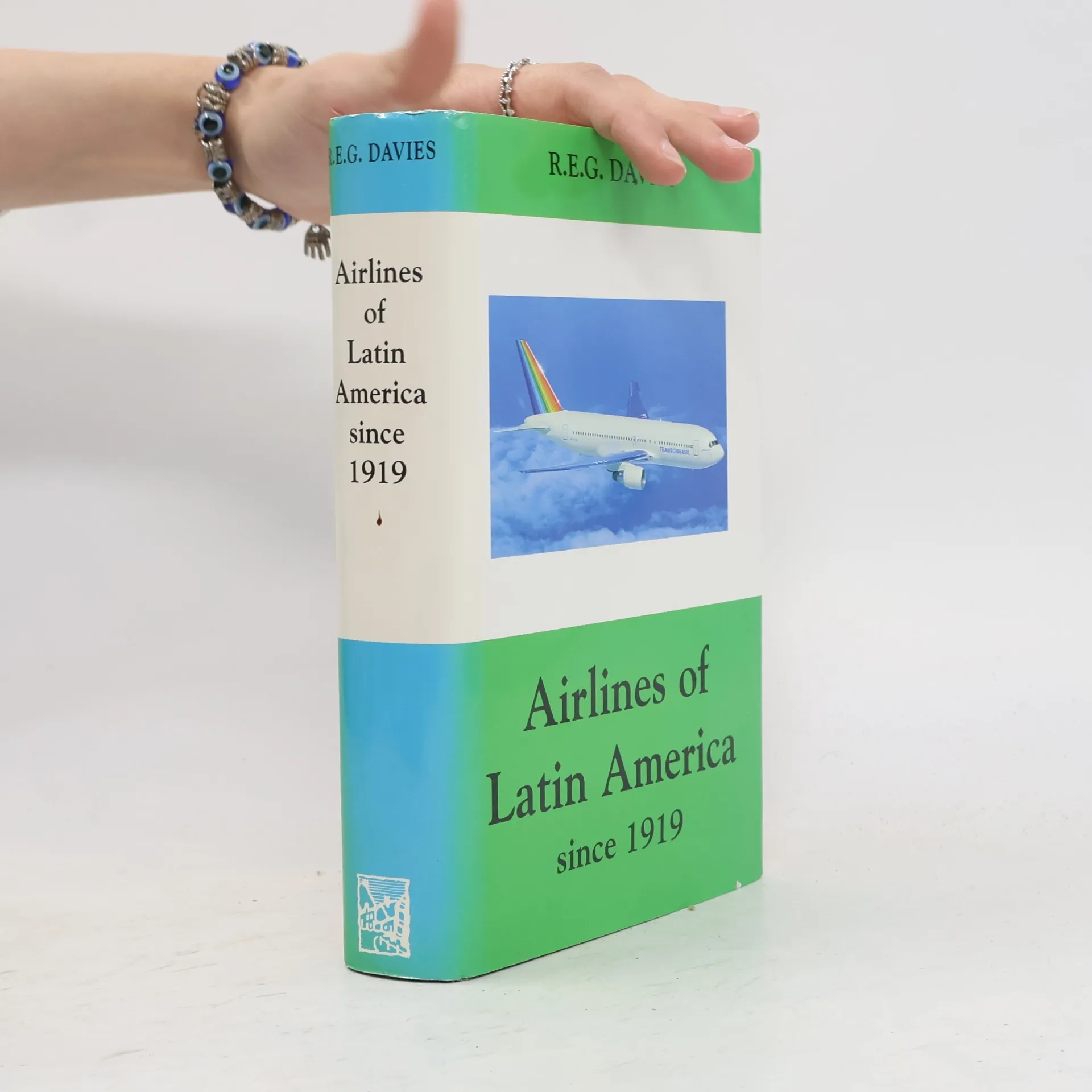
Airlines of Latin America since 1919, Ronald Edward George Davies
- Sprache

- Erscheinungsdatum
- 1997
- Einband
- (Hardcover)
Keiner hat bisher bewertet.
- Titel
- Airlines of Latin America since 1919
- Sprache
- Englisch
- Autor*innen
- Ronald Edward George Davies
- Erscheinungsdatum
- 1997
- Einband
- Hardcover
- Seitenzahl
- 700
- ISBN10
- 1888962038
- ISBN13
- 9781888962031
- Reihe
- Schlagwörter
- Beschreibung
- The world's first scheduled air service began before World War I with flying boats in Florida, marking the U.S. as a pioneer in air transport using heavier-than-air craft. After the Great War, the U.S. initially lagged behind Europe in commercial air services but eventually established transcontinental air mail routes. From the mid-1920s, passenger airlines emerged, supported by remarkable aircraft like the Ford Tri-Motor, Boeing 247, and Douglas DC-3, solidifying the U.S. as a leader in global air transport. This narrative traces the evolution of U.S. airlines from 1914 to the present, highlighting their role in carrying nearly half of the world's air passengers. Key developments include the exploratory days before the Air Mail Act of 1925, the 1934 Air Mail Scandal, and the impact of the Civil Aeronautics Act of 1938 on the airline industry's framework. It covers various airline categories, including Trunks, Local Service, and International airlines, while detailing the historical development of routes and fleets without excessive statistics. Numerous tables, maps, and charts provide reference, and an essay on airline deregulation, written in 1982, remains relevant today. The interplay of individual initiative, government regulation, competition, and public opinion is explored, alongside the evolution of modern airliners like the Boeing 747, all illustrated by nearly 500 photographs.