

Wir senden dir das abgebildete Buch
Mehr zum Buch
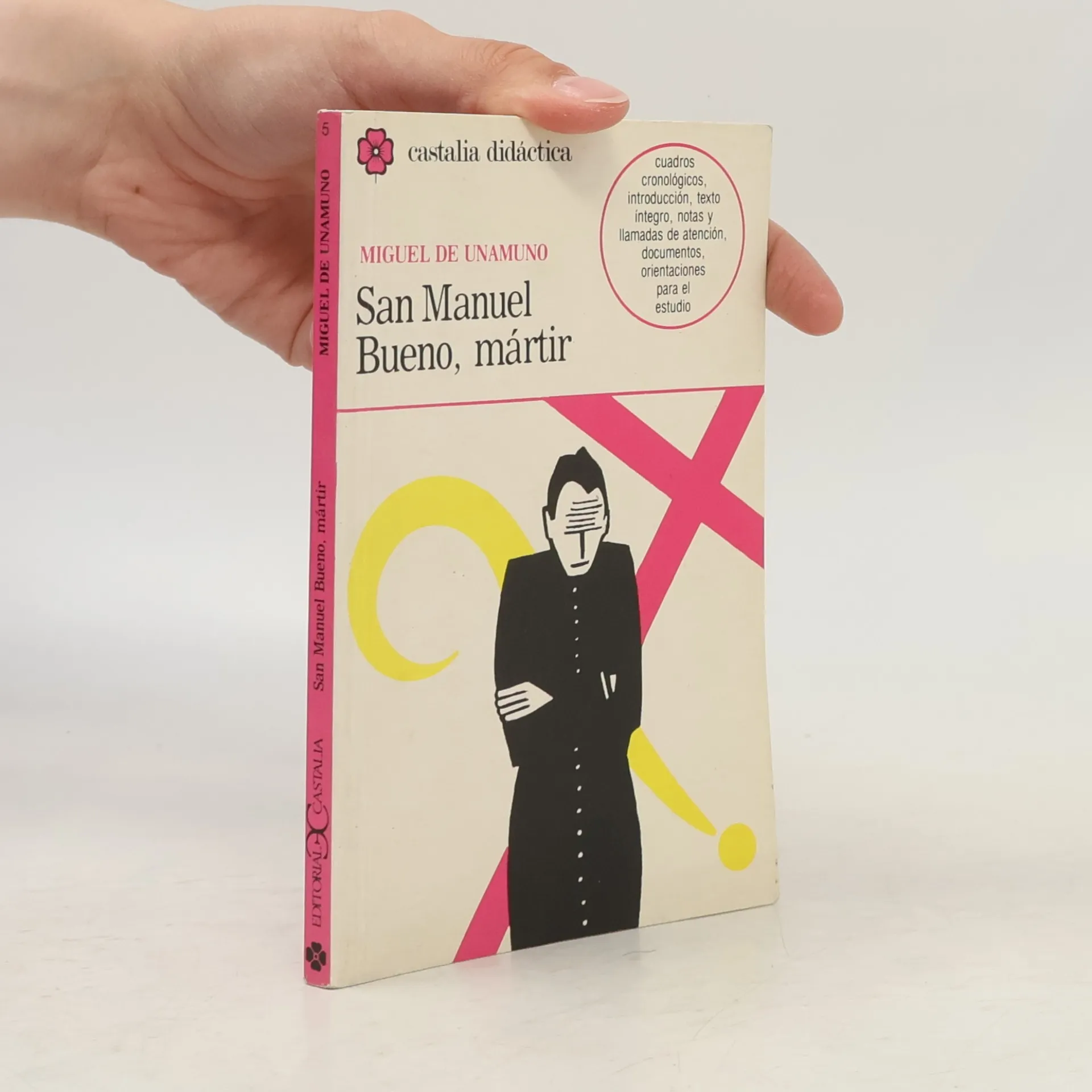
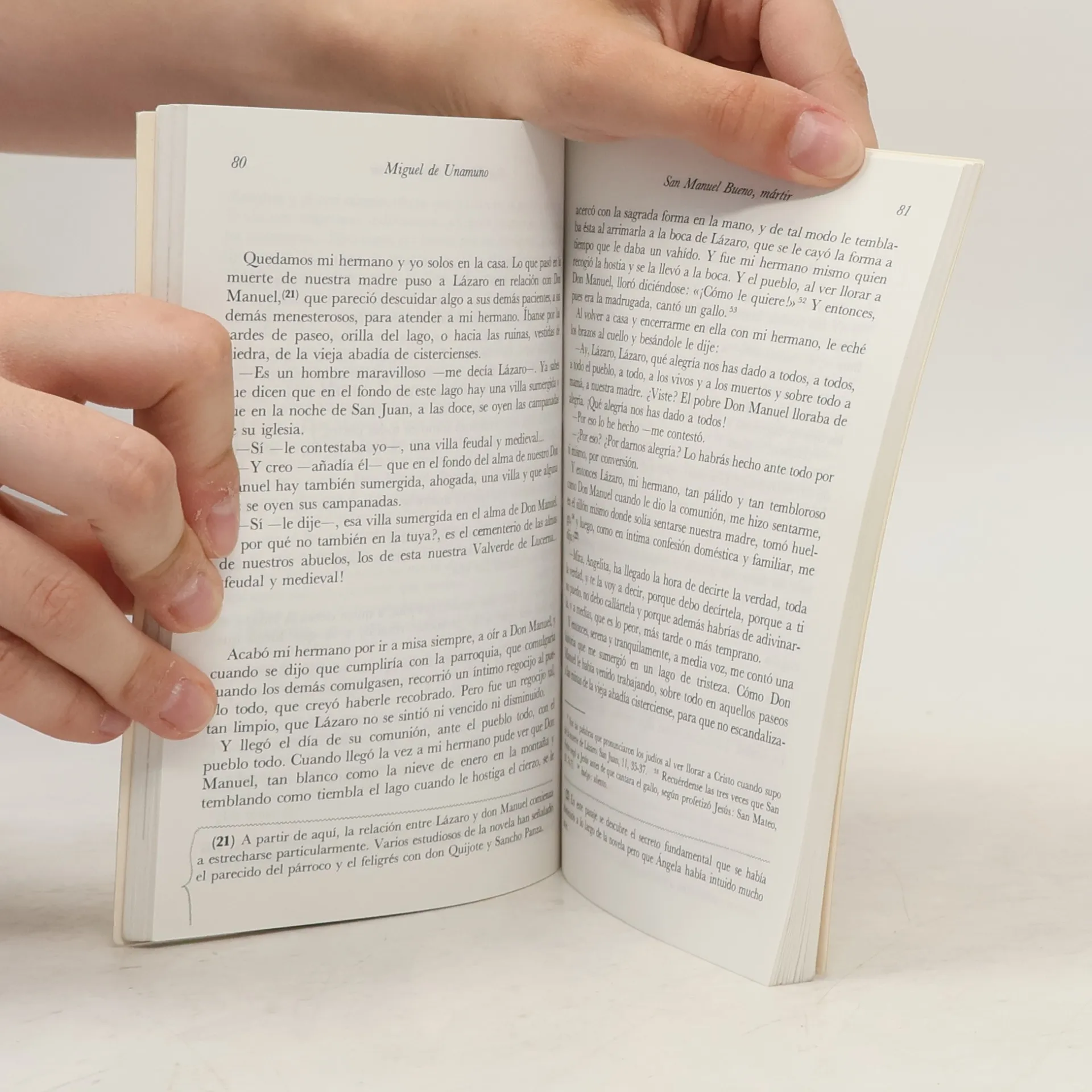
Miguel de Unamuno y Jugo was born in Bilbao on 29th September 1864. He wrote novels, essays, poems and plays, and in addition to these he played an important part in the political and intellectual life of Spain - an involvement that led to his exile to Fuerteventura in 1924. San Manuel Bueno, matir (1930) was his last novel before his death in 1936. It tells the story of a heroic priest who has lost his faith in immortality, a theme that had interested Unamuno for many years. The setting of the novel is atmospheric and significant, the characters shadowy and symbolic. The book overall is a synthesis of Unamuno's philiosophy.
Buchkauf
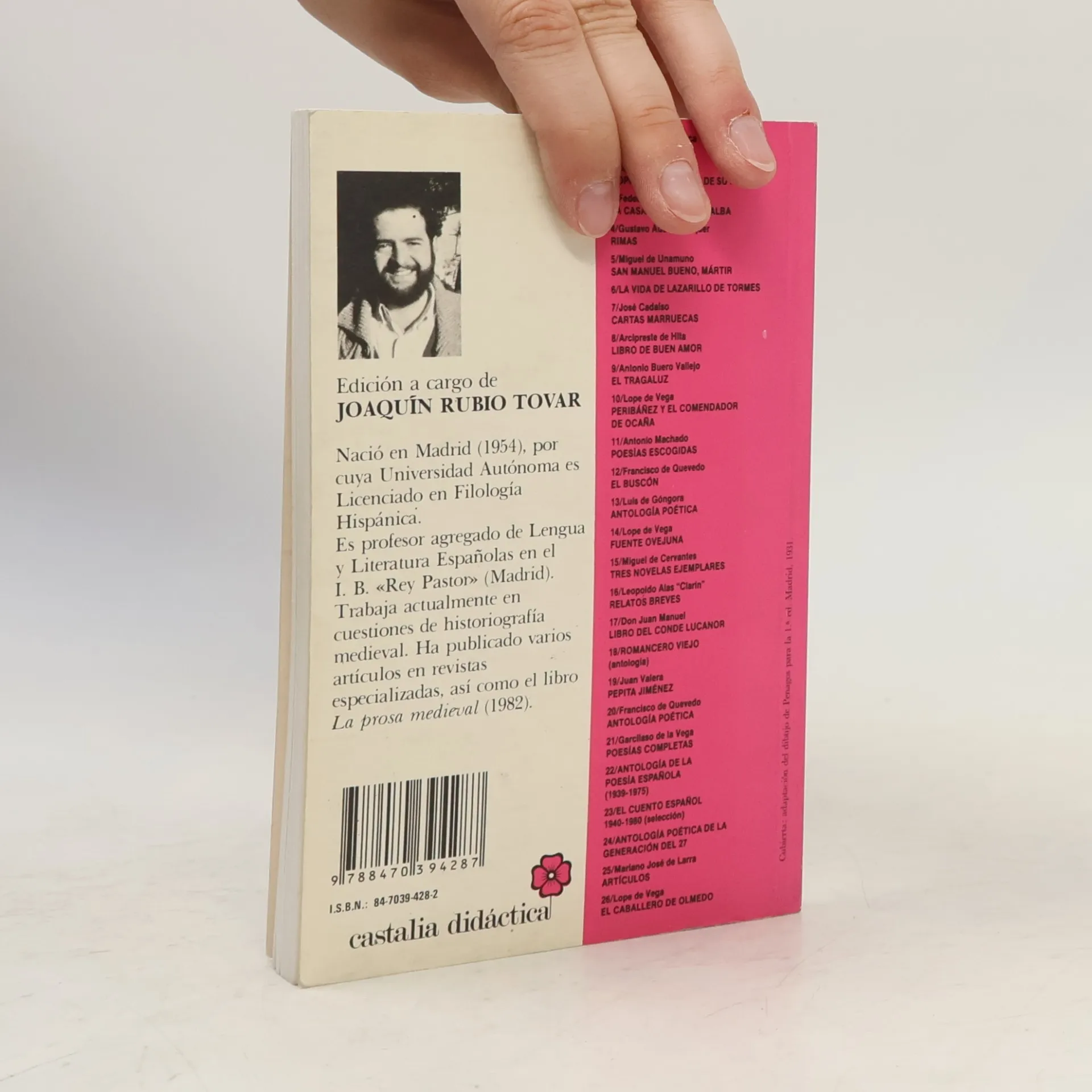
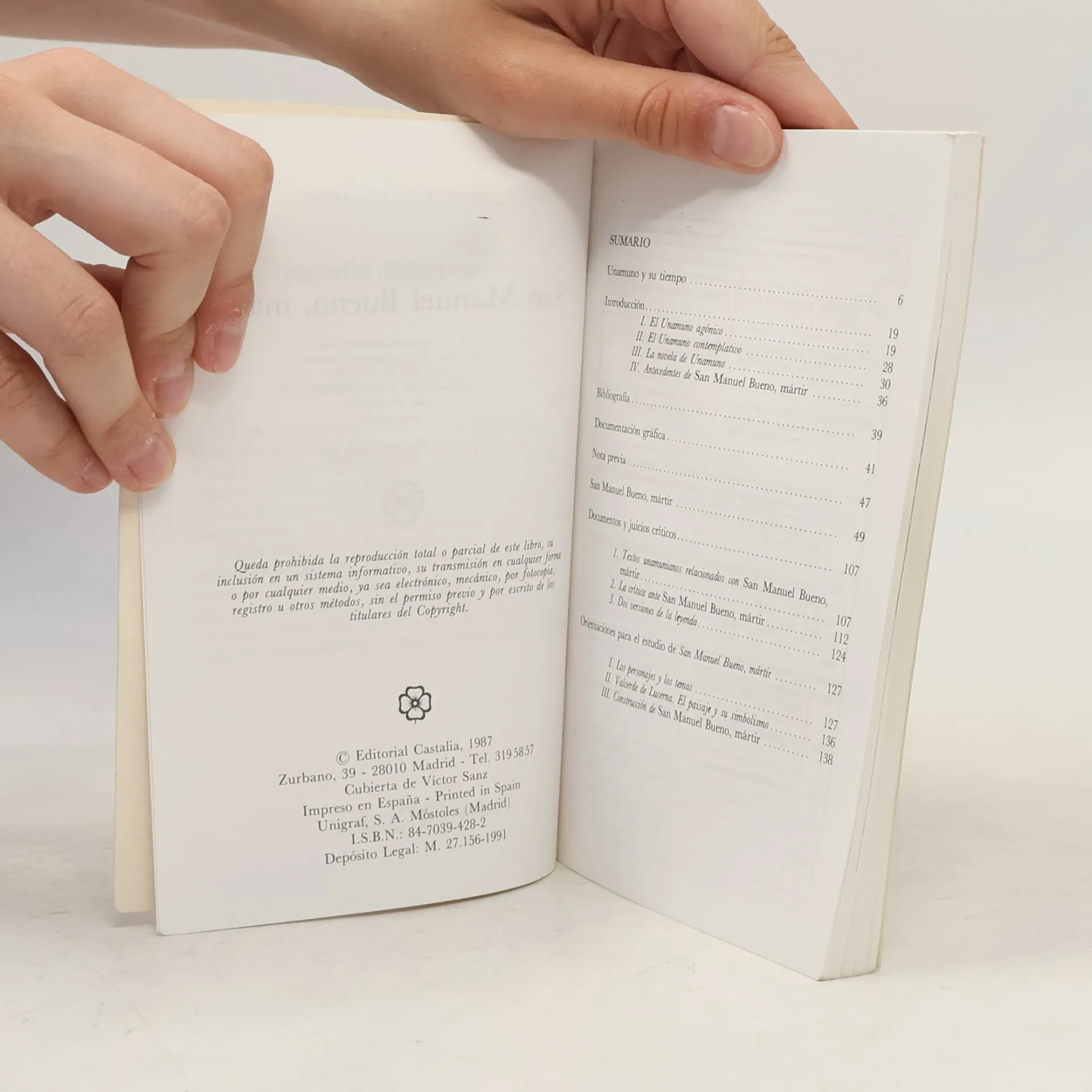
Castalia Didáctica - 5: San Manuel Bueno, Mártir, Miguel de Unamuno, Joaquín Rubio Tovar
- Sprache

- Erscheinungsdatum
- 1984
- Einband
- (Paperback),
- Buchzustand
- Gebraucht - Gut
- Preis
- € 1,59
Kauf dieses Buch für € 1
Keiner hat bisher bewertet.
- Titel
- Castalia Didáctica - 5: San Manuel Bueno, Mártir
- Untertitel
- Cuadros cronológicos, introducción, texto íntegro, notas y llamadas de atención, documentos, orientaciones para el estudio
- Sprache
- Spanisch
- Autor*innen
- Miguel de Unamuno, Joaquín Rubio Tovar
- Verlag
- Castalia
- Erscheinungsdatum
- 1984
- Einband
- Paperback
- Seitenzahl
- 144
- ISBN10
- 8470394282
- ISBN13
- 9788470394287
- Reihe
- Kategorien
- Schlagwörter
- Sammelwerke, Anthologien, Schule, Novellen, Spanien, Spanische Literatur
- Beschreibung
- Miguel de Unamuno y Jugo was born in Bilbao on 29th September 1864. He wrote novels, essays, poems and plays, and in addition to these he played an important part in the political and intellectual life of Spain - an involvement that led to his exile to Fuerteventura in 1924. San Manuel Bueno, matir (1930) was his last novel before his death in 1936. It tells the story of a heroic priest who has lost his faith in immortality, a theme that had interested Unamuno for many years. The setting of the novel is atmospheric and significant, the characters shadowy and symbolic. The book overall is a synthesis of Unamuno's philiosophy.