




Buchbewertung
Mehr zum Buch
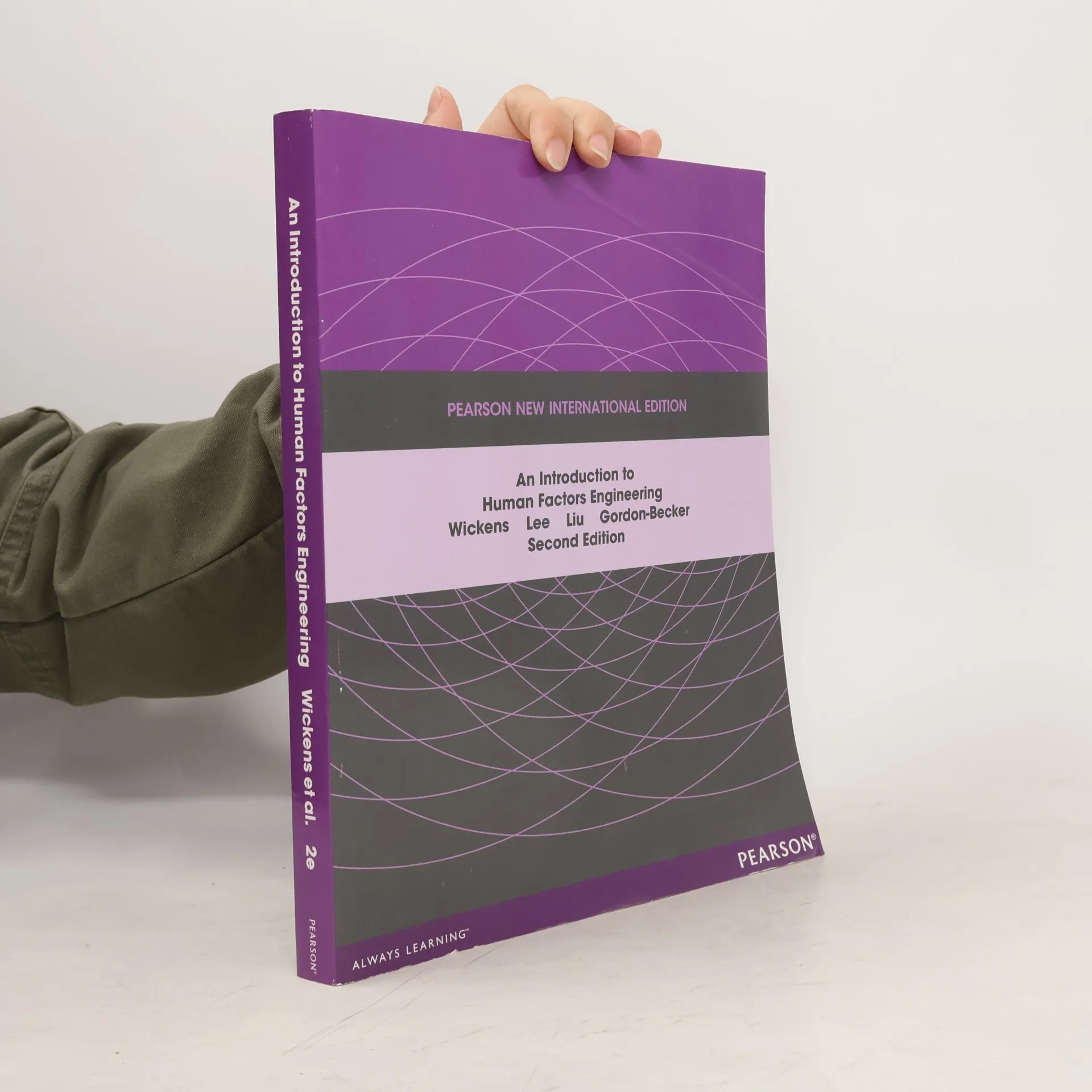
For undergraduate courses in Human-Factors Engineering, Human-Computer Interaction, Engineering Psychology, or Human-Factors Psychology. Offering a somewhat more psychological perspective than other human factors books on the market, this text describes the capabilities and limitations of the human operator-both physical and mental-and how these should be used to guide the design of systems with which people interact. General principles of human-system interaction and design are presented, and included are specific examples of successful and unsuccessful interactions. It links theories of human performance that underlie the principles with real-world experience, without a heavy engineering-oriented perspective.


Buchkauf
Introduction to Human Factors Engineering, Christopher D. Wickens, Sallie E. Gordon-Becker, John Lee, Yili D. Liu
- Sprache

- Erscheinungsdatum
- 2013
- Einband
- (Paperback)
Hier könnte deine Bewertung stehen.
- Titel
- Introduction to Human Factors Engineering
- Untertitel
- Pearson New International Edition - Second Edition
- Sprache
- Englisch
- Autor*innen
- Christopher D. Wickens, Sallie E. Gordon-Becker, John Lee, Yili D. Liu
- Erscheinungsdatum
- 2013
- Einband
- Paperback
- Seitenzahl
- 586
- ISBN10
- 1292022310
- ISBN13
- 9781292022314
- Reihe
- Schlagwörter
- Handbücher und Anleitungen, Maschinenbau
- Bewertung
- 4 von 5 Sternen
- Beschreibung
- For undergraduate courses in Human-Factors Engineering, Human-Computer Interaction, Engineering Psychology, or Human-Factors Psychology. Offering a somewhat more psychological perspective than other human factors books on the market, this text describes the capabilities and limitations of the human operator-both physical and mental-and how these should be used to guide the design of systems with which people interact. General principles of human-system interaction and design are presented, and included are specific examples of successful and unsuccessful interactions. It links theories of human performance that underlie the principles with real-world experience, without a heavy engineering-oriented perspective.