

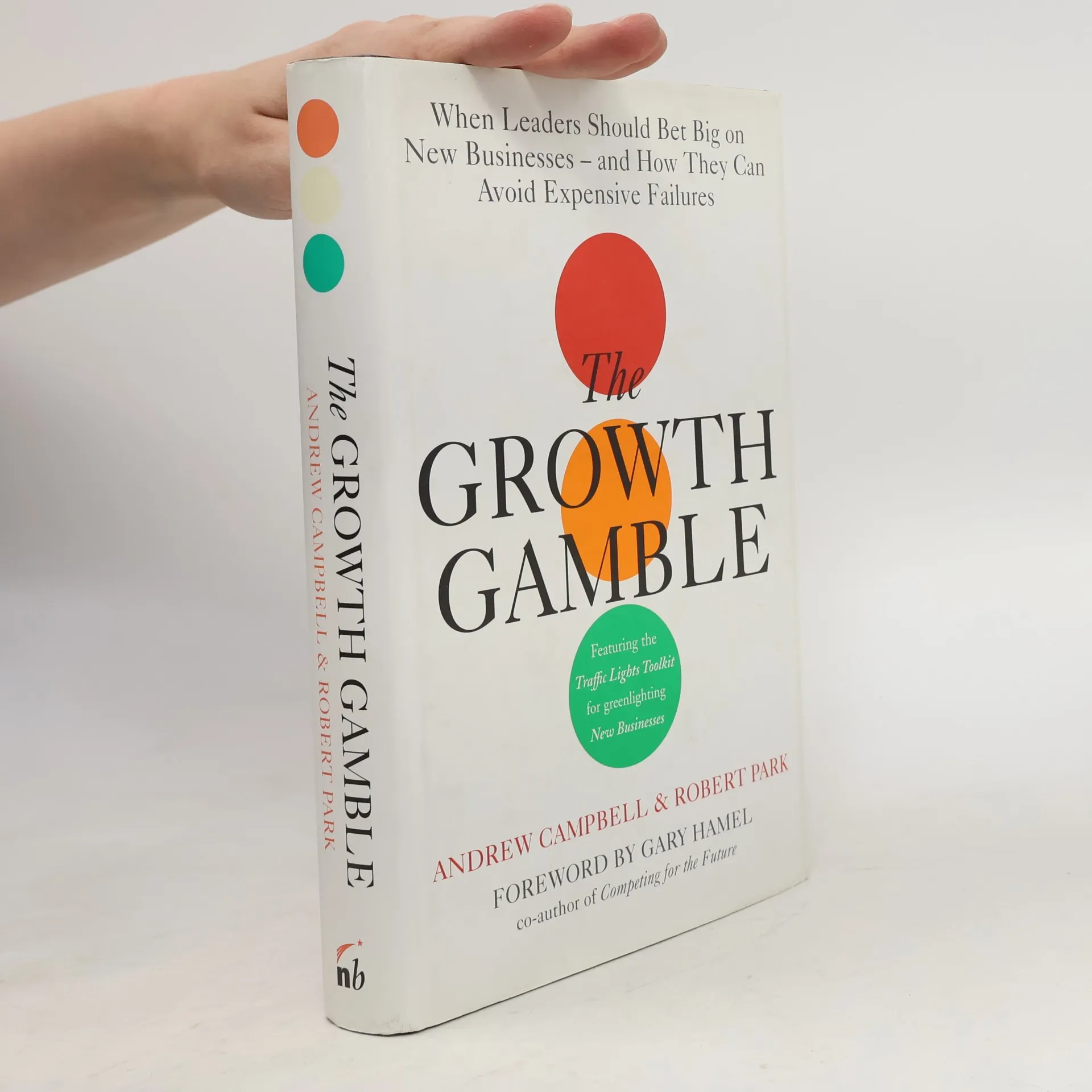
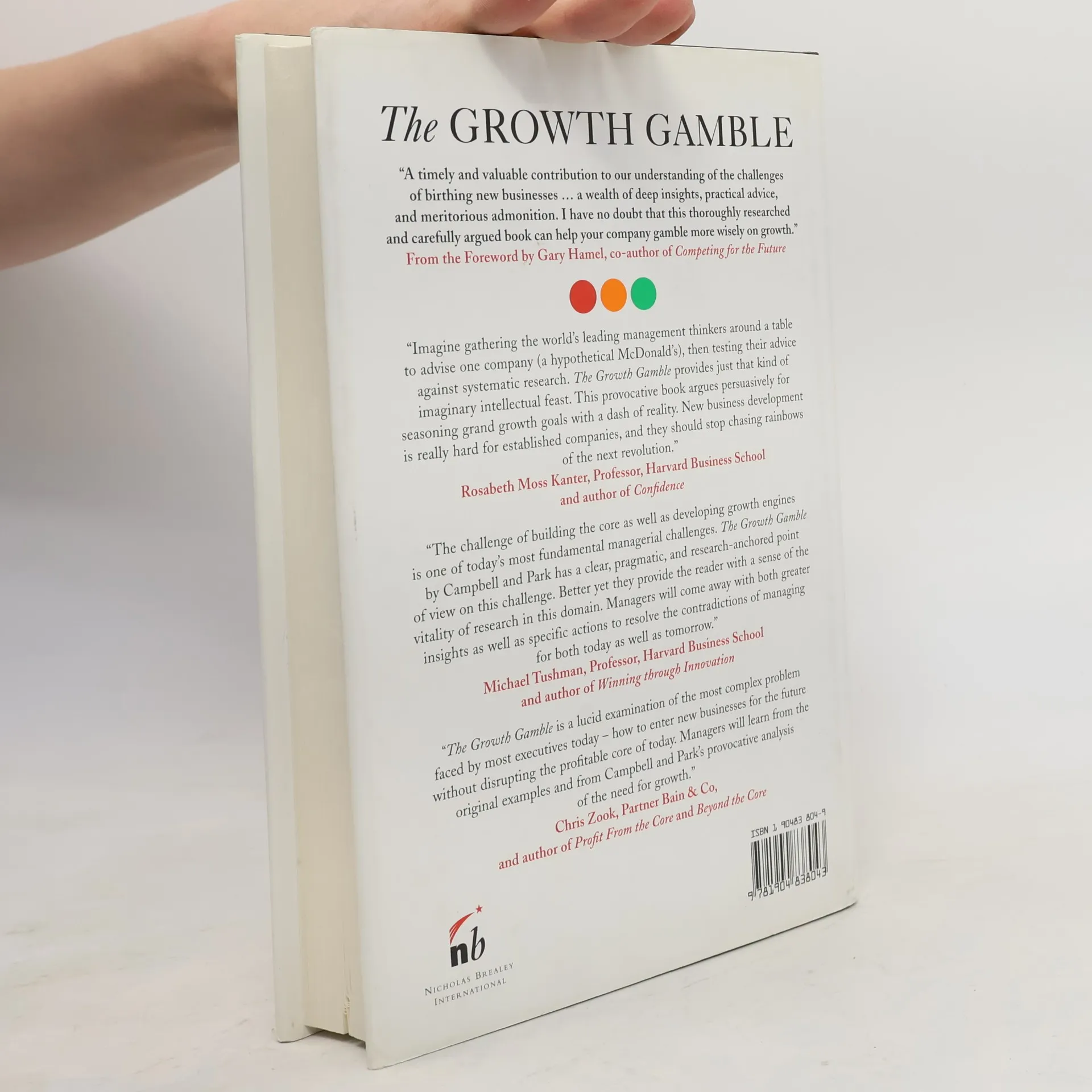

The Growth Gamble
When Leaders Should Bet Big on New Business - and How They Can Avoid Expensive Failures
Autor*innen
Mehr zum Buch
Conventional wisdom tells us to try harder, be more innovative, take more risks - and almost every company tries. Only a tiny percentage of management teams settle for sticking to their core businesses and declining gracefully as their business matures. In reality, at least ninety percent of business attempts fail. Andrew Campbell and Robert Park's The Growth When Leaders Should Bet Big on New Business - and How They Can Avoid Expensive Failures gives managers an alternative. Instead of investing heavily in experimenting with new growth areas and developing an innovative culture, the authors advise managers to be far more selective and to invest in new business only when the opportunity has a high probability of success.
Buchkauf
The Growth Gamble, Gary Hamel, Andrew C. Campbell, Robert Park
- Sprache

- Erscheinungsdatum
- 2005
- Einband
- (Hardcover),
- Buchzustand
- Gebraucht - Gut
- Preis
- € 4,89
Keiner hat bisher bewertet.
- Titel
- The Growth Gamble
- Untertitel
- When Leaders Should Bet Big on New Business - and How They Can Avoid Expensive Failures
- Sprache
- Englisch
- Autor*innen
- Gary Hamel, Andrew C. Campbell, Robert Park
- Erscheinungsdatum
- 2005
- Einband
- Hardcover
- Seitenzahl
- 338
- ISBN10
- 1904838049
- ISBN13
- 9781904838043
- Reihe
- Schlagwörter
- Handel
- Beschreibung
- Conventional wisdom tells us to try harder, be more innovative, take more risks - and almost every company tries. Only a tiny percentage of management teams settle for sticking to their core businesses and declining gracefully as their business matures. In reality, at least ninety percent of business attempts fail. Andrew Campbell and Robert Park's The Growth When Leaders Should Bet Big on New Business - and How They Can Avoid Expensive Failures gives managers an alternative. Instead of investing heavily in experimenting with new growth areas and developing an innovative culture, the authors advise managers to be far more selective and to invest in new business only when the opportunity has a high probability of success.