

Wir senden dir das abgebildete Buch



Mehr zum Buch
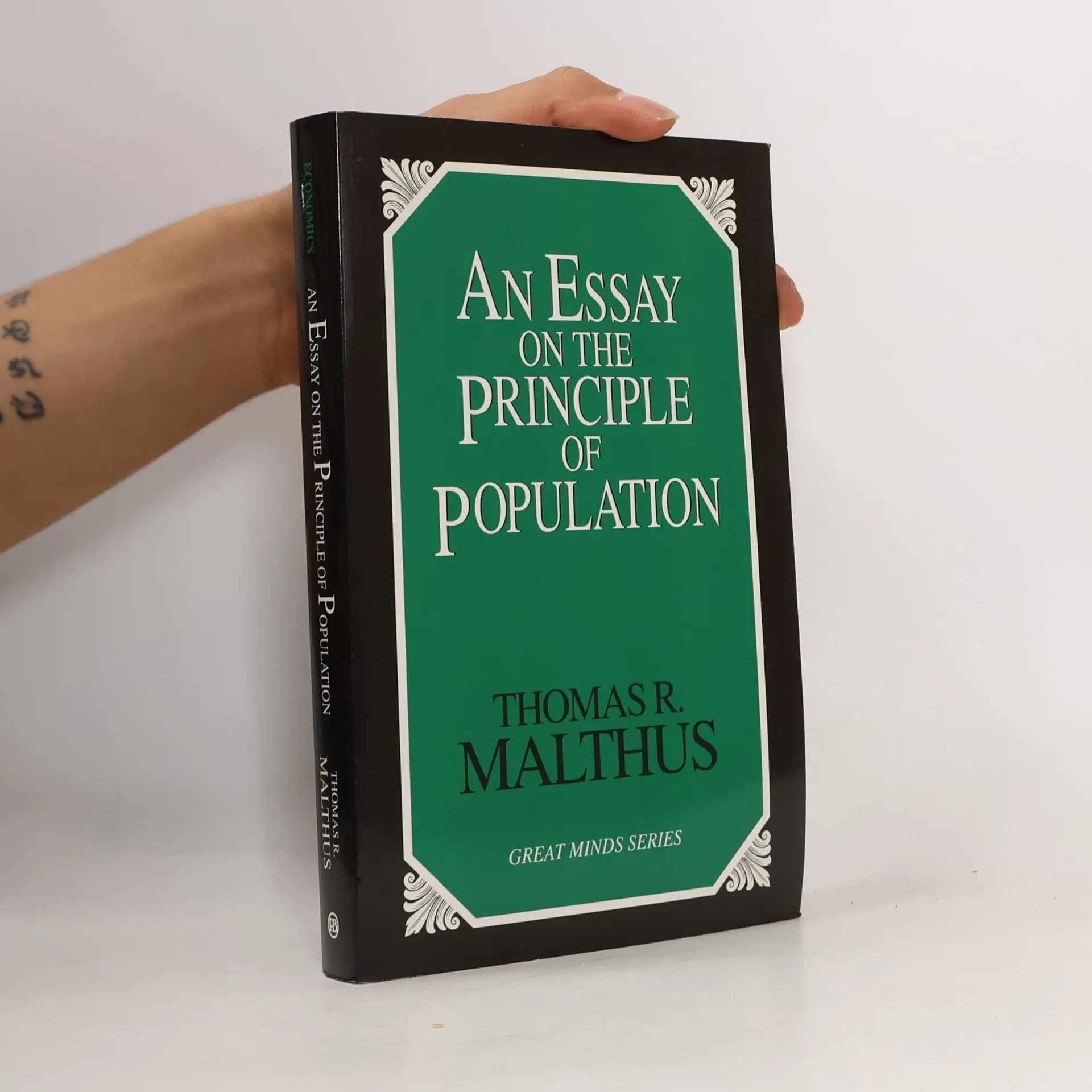
Focusing on the critical theme of population dynamics, the book presents Thomas R. Malthus's argument that unchecked population growth outpaces food supply, leading to dire societal consequences. Through mathematical proofs and scientific evidence, Malthus contends that preventive measures are essential to avoid overcrowding, disease, war, and poverty. His pessimistic outlook on humanity's future sparked significant debate among contemporary optimists and laid foundational ideas that influenced Charles Darwin's research.
Buchkauf
Great Minds Series: An Essay on the Principle of Population, Thomas Robert Malthus
- Sprache

- Erscheinungsdatum
- 1998
- Einband
- (Paperback),
- Buchzustand
- Gebraucht - Sehr gut
- Preis
- € 18,39
Keiner hat bisher bewertet.
- Titel
- Great Minds Series: An Essay on the Principle of Population
- Sprache
- Englisch
- Autor*innen
- Thomas Robert Malthus
- Verlag
- Globe Pequot Press
- Erscheinungsdatum
- 1998
- Einband
- Paperback
- Seitenzahl
- 400
- ISBN10
- 1573922552
- ISBN13
- 9781573922555
- Reihe
- Kategorien
- Schlagwörter
- Historisches Thema, Handel, Natur, Handbücher und Anleitungen, Philosophisches Thema, Politik, Wissenschaft, USA, Gesundheit, Technologie, Bildung, Schule, Gesellschaft, Linguistik, Geschichte Europas, Führung, Finanzen, Politische Theorien, Kultur, Geschichte der USA, Rassismus, Geld, Ethik, Evolution, Soziale Gerechtigkeit, Demokratie, Naturbeobachtung, Marxismus, Genetik, Sozialismus, Kapitalismus, Aufklärung, Regierung, Aktivismus, Kosmologie, Politische Philosophie, Wissenschaftsphilosophie, Atheismus, Liberalismus, Kritisches Denken, Demografie, Kritische Theorie, Bevölkerung
- Beschreibung
- Focusing on the critical theme of population dynamics, the book presents Thomas R. Malthus's argument that unchecked population growth outpaces food supply, leading to dire societal consequences. Through mathematical proofs and scientific evidence, Malthus contends that preventive measures are essential to avoid overcrowding, disease, war, and poverty. His pessimistic outlook on humanity's future sparked significant debate among contemporary optimists and laid foundational ideas that influenced Charles Darwin's research.