


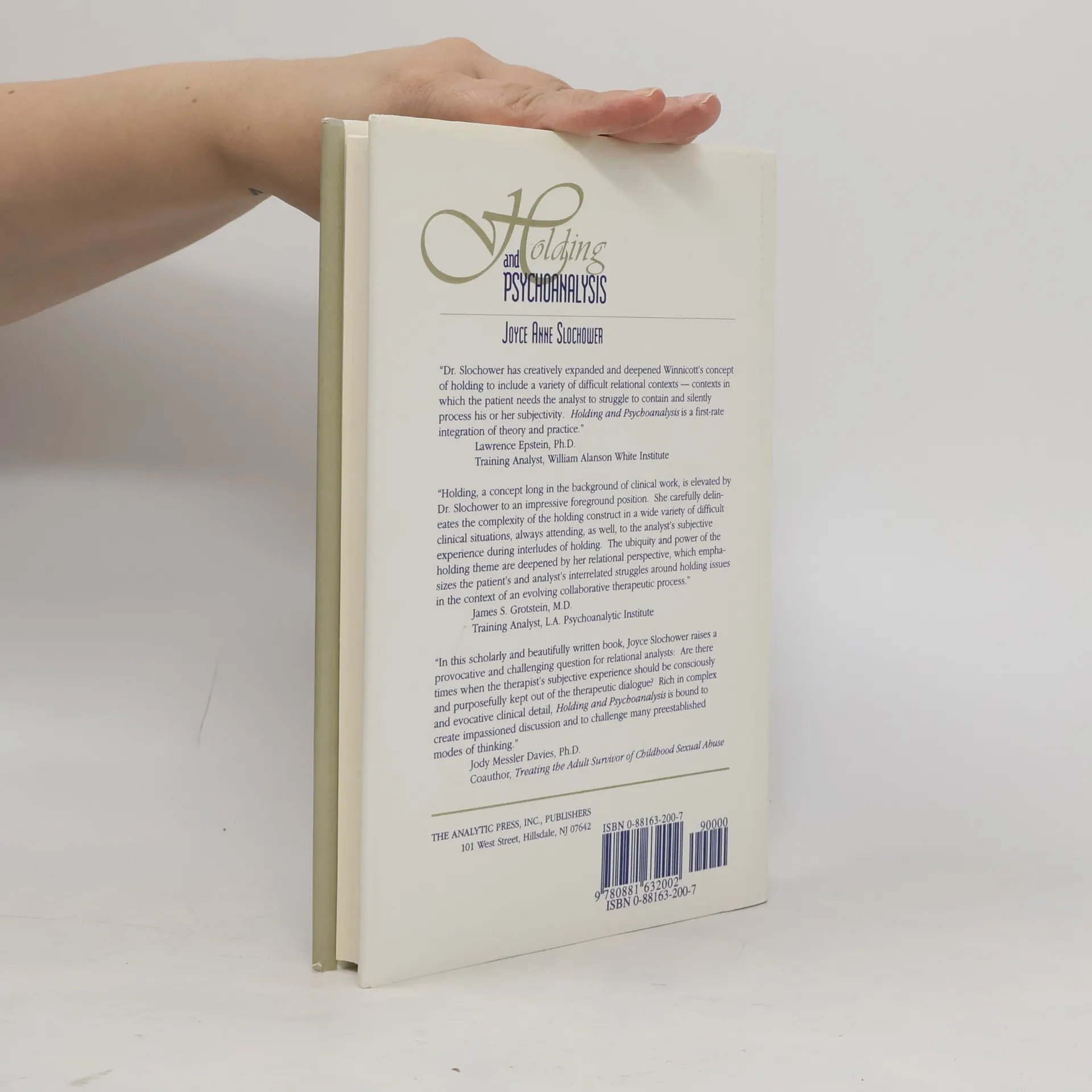

Holding and Psychoanalysis
A Relational Perspective
Autor*innen
Mehr zum Buch
Slochower begins her study by questioning the therapeutic limitations of an interactive style, suggesting that some patients cannot tolerate the analyst's separate subjective presence and instead require a holding experience. This holding function is vital for difficult patients but is relevant for all, influencing both patient and analyst. She emphasizes their co-construction of an essential illusion of analytic attunement during holding moments, which protects the patient from disruptive aspects of the analyst's presence. Through case vignettes, Slochower illuminates the intersubjective aspects of the holding process, including the clinical implications when a holding frame fails. She further explores the therapeutic function of holding in mourning and concludes with a thoughtful examination of the theoretical and clinical limitations of working within a holding process. This work offers a valuable perspective on an essential Winnicottian theme, broadening and deepening our understanding of the analyst's holding function in therapy.
Buchkauf
Holding and Psychoanalysis, Joyce Anne Slochower
- Sprache

- Erscheinungsdatum
- 1996
- Einband
- (Hardcover)
Keiner hat bisher bewertet.
- Titel
- Holding and Psychoanalysis
- Untertitel
- A Relational Perspective
- Sprache
- Englisch
- Autor*innen
- Joyce Anne Slochower
- Verlag
- Routledge
- Erscheinungsdatum
- 1996
- Einband
- Hardcover
- Seitenzahl
- 194
- ISBN10
- 0881632007
- ISBN13
- 9780881632002
- Reihe
- Schlagwörter
- Psychologische Thematik, Psychotherapie, Psychoanalyse
- Beschreibung
- Slochower begins her study by questioning the therapeutic limitations of an interactive style, suggesting that some patients cannot tolerate the analyst's separate subjective presence and instead require a holding experience. This holding function is vital for difficult patients but is relevant for all, influencing both patient and analyst. She emphasizes their co-construction of an essential illusion of analytic attunement during holding moments, which protects the patient from disruptive aspects of the analyst's presence. Through case vignettes, Slochower illuminates the intersubjective aspects of the holding process, including the clinical implications when a holding frame fails. She further explores the therapeutic function of holding in mourning and concludes with a thoughtful examination of the theoretical and clinical limitations of working within a holding process. This work offers a valuable perspective on an essential Winnicottian theme, broadening and deepening our understanding of the analyst's holding function in therapy.