

Der Euro ist weiter instabil, die Ökonomien der Südländer der EU befinden sich am Boden und überall bekommen rechtsextreme Parteien Zulauf. Trotz alledem gilt der eingeschlagene Kurs immer noch als alternativlos. Um dieses Dogma zu überwinden, diskutieren in diesem Band die prononciertesten politischen Philosophen und Ökonomen Europas über die Ursache, den Zustand und die Lösung der Eurokrise. So wirft Varoufakis einen Blick zurück und berichtet anschaulich von seinen Erfahrungen als Finanzminister, wie die Entscheidungen auf höchster Ebene getroffen werden und welche gravierenden Demokratiedefizite die EU prägen, entwirft aber auch einen Reformplan für ein neues Europa. Doch ist eine politische Kehrtwende nach Jahrzehnten siegreichen Neoliberalismus noch einfach so möglich oder hat nicht die Demokratie grundlegenderen Schaden genommen? Der Debattenband versammelt Vorschläge und Einsprüche zur Zukunft Europas und bietet einen Ausgangspunkt für alle, die sich dem falschen Zwang der Alternativlosigkeit nicht ergeben wollen.
Srećko Horvat Bücher
Srećko Horvat ist ein Philosoph, Autor und politischer Aktivist, dessen Werk sich mit Poststrukturalismus, Ideologie und politischer Theorie beschäftigt. Seine Schriften untersuchen oft die Schnittstelle von Filmtheorie und Marxismus und bieten scharfsinnige Einblicke in zeitgenössische soziale und politische Fragen. Horvats Stil zeichnet sich durch intellektuelle Tiefe und einen provokativen Ansatz zur Analyse ideologischer Strukturen aus. Leser werden seine Fähigkeit schätzen, komplexe philosophische Konzepte mit realen politischen Herausforderungen zu verbinden, was ihn zu einer bedeutenden Stimme im gegenwärtigen Diskurs macht.




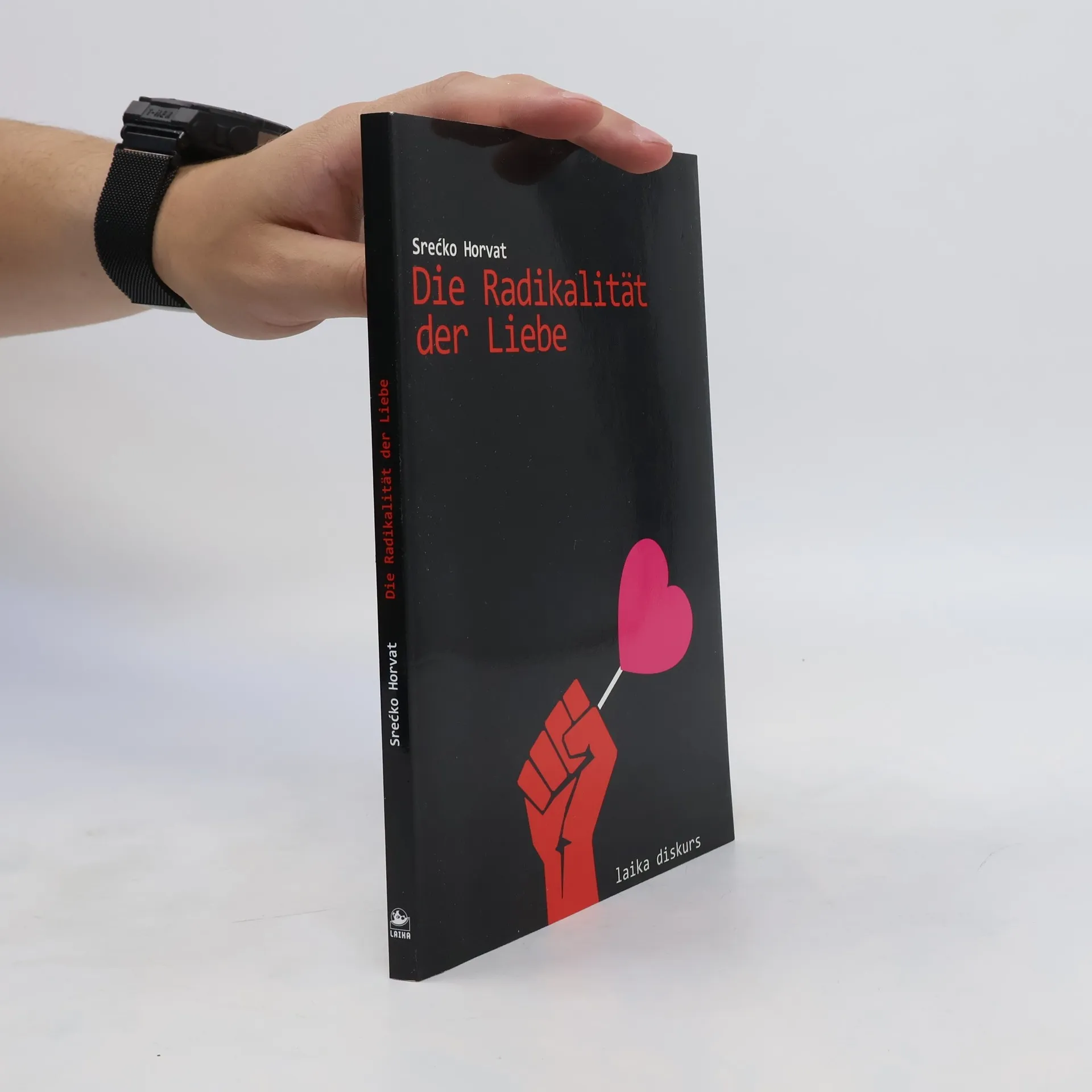

Die Radikalität der Liebe
- 120 Seiten
- 5 Lesestunden
Was würde passieren, wenn wir durch die revolutionäre Geschichte des 20. Jahrhunderts spazieren könnten und, ohne Angst vor den möglichen Antworten, den wichtigsten Protagonisten – von Lenin bis Che Guevara, von Alexandra Kollontai bis Ulrike Meinhof – scheinbar naive Fragen über die Liebe stellten? Die Radikalsten von ihnen, so der kroatische Philosoph Srećko Horvat, fürchteten sie. Obwohl alle wichtigen politischen und sozialen Veränderungen des 20. Jahrhunderts hitzige Debatten über die Rolle der Liebe mit sich brachten, scheint es, als würden wir uns im 21. Jahrhundert mit seinen neuen Technologien des Selbst (Grindr, Tinder, Online-Dating etc.) einer Hyperinflation des Sex, nicht der Liebe gegenübersehen. Dieses Buch versteht sich als Beitrag zu den gegenwärtigen Erhebungen in aller Welt – von Tahrir bis Taksim, von Occupy Wall Street bis Hongkong, von Athen bis Sarajevo – bei denen die Frage der Liebe seltsamerweise, erstaunlicherweise, durch Abwesenheit glänzt.
In a world dominated by capitalism which is dangerously sliding into a new kind of fascism, Srecko Horvat's new book explores the concept of subverting the dominant paradigm in politics, technology and love. Drawing from his own experience of participating in different protest movements all around the world, working closely with WikiLeaks and being one of the protagonists of the Democracy in Europe Movement 2025, Horvat resists the prevailing melancholy of the Left by offering new political imagination beyond traditional concepts. Instead of the tension between horizontal movements or vertical political parties, "Subversion" opts for a radical dialectics of both methods as the only way out of our current deadlock. If there is a crack in everything, the way to use the light that gets in is constructive subversion.
Poetry from the Future
- 192 Seiten
- 7 Lesestunden
'A compelling vision, an urgent necessity, and not beyond reach' Noam Chomsky The past is forgotten, and the future is without hope. Dystopia has become a reality. This is the new normal in our apocalyptic politics - but if we accept it, our helplessness is guaranteed. To bring about real change, argues activist and political philosopher Srecko Horvat, we must first transform our mindset. Ranging through time and space, from the partisan liberation movements of Nazi-occupied Yugoslavia to the contemporary culture, refugee camps and political frontlines of 21st century Europe, Horvat shows that the problems we face today are of an unprecedented nature. To solve them, he argues in this passionate call for a new radical internationalism, we must move beyond existing ways of thinking: beyond borders, national identities and the redundant narratives of the past. Only in this way can we create new models for living and, together, shape a more open and optimistic future.
The Radicality of Love
- 184 Seiten
- 7 Lesestunden
What would happen if we could stroll through the revolutionary history of the 20th century and, without any fear of the possible responses, ask the main protagonists - from Lenin to Che Guevara, from Alexandra Kollontai to Ulrike Meinhof - seemingly naïve questions about love? Although all important political and social changes of the 20th century included heated debates on the role of love, it seems that in the 21st century of new technologies of the self (Grindr, Tinder, online dating, etc.) we are faced with a hyperinflation of sex, not love. By going back to the sexual revolution of the October Revolution and its subsequent repression, to Ches dilemma between love and revolutionary commitment and to the period of 68 (from communes to terrorism) and its commodification in late capitalism, the Croatian philosopher Srecko Horvat gives a possible answer to the question of why it is that the most radical revolutionaries like Lenin or Che were scared of the radicality of love. What is so radical about a seemingly conservative notion of love and why is it anything but conservative? This short book is a modest contribution to the current upheavals around the world - from Tahrir to Taksim, from Occupy Wall Street to Hong Kong, from Athens to Sarajevo - in which the question of love is curiously, surprisingly, absent.
What Does Europe Want?
- 202 Seiten
- 8 Lesestunden
Slavoj Zizek and Srecko Horvat combine their critical clout to emphasize the dangers of ignoring Europe's growing wealth gap and the parallel rise in right-wing nationalism, which is directly tied to the fallout from the ongoing financial crisis and its prescription of imposed austerity.