

Gratis Versand in ganz Österreich
Bookbot

Gottfried Vossen

    Datenbanksysteme in Business, Technologie und Web (BTW)
    The Web at Graduation and Beyond
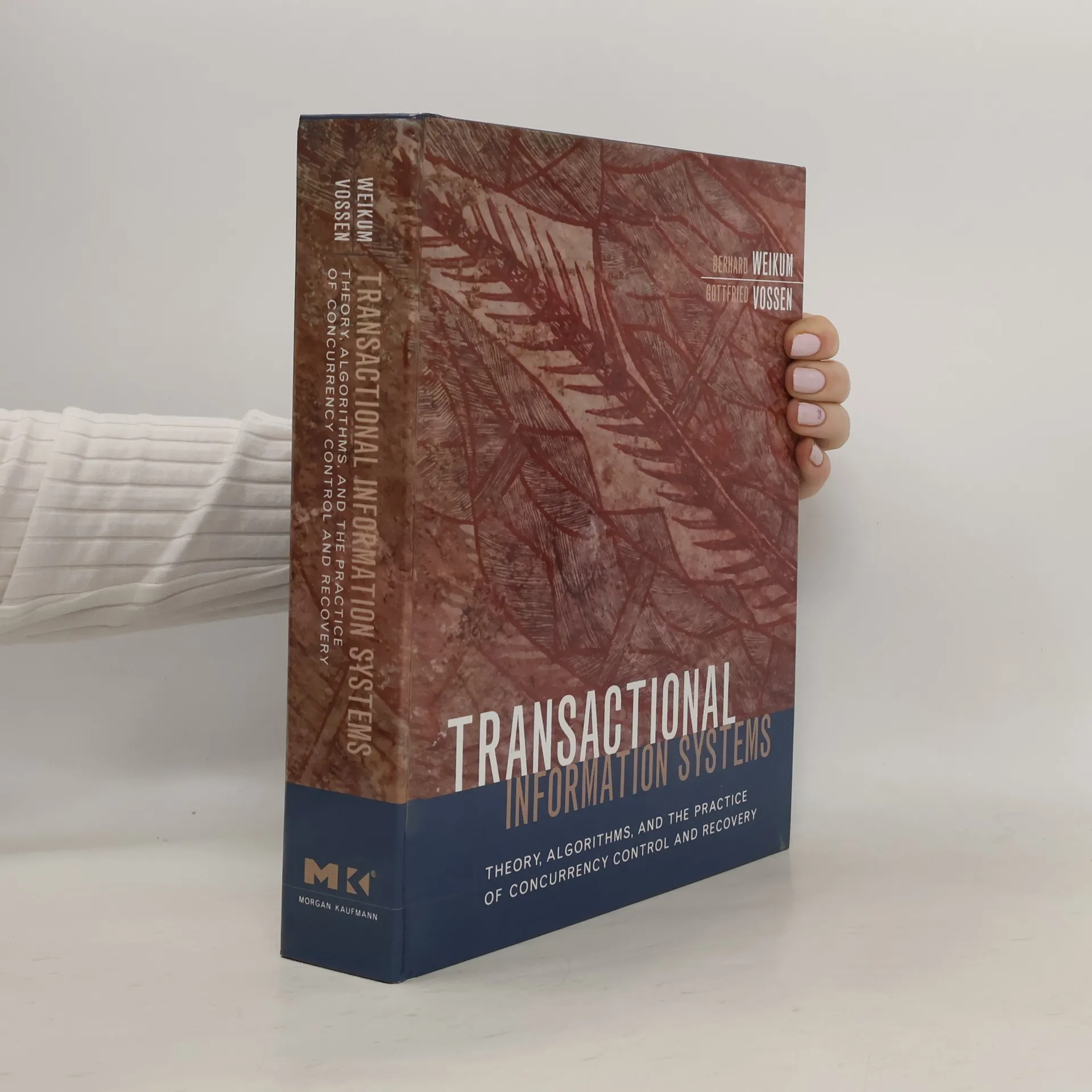
    Transactional Information Systems
    Grundlagen der Transaktionsverarbeitung
    Cloud-Computing für Unternehmen
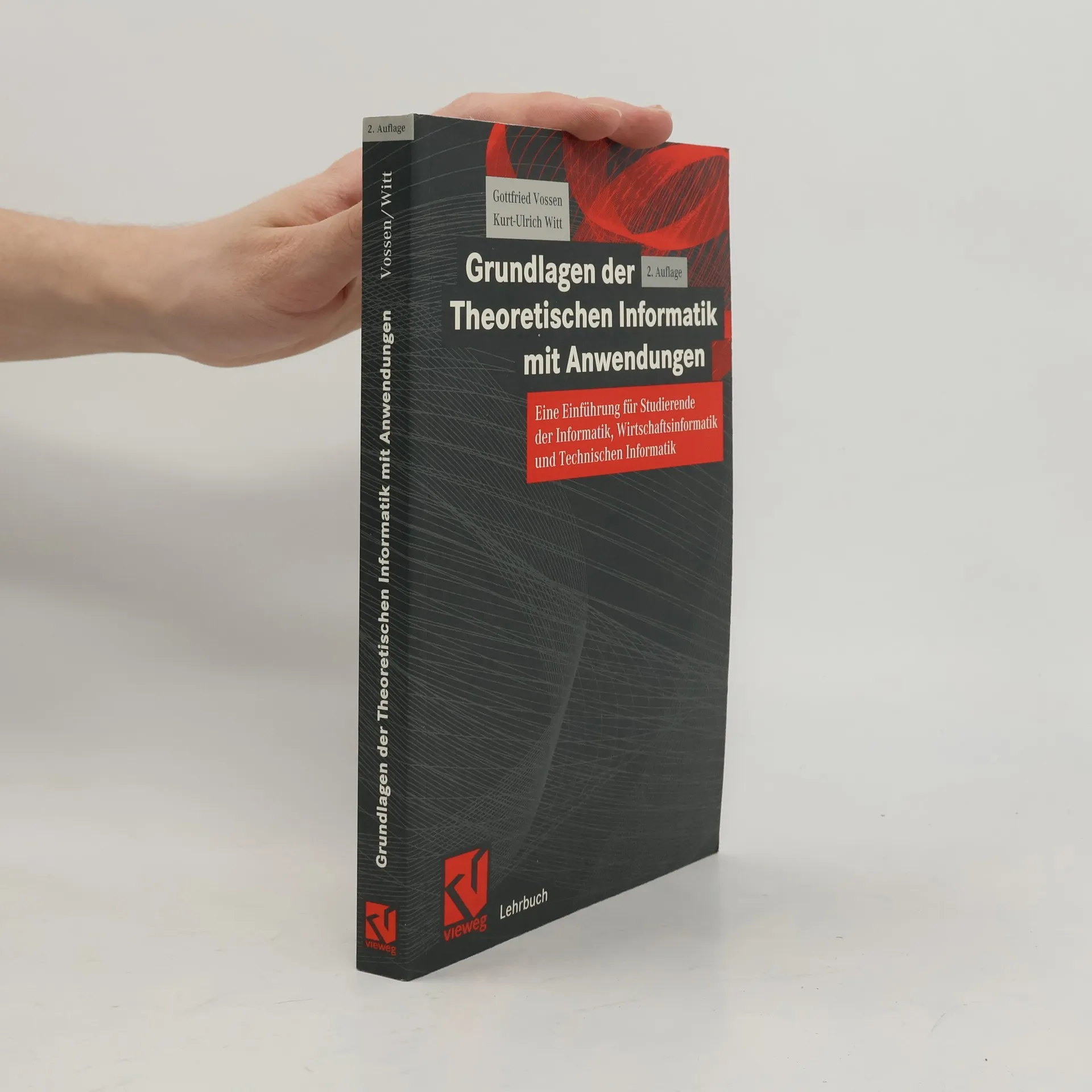
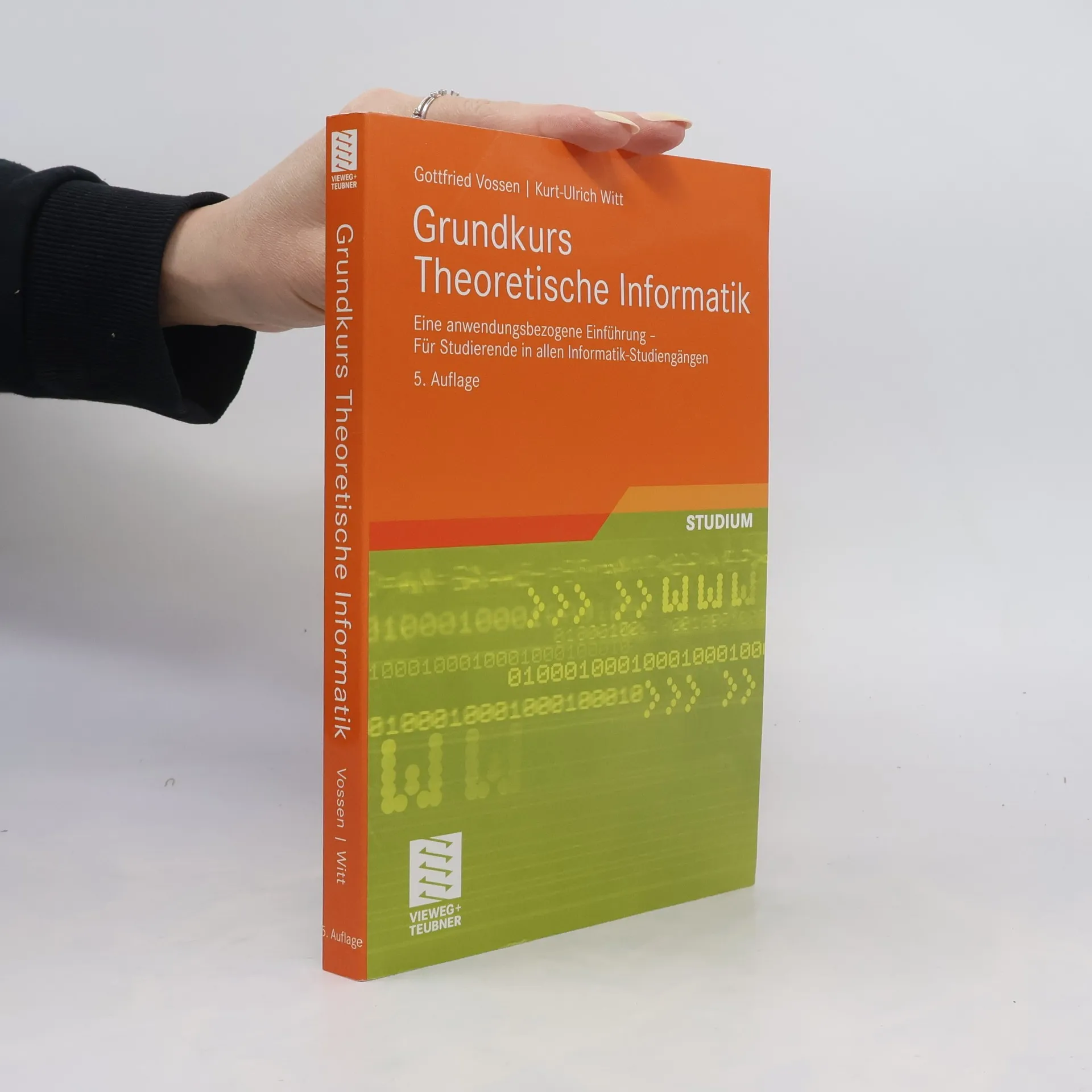
    Grundkurs Theoretische Informatik
    • Grundkurs Theoretische Informatik

      Eine anwendungsbezogene Einführung - Für Studierende in allen Informatik-Studiengängen

      4,4(3)Abgeben

      Diese Theorie-Einführung hat konsequent praktische Anwendungen im Blick. Seien es Workflow-Systeme, Web Services, Verschlüsselung von Informationen, Authentifizierungsprotokolle oder selbstfahrende Autos – all diese Technologien haben enge Bezüge zu den theoretischen Grundlagen der Informatik. So trägt das Buch dazu bei, dass Studierende die Grundlagen der Theoretischen Informatik nicht nur verstehen, sondern auch anwenden können, um effektiv und produktiv an informationstechnischen Problemlösungen mitwirken zu können. Wegen seiner speziellen inhaltlichen und didaktischen Qualität ist das Buch neben dem Einsatz in der Lehre auch für das Selbststudium geeignet.
      Grundkurs Theoretische Informatik
    • Das Buch behandelt die Möglichkeiten und Grenzen von Cloud-Computing und weiteren Cloud-Services im Unternehmen. Es beginnt mit einer kurzen Präsentation der Potenziale und erläutert die technischen Grundlagen der Cloud praxisorientiert und prägnant, ohne fachliche Genauigkeit zu opfern. Auf dieser Basis werden wirtschaftliche und organisatorische Faktoren dargestellt, die für Unternehmen bei der Entscheidung für oder gegen den Einsatz von Cloud-Services relevant sind, einschließlich der Entwicklung einer Cloud-Strategie. Neben betriebswirtschaftlichen Aspekten werden auch rechtliche Fragestellungen rund um Cloud-Sourcing ausführlich behandelt. Ein eigenes Kapitel widmet sich den Sicherheitsfragen in der Cloud. Abschließend bietet das Buch eine Auswahl an kompakten Entscheidungshilfen, die wichtige Aspekte praxisgerecht zusammenfassen. Es richtet sich insbesondere an kleine und mittlere Unternehmen (KMU), die Interesse an Cloud-Computing haben, jedoch zentrale Fragen wie Provider-Auswahl oder Sicherheit offen sind. Der Leser/die Leserin erlernt wichtige Grundlagen für den effektiven Einsatz von Cloud-Services und deren fachkundige Bewertung sowie konkrete Handlungsempfehlungen, die eine hilfreiche Ausgangsbasis für den Schritt „in die Cloud“ darstellen.

      Cloud-Computing für Unternehmen
    • Transactional Information Systems

      Theory, Algorithms, and the Practice of Concurrency Control and Recovery

      • 872 Seiten
      • 31 Lesestunden
      4,4(18)Abgeben

      Focusing on the role of transactional technology in modern economics and science, this comprehensive work addresses critical challenges in transaction processing. It offers insights from leading experts on managing concurrent access by multiple clients, recovering from system failures, and coordinating distributed transactions. The book presents effective techniques essential for practitioners in the field, making it a valuable resource for understanding and navigating the complexities of transactional information systems.

      Transactional Information Systems
    • The Web at Graduation and Beyond

      Business Impacts and Developments

      • 306 Seiten
      • 11 Lesestunden

      This book provides a comprehensive treatment of the rapidly changing world of Web-based business technologies and their often-disruptive innovations. The book describes the most important Web technologies and related business applications, and especially focuses on the business implications of these technologies.

      The Web at Graduation and Beyond
    • Welcome to the tenth anniversary of the International Conference on Web Information Systems Engineering, WISE 2009. This year, the conference continued its tradition, which began in 2000 in Hong Kong and has since traveled globally: 2001 Kyoto, 2002 Singapore, 2003 Rome, 2004 Brisbane, 2005 New York, 2006 Wuhan, 2007 Nancy, and 2008 Auckland. This year, we were pleased to host the event in Poznan, a city of 600,000 in western Poland and the capital of the affluent Wielkopolska province. Poznan has been a significant scientific, cultural, and economic center for over 1,000 years, strategically located on key routes from Paris and Berlin to Warsaw and Moscow, as well as from Scandinavia to the Balkans. The city boasts a vibrant research and university scene, with 140,000 students enrolled in 26 higher education institutions, including the Poznan University of Economics, which has 12,000 students. The WISE 2009 Conference served as a platform for engineers and scientists to showcase their latest research in Web-related technologies and solutions.

      Web information systems engineering