



Mehr zum Buch
Distinguished philosopher Hilary Putnam, who is also a practicing Jew, questions the thought of three major Jewish philosophers of the 20th century―Franz Rosenzweig, Martin Buber, and Emmanuel Levinas―to help him reconcile the philosophical and religious sides of his life. An additional presence in the book is Ludwig Wittgenstein, who, although not a practicing Jew, thought about religion in ways that Putnam juxtaposes to the views of Rosenzweig, Buber, and Levinas. Putnam explains the leading ideas of each of these great thinkers, bringing out what, in his opinion, constitutes the decisive intellectual and spiritual contributions of each of them. Although the religion discussed is Judaism, the depth and originality of these philosophers, as incisively interpreted by Putnam, make their thought nothing less than a guide to life.
Buchkauf
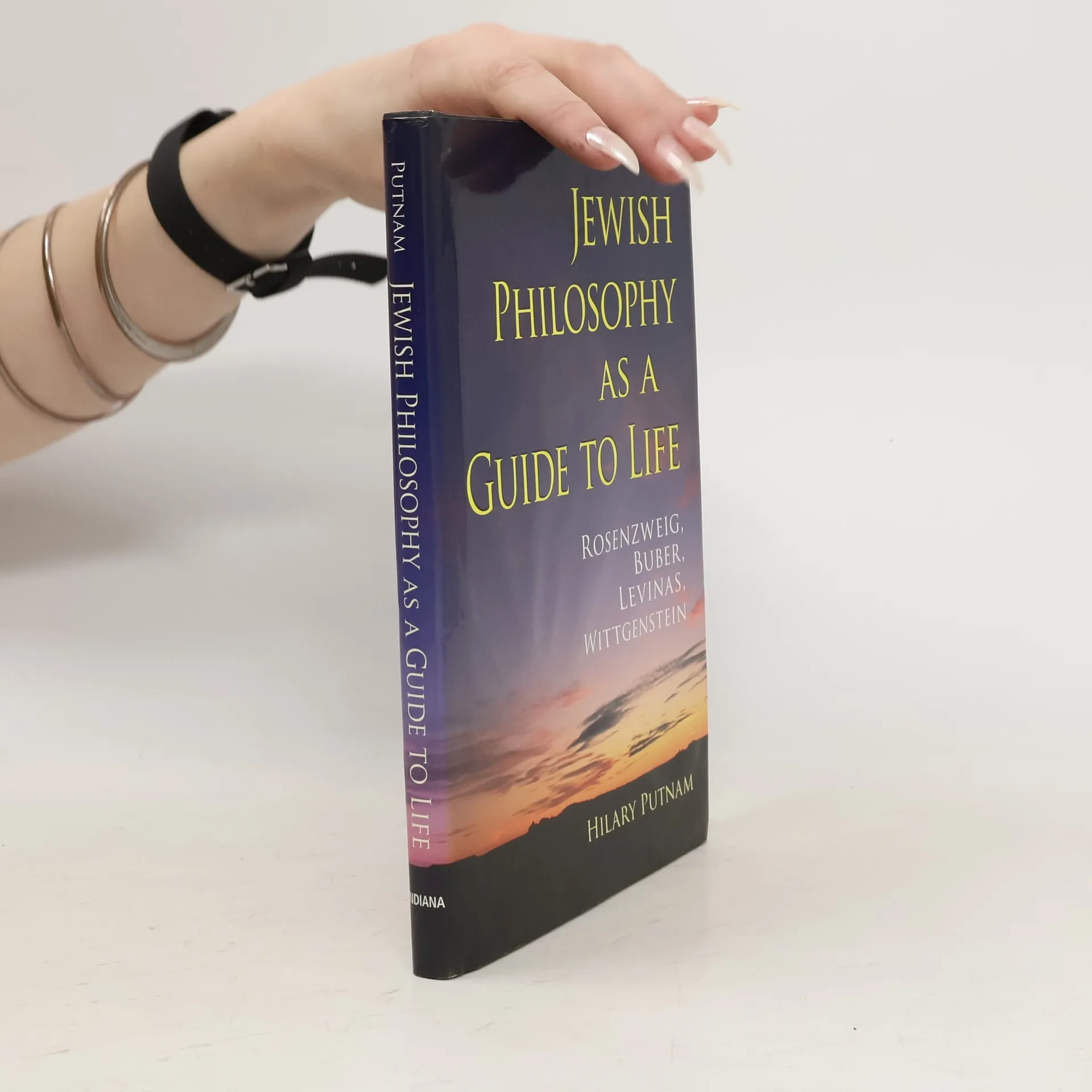
Jewish philosophy as a guide to life, Hilary Putnam
- Sprache

- Erscheinungsdatum
- 2008
- Einband
- (Hardcover)
Hier könnte deine Bewertung stehen.
- Titel
- Jewish philosophy as a guide to life
- Sprache
- Englisch
- Autor*innen
- Hilary Putnam
- Verlag
- Indiana University Press
- Erscheinungsdatum
- 2008
- Einband
- Hardcover
- Seitenzahl
- 120
- ISBN10
- 0253351332
- ISBN13
- 9780253351333
- Reihe
- Schlagwörter
- Religiöse Themen, Philosophisches Thema, Spiritualität, Theologie, Juden
- Bewertung
- 3,8 von 5 Sternen
- Beschreibung
- Distinguished philosopher Hilary Putnam, who is also a practicing Jew, questions the thought of three major Jewish philosophers of the 20th century―Franz Rosenzweig, Martin Buber, and Emmanuel Levinas―to help him reconcile the philosophical and religious sides of his life. An additional presence in the book is Ludwig Wittgenstein, who, although not a practicing Jew, thought about religion in ways that Putnam juxtaposes to the views of Rosenzweig, Buber, and Levinas. Putnam explains the leading ideas of each of these great thinkers, bringing out what, in his opinion, constitutes the decisive intellectual and spiritual contributions of each of them. Although the religion discussed is Judaism, the depth and originality of these philosophers, as incisively interpreted by Putnam, make their thought nothing less than a guide to life.