

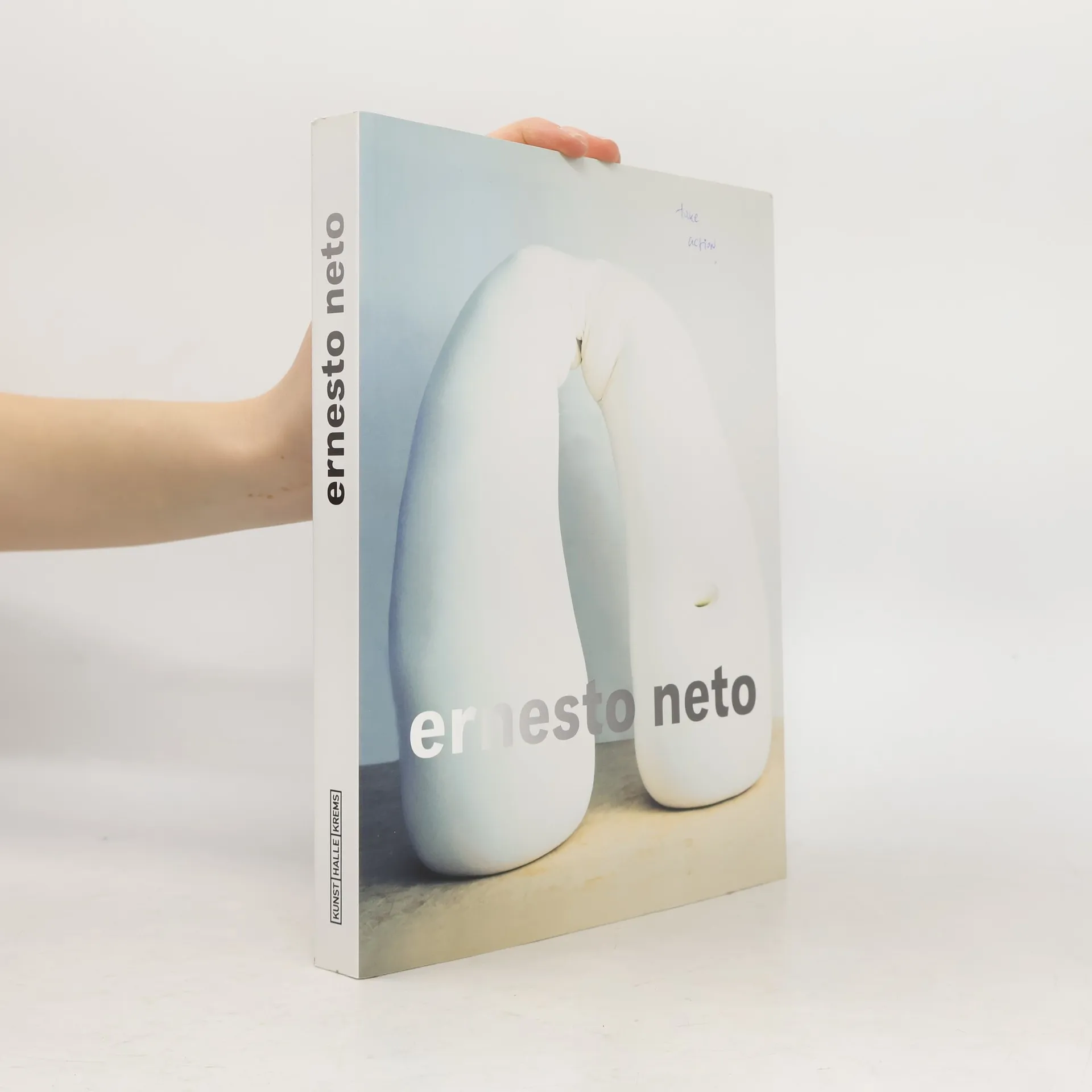
Ernesto Neto
Parameter
- 192 Seiten
- 7 Lesestunden
Mehr zum Buch
I am sculpture and think as sculpture, said Brazilian artist Ernesto Neto (born 1964). Neto aims to create an equally absorbing, boundary-blurring experience for his audiences, soliciting interaction and multisensory engagement from viewers of his engrossing biomorphic sculptural environments; he seeks nothing less than to create and to tap into a universal language of the senses. Ernesto Neto , published to accompany an exhibition-cum-Gesamtkunstwerk at the Kunsthalle Krems, is conceived as a retrospective and an opportunity to offer new insights into Neto’s biosculptural cosmos of sensuousness, intimacy and interrelationships (both human and material). Particular attention is paid in this volume to the roots of Neto’s work in the art history and culture of Brazil, from the Neo-Concrete art of Lygia Clark and Hélio Oiticica to the Tropicália theater, poetry and music of the late 1960s.
Buchkauf
Ernesto Neto, Thomas Mießgang, Ernesto Neto, Verena Gamper, Hans-Peter Wipplinger
- Sprache

- Erscheinungsdatum
- 2015
- Einband
- (Paperback)
Keiner hat bisher bewertet.
- Titel
- Ernesto Neto
- Sprache
- Deutsch
- Autor*innen
- Thomas Mießgang, Ernesto Neto, Verena Gamper, Hans-Peter Wipplinger
- Verlag
- Kunsthalle
- Erscheinungsdatum
- 2015
- Einband
- Paperback
- Seitenzahl
- 192
- ISBN10
- 390126163X
- ISBN13
- 9783901261633
- Reihe
- Kategorien
- Schlagwörter
- Bildende Kunst, Kunstgeschichte, Bildhauerkunst, Brasilien
- Beschreibung
- I am sculpture and think as sculpture, said Brazilian artist Ernesto Neto (born 1964). Neto aims to create an equally absorbing, boundary-blurring experience for his audiences, soliciting interaction and multisensory engagement from viewers of his engrossing biomorphic sculptural environments; he seeks nothing less than to create and to tap into a universal language of the senses. Ernesto Neto , published to accompany an exhibition-cum-Gesamtkunstwerk at the Kunsthalle Krems, is conceived as a retrospective and an opportunity to offer new insights into Neto’s biosculptural cosmos of sensuousness, intimacy and interrelationships (both human and material). Particular attention is paid in this volume to the roots of Neto’s work in the art history and culture of Brazil, from the Neo-Concrete art of Lygia Clark and Hélio Oiticica to the Tropicália theater, poetry and music of the late 1960s.