

Mehr zum Buch
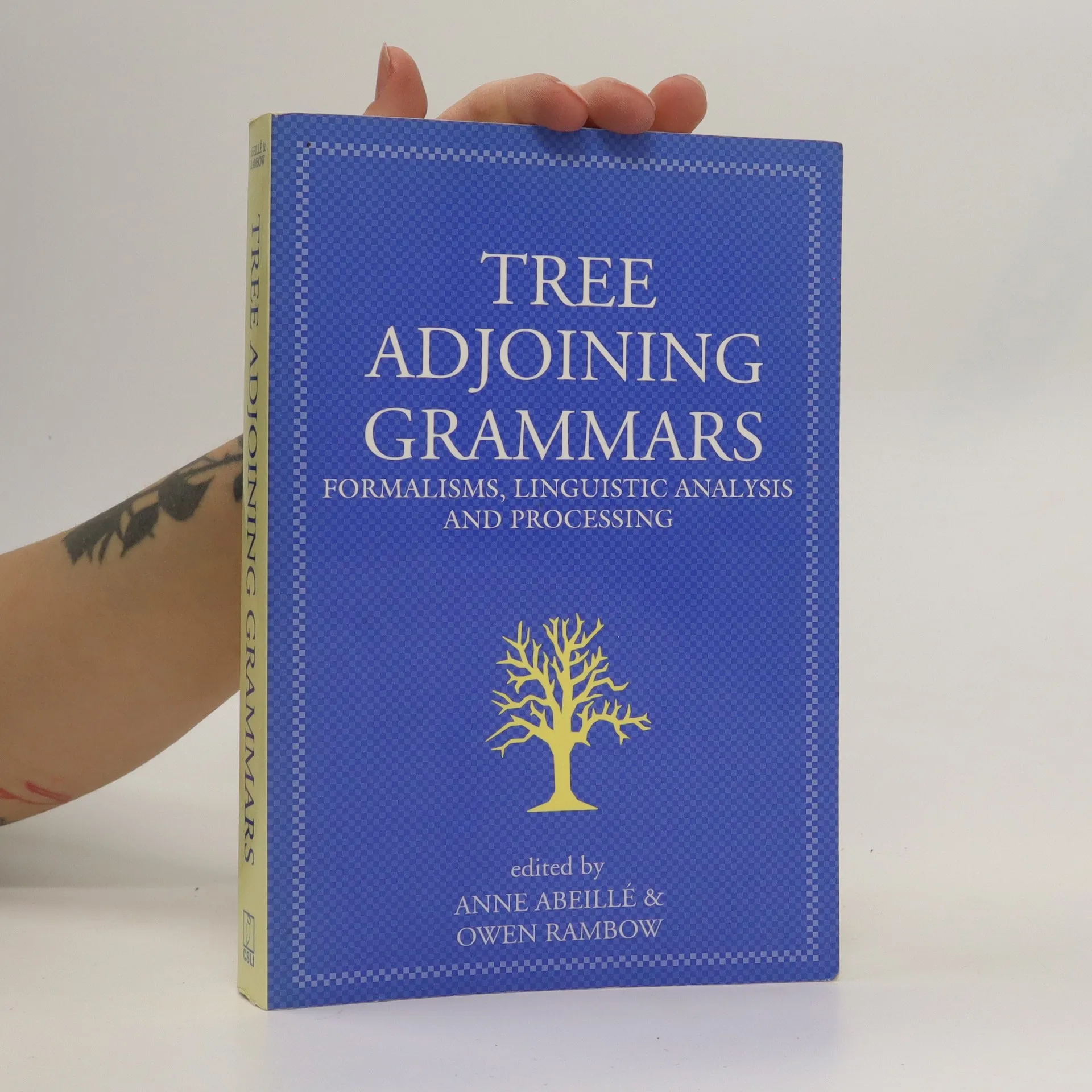
Researchers in theoretical linguistics, psycholinguistics, cognitive science, and in natural language processing have recently converged on a collective insight: formalizing the syntax of words is central to describing, understanding, and analyzing language. This insight has sparked considerable interest in Tree Adjoining Grammar, a lexically-oriented mathematical formalism that can precisely capture the syntactic properties of natural languages such as English or Korean. This volume combines contributions from a variety of authors who discuss the formalism itself, its use in analyzing linguistic phenomena, and its use in building natural language processing systems.
Buchkauf
Tree Adjoining Grammars : Formalisms, Linguistic Analysis and Processing, Owen Rambow, Anne Abbeillé
- Sprache

- Erscheinungsdatum
- 2000
- Einband
- (Paperback)
Hier könnte deine Bewertung stehen.
- Titel
- Tree Adjoining Grammars : Formalisms, Linguistic Analysis and Processing
- Sprache
- Englisch
- Autor*innen
- Owen Rambow, Anne Abbeillé
- Verlag
- CSLI Publications
- Erscheinungsdatum
- 2000
- Einband
- Paperback
- Seitenzahl
- 478
- ISBN10
- 1575862522
- ISBN13
- 9781575862521
- Reihe
- Kategorien
- Schlagwörter
- Bewertung
- 2 von 5 Sternen
- Beschreibung
- Researchers in theoretical linguistics, psycholinguistics, cognitive science, and in natural language processing have recently converged on a collective insight: formalizing the syntax of words is central to describing, understanding, and analyzing language. This insight has sparked considerable interest in Tree Adjoining Grammar, a lexically-oriented mathematical formalism that can precisely capture the syntactic properties of natural languages such as English or Korean. This volume combines contributions from a variety of authors who discuss the formalism itself, its use in analyzing linguistic phenomena, and its use in building natural language processing systems.