


Mehr zum Buch
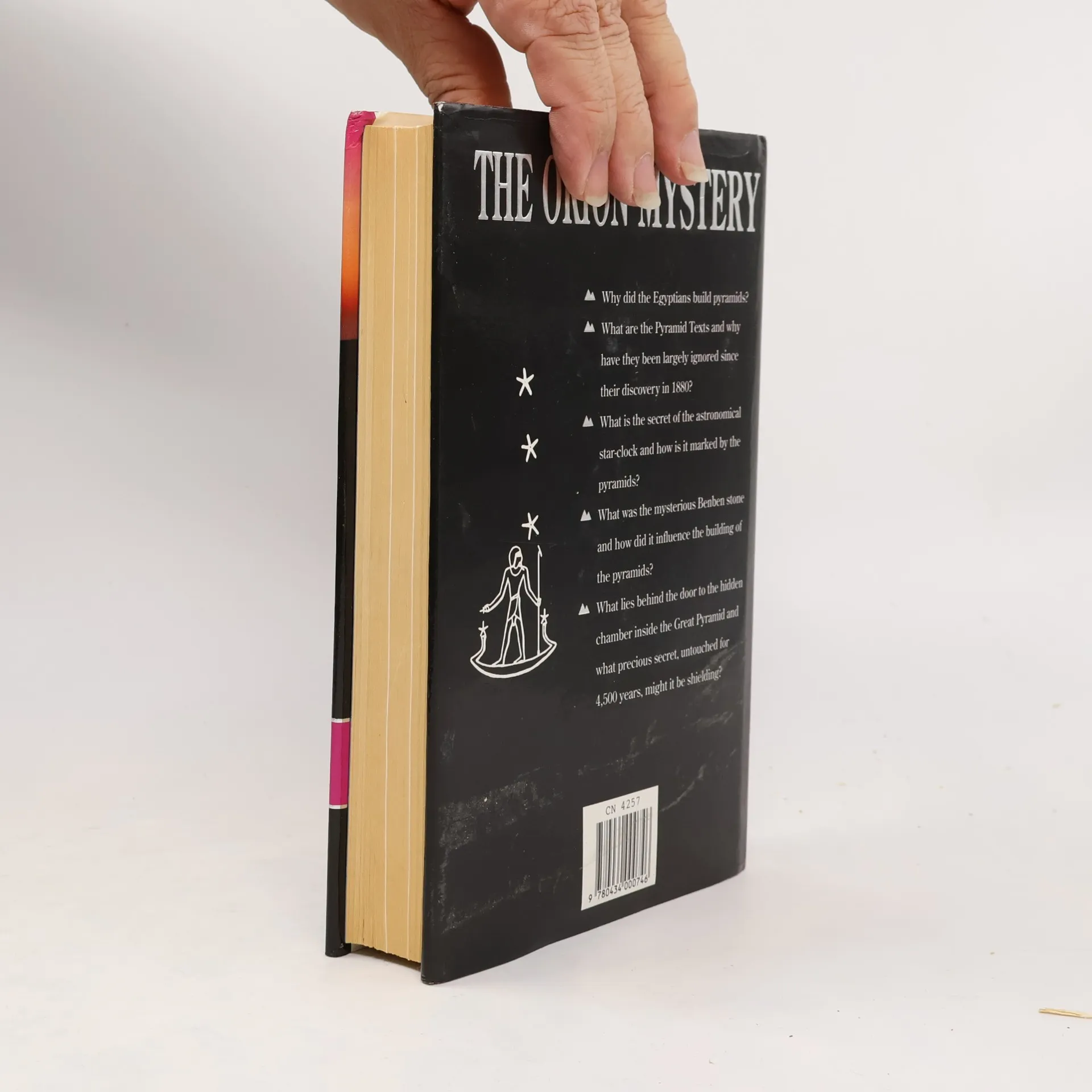
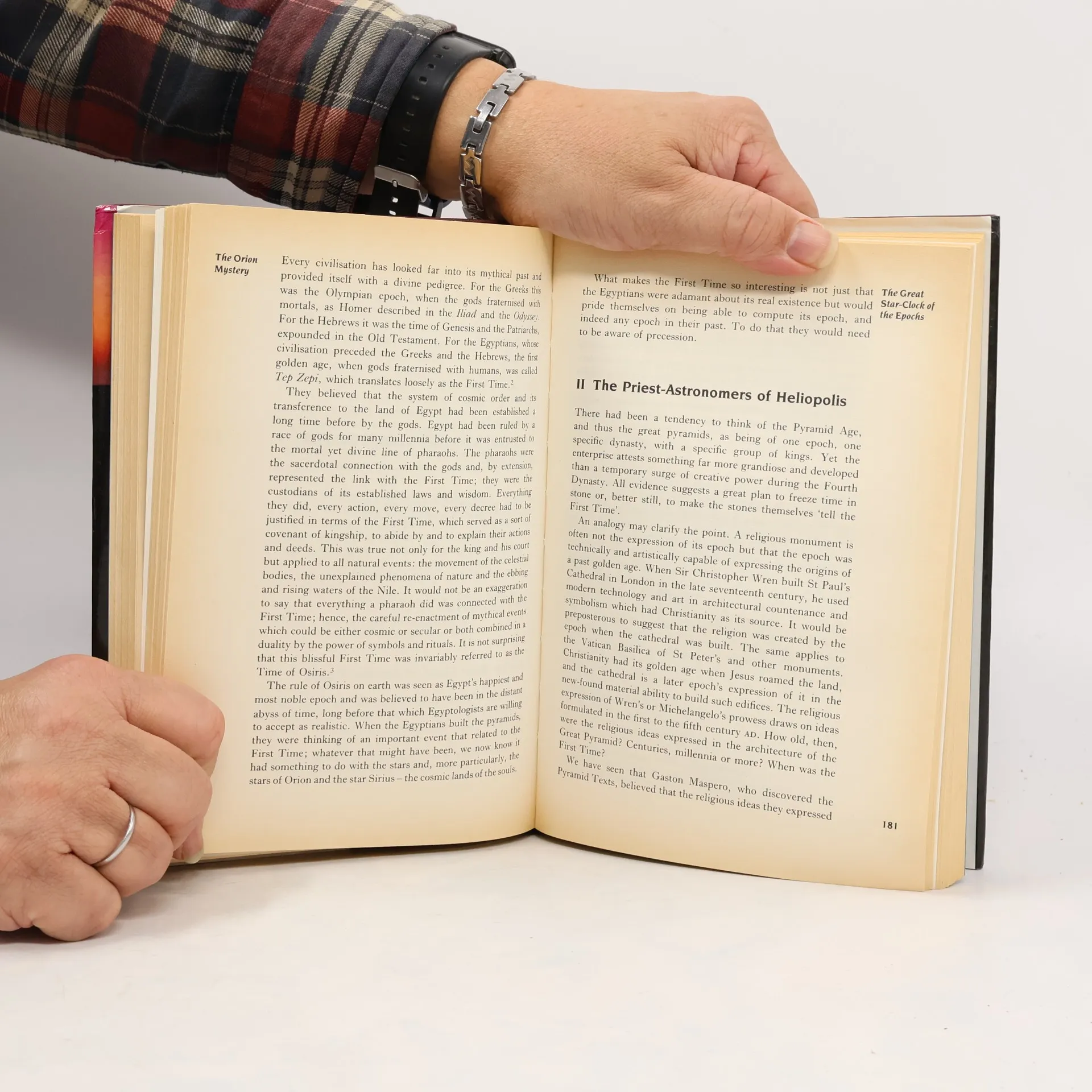
This archaeological detective story presents a compelling argument that the great pyramids of Egypt's Fourth Dynasty (c. 2600-2400 B.C.) served as astronomically sophisticated temples rather than mere pharaonic tombs. In March 1993, a remote-controlled robot designed by Rudolf Gantenbrink revealed a previously unknown sealed door within the Great Pyramid of Giza. Authors Bauval and Gilbert, who have extensively studied the pyramids, use this discovery to explore the purpose of the pyramid's airshafts, which connect its chambers to the exterior. They propose that the pyramids were strategically aligned with key stars of Orion, a constellation significant to the Egyptians. Their analysis suggests that the shafts pointed directly at these stars as they appeared in ancient times, aligning with the pyramids' positions around 10,400 B.C.—a period the Egyptians referred to as the First Time, when the god Osiris was believed to rule. The authors also speculate that the newly discovered space within the Great Pyramid may contain the mythical Benben stone, associated with creation. While some claims may seem far-fetched and unlikely to quell scholarly debate, this work offers a radical rethinking of the pyramids' mysteries, presenting ingenious arguments in a clear and engaging style.
Sprache


Buchkauf
The Orion Mystery, Adrian Adrian Geoffrey Gilbert, Robert Bauval
- Sprache

- Erscheinungsdatum
- 1994
- Einband
- (Hardcover),
- Buchzustand
- Gebraucht - Gut
- Preis
- € 5,29
Hier könnte deine Bewertung stehen.
- Titel
- The Orion Mystery
- Sprache
- Englisch
- Autor*innen
- Adrian Adrian Geoffrey Gilbert, Robert Bauval
- Verlag
- William Heinemann
- Erscheinungsdatum
- 1994
- Einband
- Hardcover
- Seitenzahl
- 325
- ISBN10
- 0434000744
- ISBN13
- 9780434000746
- Reihe
- Kategorien
- Schlagwörter
- Historisches Thema, Religiöse Themen, Wissenschaft, Altertum, Archäologie, Ägypten, Sterne, Planeten, Sternbilder
- Erstveröffentlichung
- 1994
- Originaltitel
- The Orion mystery
- Bewertung
- 3,95 von 5 Sternen
- Beschreibung
- This archaeological detective story presents a compelling argument that the great pyramids of Egypt's Fourth Dynasty (c. 2600-2400 B.C.) served as astronomically sophisticated temples rather than mere pharaonic tombs. In March 1993, a remote-controlled robot designed by Rudolf Gantenbrink revealed a previously unknown sealed door within the Great Pyramid of Giza. Authors Bauval and Gilbert, who have extensively studied the pyramids, use this discovery to explore the purpose of the pyramid's airshafts, which connect its chambers to the exterior. They propose that the pyramids were strategically aligned with key stars of Orion, a constellation significant to the Egyptians. Their analysis suggests that the shafts pointed directly at these stars as they appeared in ancient times, aligning with the pyramids' positions around 10,400 B.C.—a period the Egyptians referred to as the First Time, when the god Osiris was believed to rule. The authors also speculate that the newly discovered space within the Great Pyramid may contain the mythical Benben stone, associated with creation. While some claims may seem far-fetched and unlikely to quell scholarly debate, this work offers a radical rethinking of the pyramids' mysteries, presenting ingenious arguments in a clear and engaging style.