

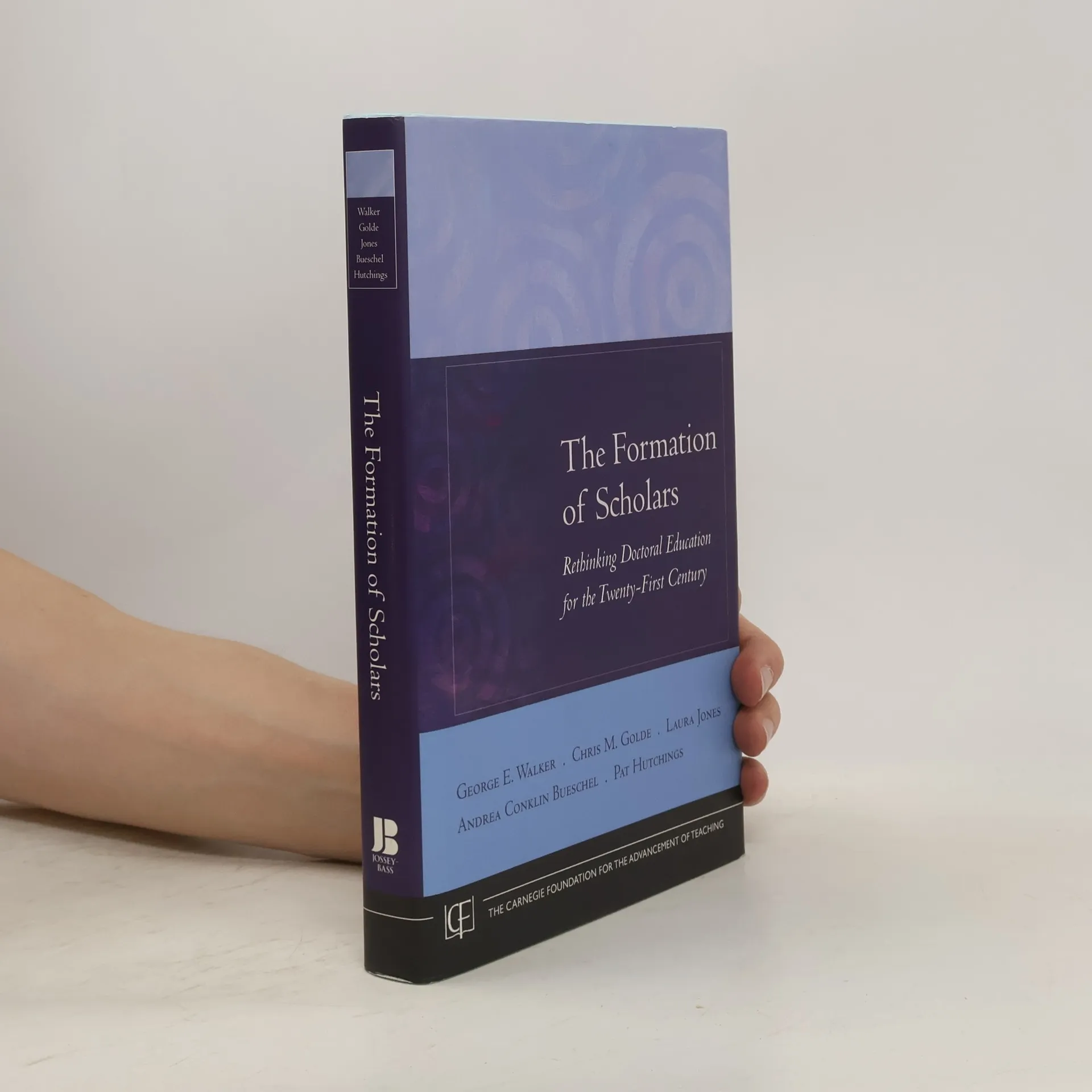
The Formation of Scholars
Rethinking Doctoral Education for the Twenty-First Century
Autor*innen
- Autorenkollektiv
Buchbewertung
Mehr zum Buch
This groundbreaking book explores the current state of doctoral education in the United States and offers a plan for increasing the effectiveness of doctoral education. Programs must grapple with questions of purpose. The authors examine practices and elements of doctoral programs and show how they can be made more powerful by relying on principles of progressive development, integration, and collaboration. They challenge the traditional apprenticeship model and offer an alternative in which students learn while apprenticing with several faculty members. The authors persuasively argue that creating intellectual community is essential for high-quality graduate education in every department. Knowledge-centered, multigenerational communities foster the development of new ideas and encourage intellectual risk taking.
Buchkauf
The Formation of Scholars, Autorenkollektiv
- Sprache

- Erscheinungsdatum
- 2008
- Einband
- (Hardcover)
Hier könnte deine Bewertung stehen.
- Titel
- The Formation of Scholars
- Untertitel
- Rethinking Doctoral Education for the Twenty-First Century
- Sprache
- Englisch
- Autor*innen
- Autorenkollektiv
- Verlag
- Jossey-Bass
- Erscheinungsdatum
- 2008
- Einband
- Hardcover
- ISBN10
- 0470197439
- ISBN13
- 9780470197431
- Reihe
- Kategorien
- Schlagwörter
- Bildung, Universität, Postgraduales Studium, Akademische Arbeiten, Lehrtätigkeit (Bildung)
- Bewertung
- 3,7 von 5 Sternen
- Beschreibung
- This groundbreaking book explores the current state of doctoral education in the United States and offers a plan for increasing the effectiveness of doctoral education. Programs must grapple with questions of purpose. The authors examine practices and elements of doctoral programs and show how they can be made more powerful by relying on principles of progressive development, integration, and collaboration. They challenge the traditional apprenticeship model and offer an alternative in which students learn while apprenticing with several faculty members. The authors persuasively argue that creating intellectual community is essential for high-quality graduate education in every department. Knowledge-centered, multigenerational communities foster the development of new ideas and encourage intellectual risk taking.