

Mehr zum Buch
To correct misconceptions about his philosophy, Sartre accepted an invitation to speak on October 29, 1945, at the Club Maintenant in Paris. His lecture aimed to clarify existentialism, a term widely discussed at the time, and although he considered it primarily a doctrine for philosophers, he made it accessible to a broader audience. The published text of this lecture quickly became a foundational work of existentialism and catapulted Sartre to international fame. Central to his doctrine is the concept of freedom; he posits that man, born into a godless universe, starts as nothing and creates his essence through the choices he makes—"existence precedes essence." The inevitability of death adds urgency to our choices, as selecting one path affirms the value of that choice and commits not just the individual but all of humanity. This edition of the work is a translation of the 1996 French edition, featuring Arlette Elkaïm-Sartre’s introduction and a Q&A with Sartre regarding his lecture. Additionally, it includes Sartre’s commentary on Camus’s *The Stranger*. In her foreword for an American audience, acclaimed Sartre biographer Annie Cohen-Solal assesses both works.


Publikation

Buchkauf
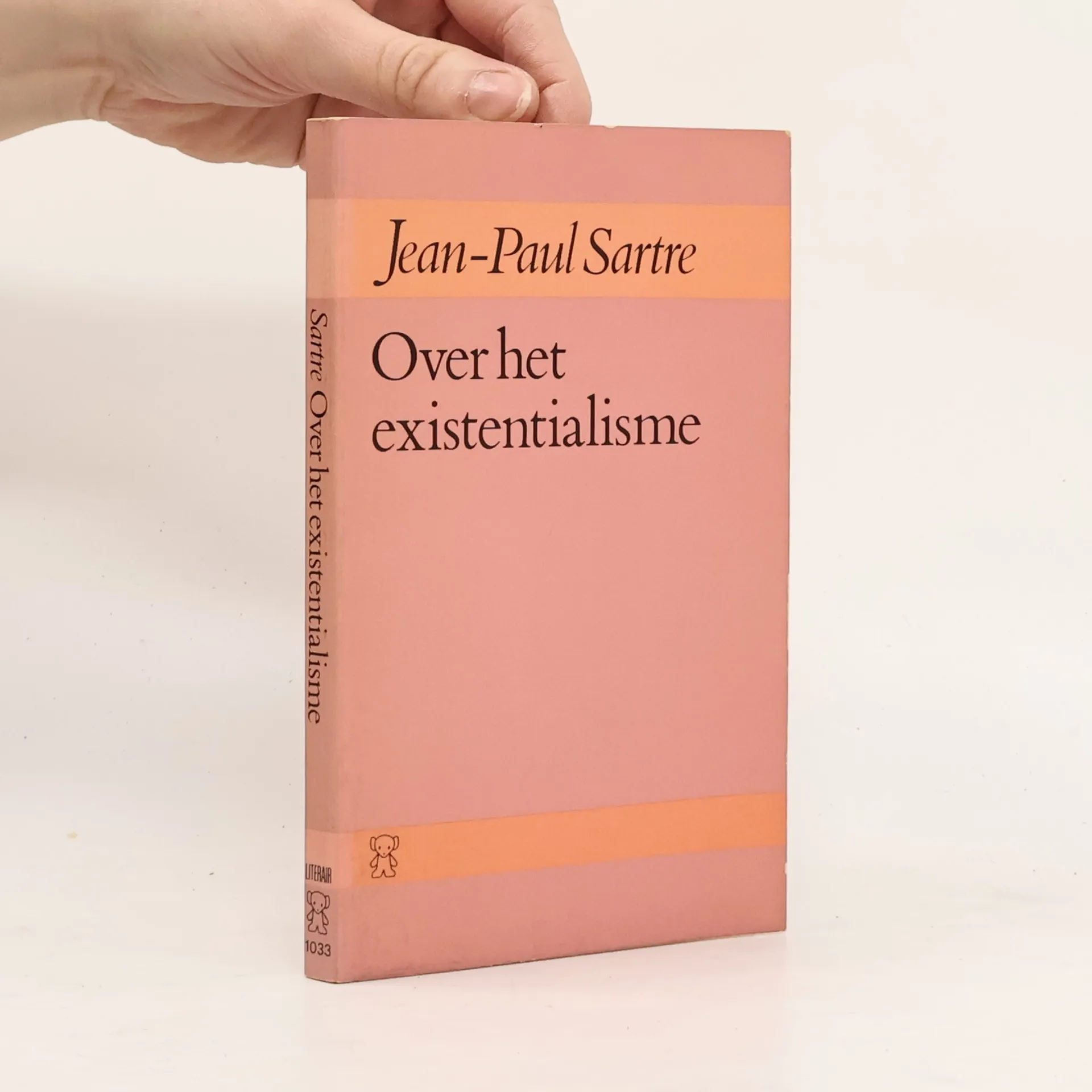
Over het existentialisme, Jean-Paul Sartre
- Sprache

- Erscheinungsdatum
- 1967
- Einband
- (Paperback)
Hier könnte deine Bewertung stehen.
- Titel
- Over het existentialisme
- Sprache
- Niederländisch
- Autor*innen
- Jean-Paul Sartre
- Verlag
- A.W. Bruna Uitgevers
- Erscheinungsdatum
- 1967
- Einband
- Paperback
- Seitenzahl
- 91
- ISBN10
- 9022910334
- ISBN13
- 9789022910337
- Reihe
- Kategorien
- Schlagwörter
- Frankreich, Französische Literatur, Existenzialismus
- Erstveröffentlichung
- 1945
- Originaltitel
- L'existentialisme est un humanisme
- Bewertung
- 4,05 von 5 Sternen
- Beschreibung
- To correct misconceptions about his philosophy, Sartre accepted an invitation to speak on October 29, 1945, at the Club Maintenant in Paris. His lecture aimed to clarify existentialism, a term widely discussed at the time, and although he considered it primarily a doctrine for philosophers, he made it accessible to a broader audience. The published text of this lecture quickly became a foundational work of existentialism and catapulted Sartre to international fame. Central to his doctrine is the concept of freedom; he posits that man, born into a godless universe, starts as nothing and creates his essence through the choices he makes—"existence precedes essence." The inevitability of death adds urgency to our choices, as selecting one path affirms the value of that choice and commits not just the individual but all of humanity. This edition of the work is a translation of the 1996 French edition, featuring Arlette Elkaïm-Sartre’s introduction and a Q&A with Sartre regarding his lecture. Additionally, it includes Sartre’s commentary on Camus’s *The Stranger*. In her foreword for an American audience, acclaimed Sartre biographer Annie Cohen-Solal assesses both works.