

Mehr zum Buch
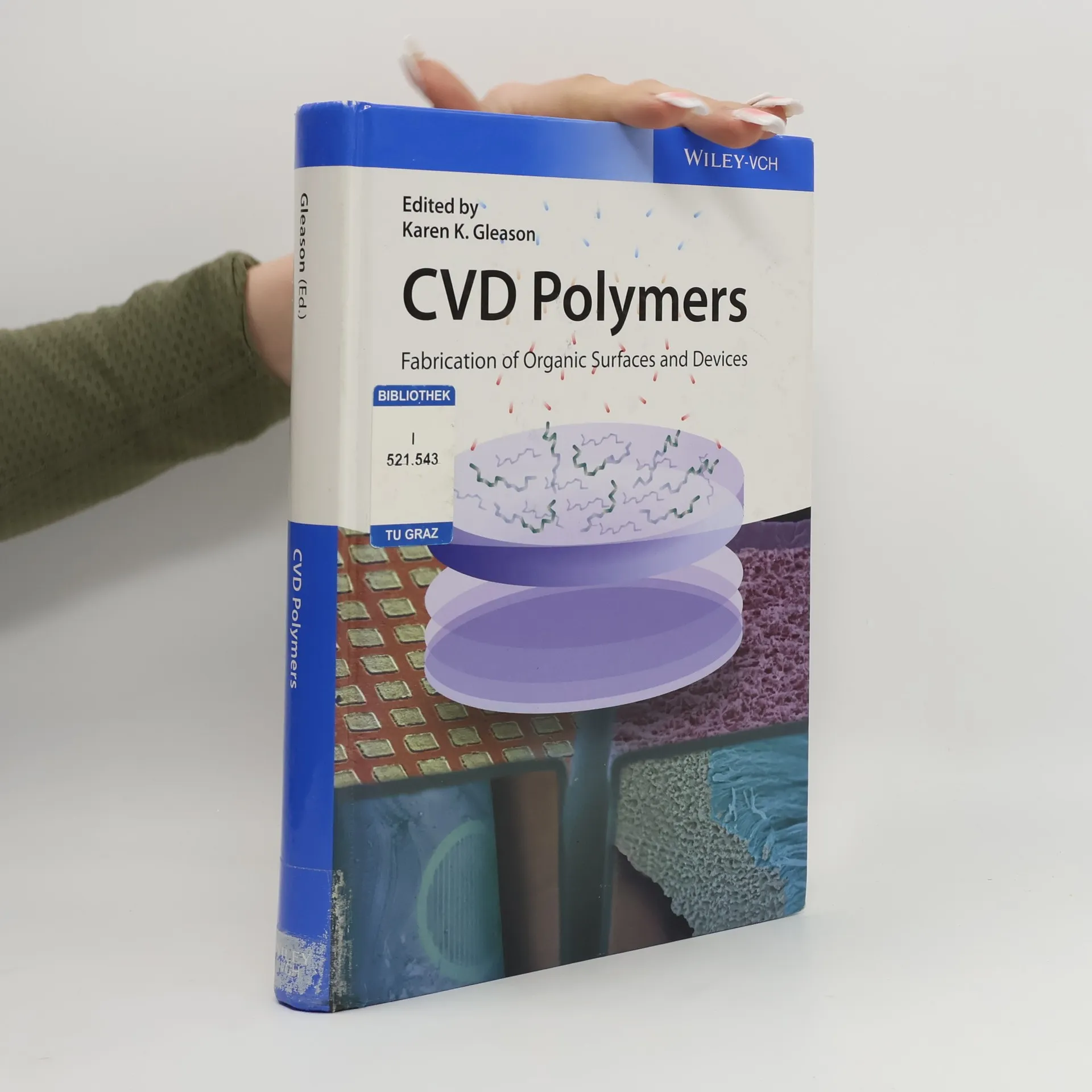
The method of CVD (chemical vapor deposition) is a versatile technique for fabricating high-quality thin films and structured surfaces at the nanometer scale from the vapor phase. Widely used for depositing inorganic materials in the semiconductor industry, CVD has also become essential for processing polymers. This scalable technique synthesizes high-purity, defect-free films while allowing systematic tuning of their chemical, mechanical, and physical properties. Vapor phase processing is crucial for depositing insoluble materials, including fluoropolymers and electrically conductive polymers, as well as for coating substrates that would dissolve or swell in solvents. The scope of the book encompasses CVD polymerization processes that translate traditional polymer synthesis mechanisms into heterogeneous processes for modifying solid surfaces. It is structured into four parts, starting with an overview of diverse CVD process strategies for polymeric materials. The first part covers the fundamentals of CVD polymers, followed by an in-depth examination of their materials chemistry, including synthesis mechanisms and resulting classes of materials. The third part highlights applications such as membrane modification and device fabrication, while the final part discusses the potential for scale-up and commercialization of CVD polymers.
Buchkauf
CVD Polymers, Karen K. Gleason
- Sprache

- Erscheinungsdatum
- 2015
- Einband
- (Hardcover)
Keiner hat bisher bewertet.
- Titel
- CVD Polymers
- Sprache
- Englisch
- Autor*innen
- Karen K. Gleason
- Verlag
- Wiley-VCH
- Erscheinungsdatum
- 2015
- Einband
- Hardcover
- Seitenzahl
- 488
- ISBN10
- 3527337997
- ISBN13
- 9783527337996
- Reihe
- Schlagwörter
- Naturwissenschaften, Wissenschaft, Technologie
- Beschreibung
- The method of CVD (chemical vapor deposition) is a versatile technique for fabricating high-quality thin films and structured surfaces at the nanometer scale from the vapor phase. Widely used for depositing inorganic materials in the semiconductor industry, CVD has also become essential for processing polymers. This scalable technique synthesizes high-purity, defect-free films while allowing systematic tuning of their chemical, mechanical, and physical properties. Vapor phase processing is crucial for depositing insoluble materials, including fluoropolymers and electrically conductive polymers, as well as for coating substrates that would dissolve or swell in solvents. The scope of the book encompasses CVD polymerization processes that translate traditional polymer synthesis mechanisms into heterogeneous processes for modifying solid surfaces. It is structured into four parts, starting with an overview of diverse CVD process strategies for polymeric materials. The first part covers the fundamentals of CVD polymers, followed by an in-depth examination of their materials chemistry, including synthesis mechanisms and resulting classes of materials. The third part highlights applications such as membrane modification and device fabrication, while the final part discusses the potential for scale-up and commercialization of CVD polymers.