
"In The Irrationals, Julian Havil tells the story of irrational numbers and the mathematicians who have tackled their challenges from antiquity to the twenty-first century"--
Julian Havil Reihenfolge der Bücher (Chronologisch)


Curves for the Mathematically Curious
- 280 Seiten
- 10 Lesestunden
Ten amazing curves personally selected by one of today's most important math writers Curves for the Mathematically Curious is a thoughtfully curated collection of ten mathematical curves, selected by Julian Havil for their significance, mathematical interest, and beauty. Each chapter gives an account of the history and definition of one curve, providing a glimpse into the elegant and often surprising mathematics involved in its creation and evolution. In telling the ten stories, Havil introduces many mathematicians and other innovators, some whose fame has withstood the passing of years and others who have slipped into comparative obscurity. You will meet Pierre Bézier, who is known for his ubiquitous and eponymous curves, and Adolphe Quetelet, who trumpeted the ubiquity of the normal curve but whose name now hides behind the modern body mass index. These and other ingenious thinkers engaged with the challenges, incongruities, and insights to be found in these remarkable curves—and now you can share in this adventure. Curves for the Mathematically Curious is a rigorous and enriching mathematical experience for anyone interested in curves, and the book is designed so that readers who choose can follow the details with pencil and paper. Every curve has a story worth telling.
Gamma
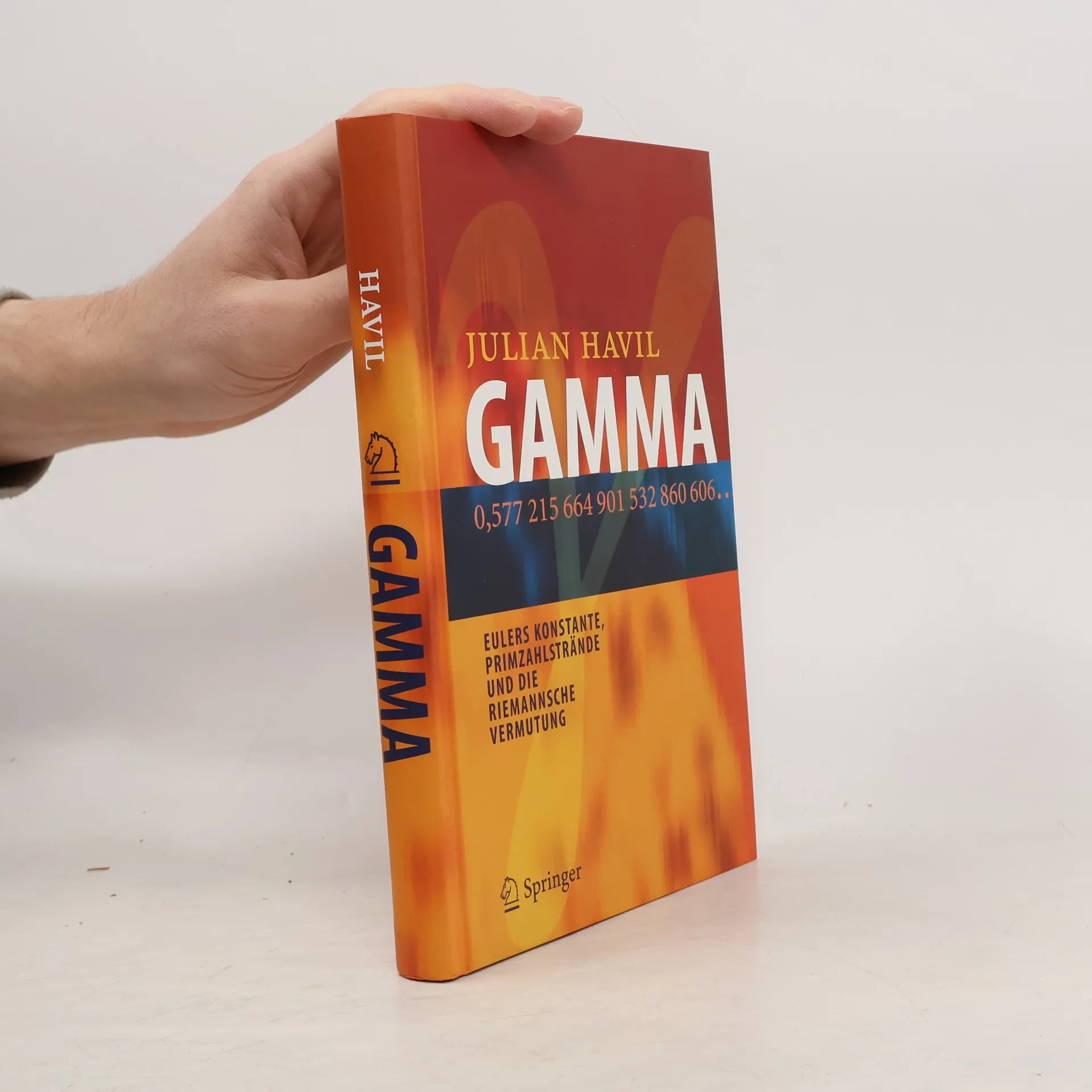
Eulers Konstante, Primzahlstrände und die Riemannsche Vermutung
Jeder kennt p = 3,14159..., viele kennen e = 2,71828..., einige i. Und dann? Die "viertwichtigste" Konstante ist die Eulersche Zahl g = 0,5772156... - benannt nach dem genialen Leonhard Euler (1707-1783). Bis heute ist unbekannt, ob g eine rationale Zahl ist. Das Buch lotet die "obskure" Konstante aus. Die Reise beginnt mit Logarithmen und der harmonischen Reihe. Es folgen Zeta-Funktionen und Eulers wunderbare Identität, Bernoulli-Zahlen, Madelungsche Konstanten, Fettfinger in Wörterbüchern, elende mathematische Würmer und Jeeps in der Wüste. Besser kann man nicht über Mathematik schreiben. Was Julian Havil dazu zu sagen hat, ist spektakulär.
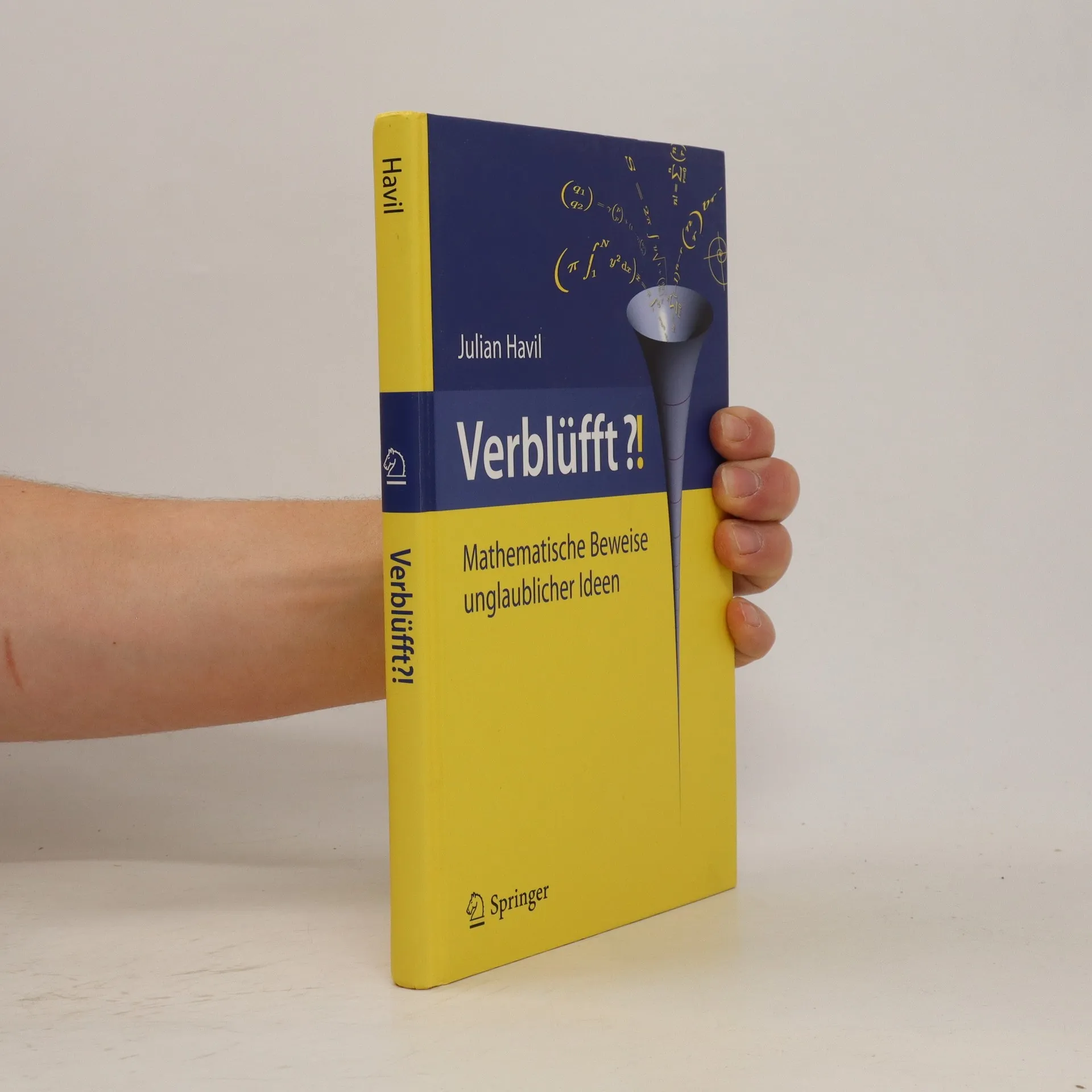
Das Buch stellt eine Reihe scheinbar paradoxer mathematischer Aussagen und deren Beweise vor. Sie kommen aus verschiedenen Bereichen der Mathematik, darunter das Geburtstagsparadoxon, Conways Chequerboard-Armee und Torricellis Trompete. Angewendet werden elementare Methoden der Kombinatorik, Wahrscheinlichkeitsrechnung, Statistik, Geometrie und Analysis. Zahlreiche Abbildungen und Tabellen illustrieren die Fragen und die wesentlichen Schritte zu ihrer Lösung. Das Buch ist für mathematisch Interessierte mit Oberstufenkenntnissen verständlich.