Gandhi's concept of Swaraj is explored as a distinctive alternative to contemporary notions of political authority. The book delves into his philosophies of moral interconnectedness and empathetic pluralism, offering readers a deeper understanding of his vision for society and governance. Through this examination, it highlights the relevance of Gandhi's ideas in today's political landscape.
Peace is a day when\neveryone in the world eats bread together as friends.\nBanishing starvation from the earth is peace.\n―Ko Un, Song of Peace\n\nIn a world known for its conformism and complacency, questioning through the writing of poetry is a most courageous and dangerous act. Poets are brave spirits, fighting against tyrannies, wars and violence. Perhaps no one exemplifies this more than South Korean poet Ko Un. His poems, touching upon the themes of life, nature, mortality and echoes of tradition, are firmly rooted in Korean life, fulfilling the function of historical memory. In the past 30 years, he has been translated into 35 languages, and is the recipient of dozens of literary prizes and honours.\n\t\nIn Conversations with Ko Un, renowned philosopher Ramin Jahanbegloo talks to the poet about his life, vision, aesthetics, travails and anxieties. Ko Un speaks about coming of age during the Korean War, his experience as a Buddhist monk, his imprisonment on several occasions, and poetry as an act of dissent. The result is an intense, illuminating, rich and insightful volume that emphasises the universality of the human experience.
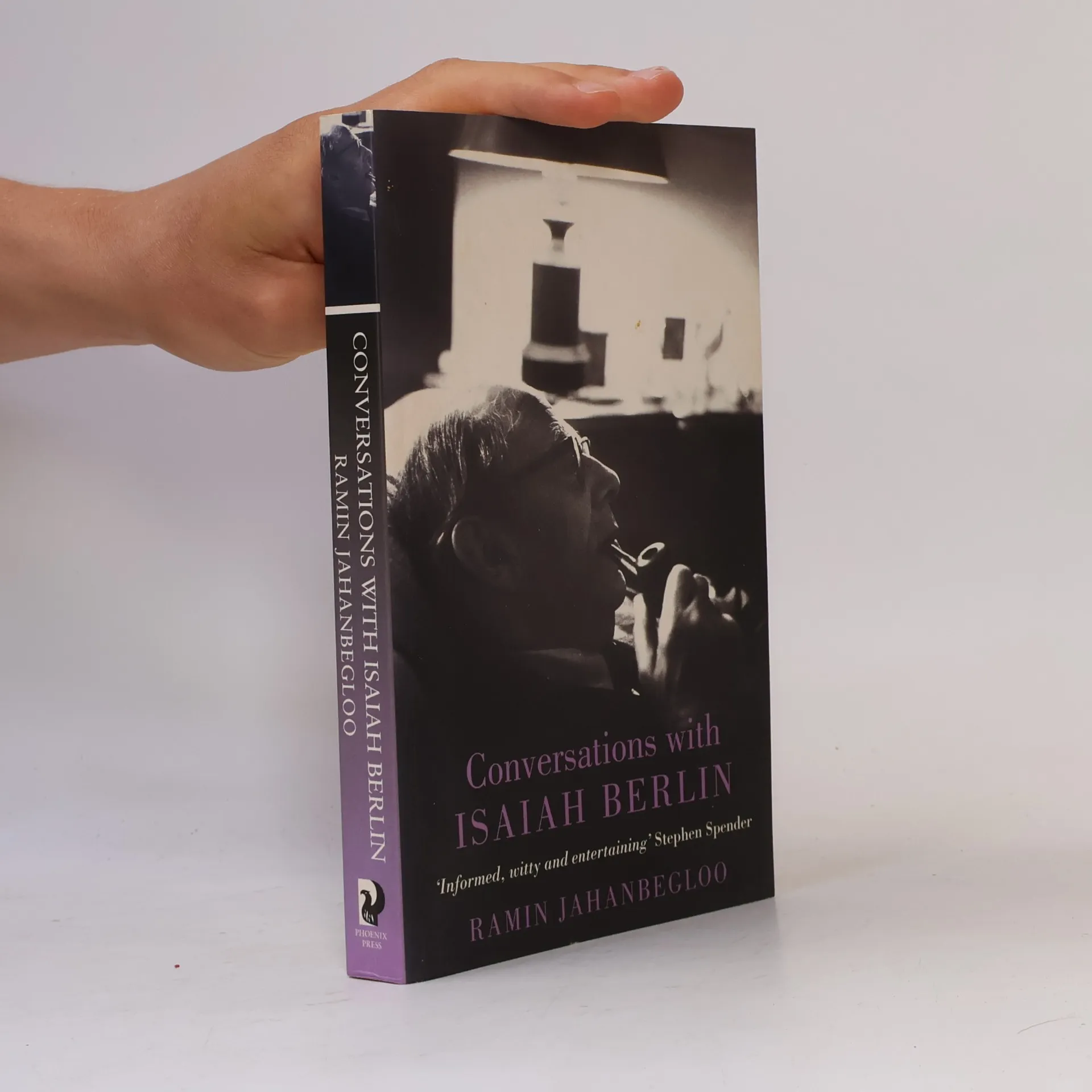
:"Conversations here means the minds of the interviewed and interviewer meet on equal terms in language that is transparently clear, informed, witty and entertaining."-- Stephen Spender . Philosopher and leading proponent of liberal thinking, it's essential to understand Berlin, especially to appreciate his impact on intellectual and political views of the last 50 years.
The powers of wisdom for a philospher contained by the walls of a prison Sorbonne-educated and the author of almost 30 books, Ramin Jahanbegloo, a philosopher of non-violence in the tradition of Tolstoy and Gandhi, was arrested and detained in Iran's notorious Evin prison in 2006. A petition against his imprisonment was initiated, with Umberto Eco, Jurgen Habermas, and Noam Chomsky among the signatories. International organizations joined in, and media around the world reported his case extensively. Finally, after four months, he was released. In this memoir Jahanbegloo recounts his confinement, his fear for his life, and his concern for the well-being of his family. With cockroaches his only companions, he is sustained by the wisdom of the great philosophers and by his memories of childhood in Tehran and coming-of-age in Paris.