

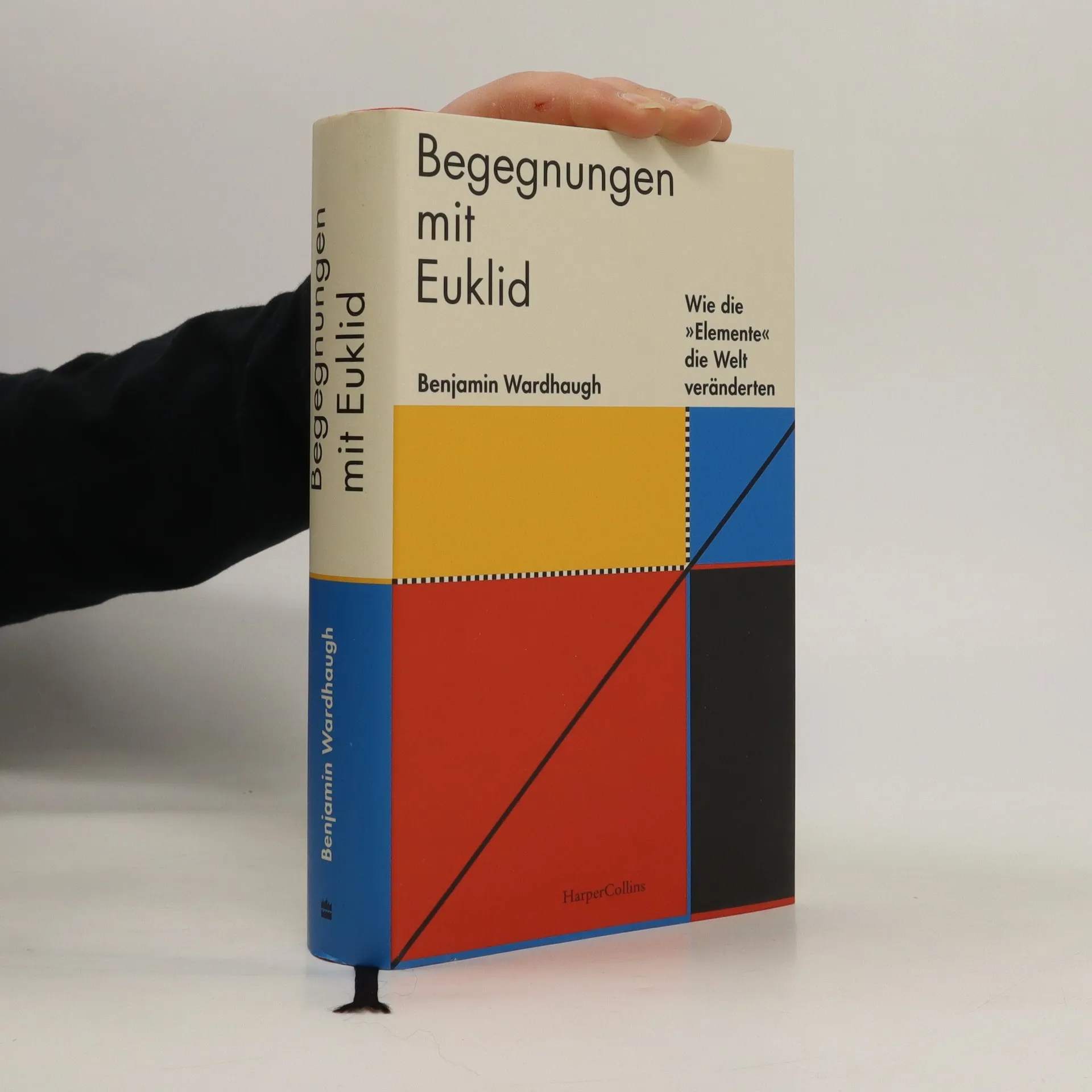
Euklid auf den Fersen – eine grandios erzählte Reise zu den Anfängen der Mathematik Seit dreiundzwanzig Jahrhunderten prägen Euklids »Elemente« die Welt. Die Zusammenstellung von Fakten über den Raum und seine Eigenschaften – Linien und Figuren, Zahlen und Verhältnisse – bestimmen bis heute Philosophie, Kunst, Musik, Literatur und Mathematik. Dreizehn Bände, die nicht nur Wissenschaftsgeschichte schrieben, sondern auch zu ersten globalen Bestsellern wurden. Benjamin Wardhaugh entstaubt Euklids Vermächtnis und begibt sich auf eine Zeitreise. Von Ptolemaios bis Isaac Newton, von Lewis Carroll bis Max Ernst – hautnah erleben wir den Einfluss der »Elemente« auf die jeweilige Zeit und ihre Protagonisten. Die spannende Geschichte über das Grundlagenwerk menschlichen Wissens.
Benjamin Wardhaugh Bücher


Die unglaubliche Geschichte von Charles Hutton – vom Grubenjungen zum begnadeten WissenschaftlerEngland, 1755: Als Sohn eines Schichtmeisters wächst Charles Hutton in den Bergwerken Newcastles auf. Die industrielle Revolution ist in vollem Gange und Kinderarbeit an der Tagesordnung. Mit acht Jahren beginnt auch Charles, in den Kohlegruben zu arbeiten, doch ein Unfall rettet ihn. Eine Zeit lang darf er deswegen die Schule besuchen, erkennt seine Begabung für Mathematik und fängt Feuer.Er verschlingt die Werke Newtons, besucht weiterführende Abendkurse, verfasst schon bald eigene Lehrbücher und publiziert mathematische Rätsel in den damals beliebten Unterhaltungsmagazinen The Gentleman’s Diary und The Ladies’ Diary.Nebenbei arbeitet er als Landvermesser, erfindet die Höhenlinien und bekommt eine Stelle an der Königlichen Militärakademie, für die er Newcastle hinter sich und seiner Liebe zum Schießpulver freien Lauf lässt …Eine Bildungsgeschichte, die ihresgleichen sucht.»Die Mathematik bildet die Grundlagen unserer Gesellschaft. Dieses wundervolle Buch beleuchtet endlich, warum dem so ist.«New Scientist»Benjamin Wardhaugh erzählt die fast unglaubliche Geschichte eines Kohlejungen, der zum größten Mathematiker seiner Zeit und zu einer nationalen Berühmtheit wurde. Mit Stil und Esprit erweckt er sowohl das georgianische Zeitalter als auch die Ära der Kohleindustrie zum Leben.«Matt Ridley
Zählen. Die Geschichte von den Anfängen der Mathematik
Wie die Menschheit lernte, den Überblick zu behalten | »Sorgfältig recherchiert und lebendig erzählt« Sunday Times
- 384 Seiten
- 14 Lesestunden
Nach eins kommt zwei. Wie lernte die Menschheit, den Überblick zu behalten? Und warum sind wir die einzige Spezies, die es beherrscht? Südafrika, vor mehr als 75.000 Jahren: Eine Frau sammelt Schneckenhäuser, bohrt ein Loch hinein, fädelt sie auf ein Lederband, das sie als Kette um den Hals trägt. Das ist nur eines der spektakulären Zählsysteme, die die Menschheitsgeschichte hervorgebracht hat. Aber wie kamen wir darauf? Wie hat das Zählen den Lauf der Zeit geprägt? Und warum ist eine Welt ohne das Zählen bis heute unvorstellbar? Mitreißend schildert der Historiker und Mathematiker Benjamin Wardhaugh, wie tief diese wundersame Fähigkeit des Zählens in uns verankert ist. Wir erfahren, wie und warum indische Gelehrte, chinesische Bauern und papuanische Ladenbesitzer das Zählen anwendeten, und wir lernen die unverwechselbaren Zahlenpläne von Mayakönigen, US-Regierungen und koreanischen Vloggern kennen. Es ist die bewegende Geschichte unserer Bemühungen, in einer chaotischen Welt eine Ordnung zu erkennen – oder einer widerspenstigen Welt die Ordnung aufzudrücken, die wir Menschen in uns tragen. »Sorgfältig recherchiert und lebendig erzählt zugleich« Sunday Times »Geistreich und auf elegante Weise gelehrt« Daily Telegraph
Euclid's Elements of Geometry was a book that changed the world. In a sweeping history, Benjamin Wardhaugh traces how an ancient Greek text on mathematics - often hailed as the world's first textbook - shaped two thousand years of art, philosophy and literature, as well as science and maths.
Counting
- 384 Seiten
- 14 Lesestunden
WHAT DOES IT MEAN TO COUNT? WHY ARE HUMANS THE ONLY SPECIES ON EARTH THAT CAN DO IT? WHERE DID COUNTING COME FROM? HOW HAS IT SHAPED SOCIETIES ALONG THE WAY? AND WHY DOES IT MATTER?
What does it mean to count, and why are humans uniquely capable of this? This exploration delves into the origins and significance of counting, revealing how it has influenced societies throughout history. Acclaimed historian and mathematician Benjamin Wardhaugh embarks on a captivating journey through the diverse history of human counting, from the Stone Age to the digital age. Beginning with the roots of counting in our brains and environments, Wardhaugh takes us on a global tour, highlighting the various forms of counting that have emerged over millennia. We encounter ancient South African bead makers, the inventors of writing in the first metropolis, and the counting practices of classical Athens. The narrative also features the transformative use of counting by Indian scholars, Chinese peasants, and Papuan shopkeepers, as well as the unique numerate agendas of Mayan kings, US governments, and Korean vloggers. Through these interconnected stories, Wardhaugh illustrates the reciprocal relationship between culture and counting, showcasing how each has shaped the other over thousands of years. This rich tapestry reflects humanity's enduring quest to impose order on a chaotic world, revealing a history as intricate and profound as humanity itself.