Alles in Christus
Eine katholische Kritik des Rassismus und der Kritischen Rassentheorie
- 122 Seiten
- 5 Lesestunden


Edward Feser ist ein zeitgenössischer Philosoph, der sich vor allem mit der Philosophie des Geistes, der Moralphilosophie und politischen Philosophie sowie der Religionsphilosophie beschäftigt. Von National Review als „einer der besten zeitgenössischen Philosophenschreiber“ bezeichnet, bietet Fesers Ansatz tiefe Einblicke in komplexe philosophische Konzepte. Er befasst sich gekonnt sowohl mit spezialisierten philosophischen Themen als auch mit breiteren kulturellen und politischen Fragen, oft aus einer konservativen und traditionell katholischen Perspektive. Sein Schreiben zeichnet sich durch durchdringende Analysen und nachdenkliche Auseinandersetzung mit grundlegenden Fragen aus.



Eine katholische Kritik des Rassismus und der Kritischen Rassentheorie
"In a series of publications over the course of a decade, Edward Feser has argued for the defensibility and abiding relevance to issues in contemporary philosophy of Scholastic ideas and arguments, and especially of Aristotelian-Thomistic ideas and arguments. This work has been in the vein of what has come to be known as "analytical Thomism," though the spirit of the project goes back at least to the Neo-Scholasticism of the period from the late nineteenth century to the middle of the twentieth. Neo-Scholastic Essays collects some of Feser's academic papers from the last ten years on themes in metaphysics and philosophy of nature, natural theology, philosophy of mind, and ethics. Among the diverse topics covered are: the relationship between Aristotelian and Newtonian conceptions of motion; the varieties of teleological description and explanation; the proper interpretation of Aquinas's Five Ways; the impossibility of a materialist account of the human intellect; the philosophies of mind of Kripke, Searle, Popper, and Hayek; the metaphysics of value; the natural law understanding of the ethics of private property and taxation; a critique of political libertarianism; and the defensibility and indispensability to a proper understanding of sexual morality of the traditional "perverted faculty argument.""--
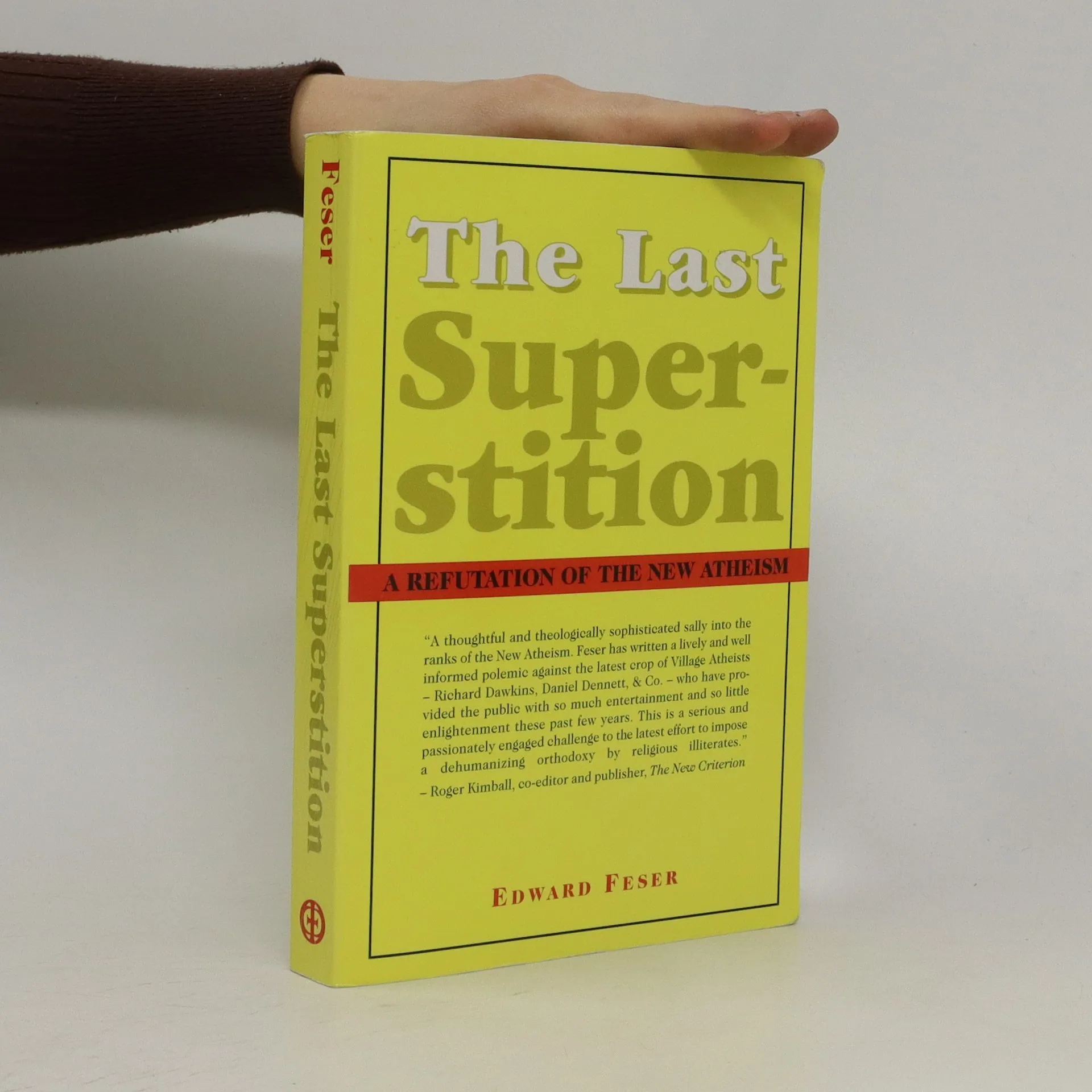
Professor Edward Feser argues here that Richard Dawkins has it all wrong. God is not a hypothesis, to be replaced if a more satisfactory theory comes up. Quite the contrary, Feser suggests, the existence of God can be proved by rationally compelling arguments. He thinks that not only is Dawkins wrong about this but so are his fellow atheists Christopher Hitchens and Sam Harris, all three of whom are frequently subject to humorous and telling remarks.
Charting the life and thought of this hugely influential medieval thinker.One of the most influential philosophers and theologians in the history of Western thought, St Thomas Aquinas established the foundations for much of modern philosophy of religion, and is infamous for his arguments for the existence of God. In this cogent and multifaceted introduction to the great Saint's work, Edward Feser argues that you cannot fully understand Aquinas' philosophy without his theology and vice-versa. Covering his thoughts on the soul, natural law, metaphysics, and the interaction of faith and reason, this will prove a indispensable resource for students, experts or the general reader.
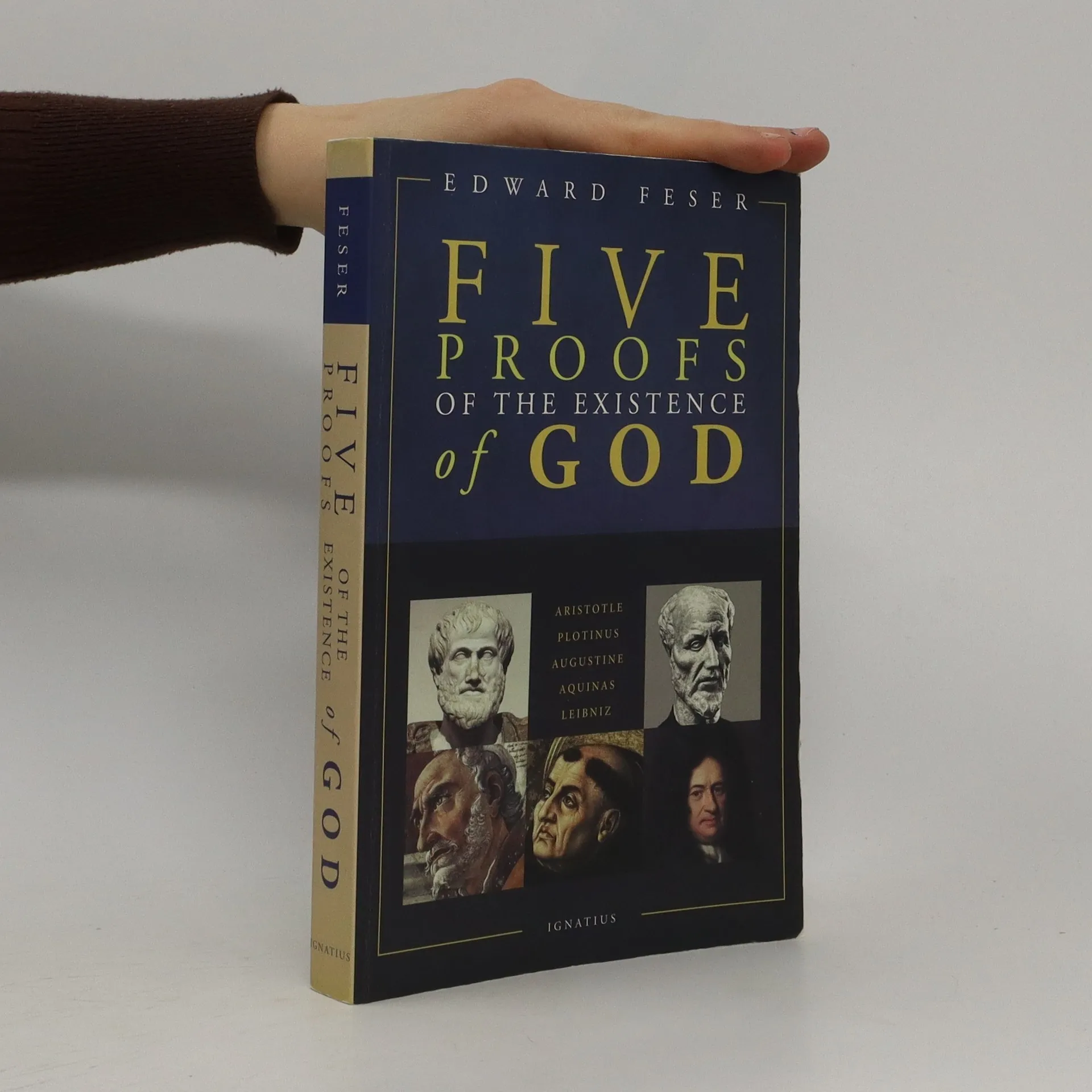
Five Proofs of the Existence of GodÊprovides a detailed, updated exposition and defense of five of the historically most important (but in recent years largely neglected) philosophical proofs of God's existence: the Aristotelian proof, the Neo-Platonic proof, the Augustinian proof, the Thomistic proof, and the Rationalist proof. Ê This book also offers a detailed treatment of each of the key divine attributes -- unity, simplicity, eternity, omnipotence, omniscience, perfect goodness, and so forth -- showing that they must be possessed by the God whose existence is demonstrated by the proofs.Ê Finally, it answers at length all of the objections that have been leveled against these proofs. Ê This book offers as ambitious and complete a defense of traditional natural theology as is currently in print.Ê Its aim is to vindicate the view of the greatest philosophers of the past -- thinkers like Aristotle, Plotinus, Augustine, Aquinas, Leibniz, and many others -- that the existence of God can be established with certainty by way of purely rational arguments.Ê It thereby serves as a refutation both of atheism and of the fideism which gives aid and comfort to atheism. Ê
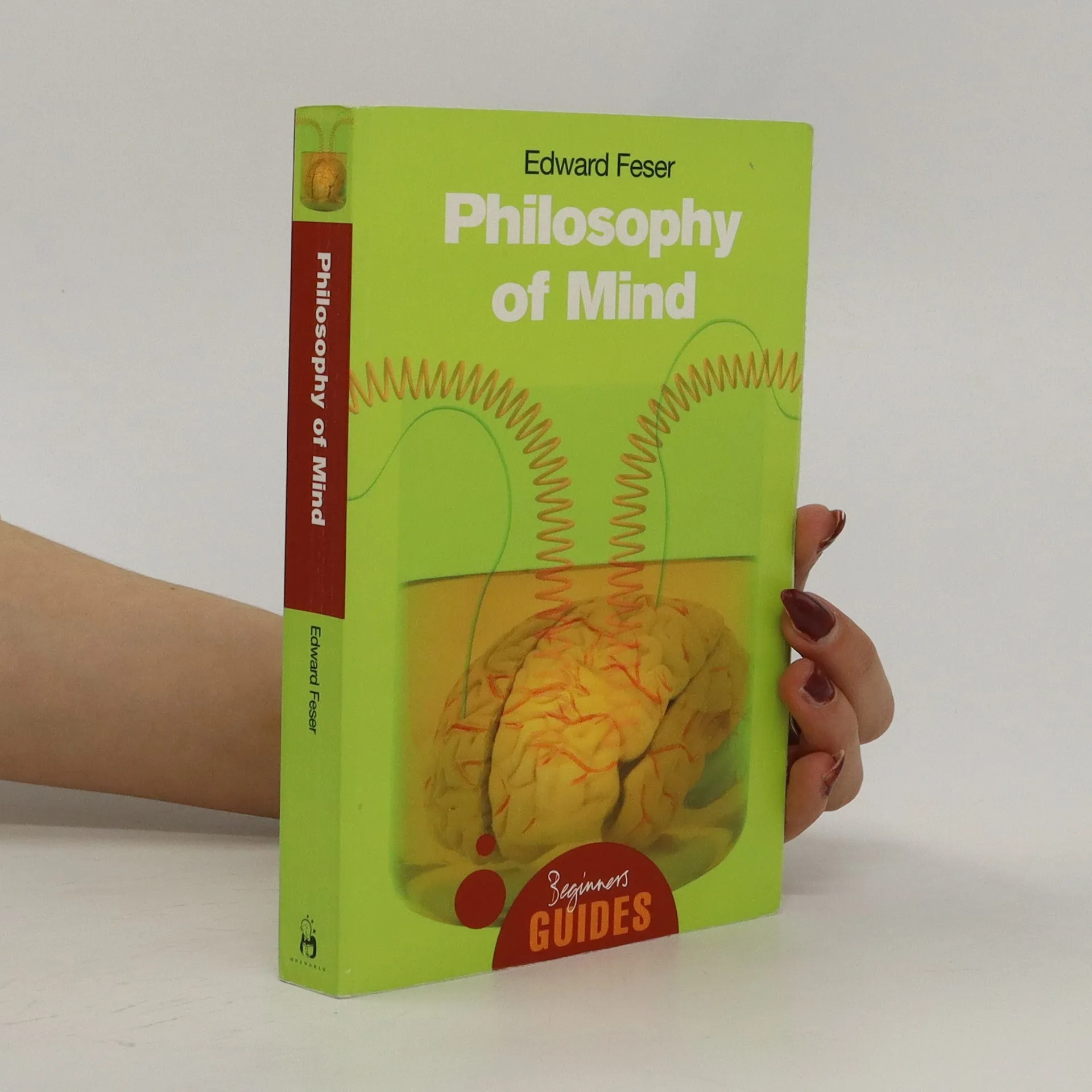
In this lively introduction to the philosophy of mind, important questions are tackled with clear explanations of all the theories of mind, from the classic accounts of Descartes and Aquinas to the developments in computing and cognitive science
"Using straightforward language without sacrificing philosophical depth, this guide outlines the major schools of thought and their different perspectives on consciousness, personal identity, and the mind-body problem. It takes seriously the arguments both for and against dualism - the view that there is a real distinction between mind and body - and is thus the first introductory text to reflect the growing challenge by contemporary philosophers to the dominant materialist doctrine." "Full of examples and scenarios, and featuring a glossary of key terms and chapter by chapter guides to further reading, this is a clearly-written, balanced and up-to-date introduction to one of the most popular fields in modern philosophy."--BOOK JACKET.