Gratis Versand in ganz Österreich
Bookbot

John Berryman

    John Berryman war eine Schlüsselfigur der amerikanischen Poesie der zweiten Hälfte des 20. Jahrhunderts. Seine Werke, insbesondere der Zyklus "The Dream Songs", sind bekannt für ihre Verspieltheit, ihren Witz und ihre Morbidität. Berrymans Schaffen wird oft der sogenannten konfessionellen Poesie zugeordnet, obwohl er diesen Begriff ablehnte. Sein einzigartiger Stil und seine provokanten Themen beeinflussten viele nachfolgende Dichter.

    Recovery
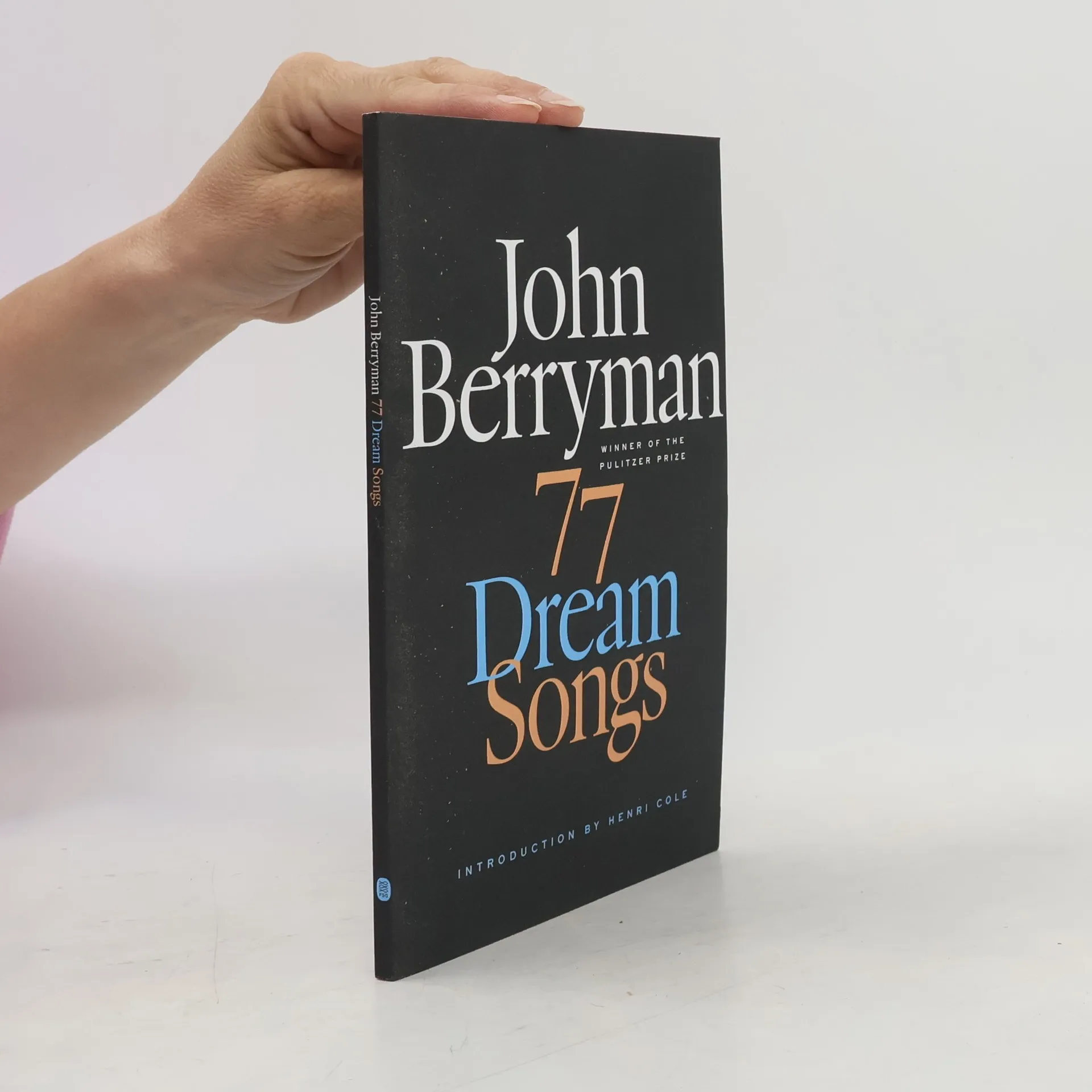
    77 Dream Songs
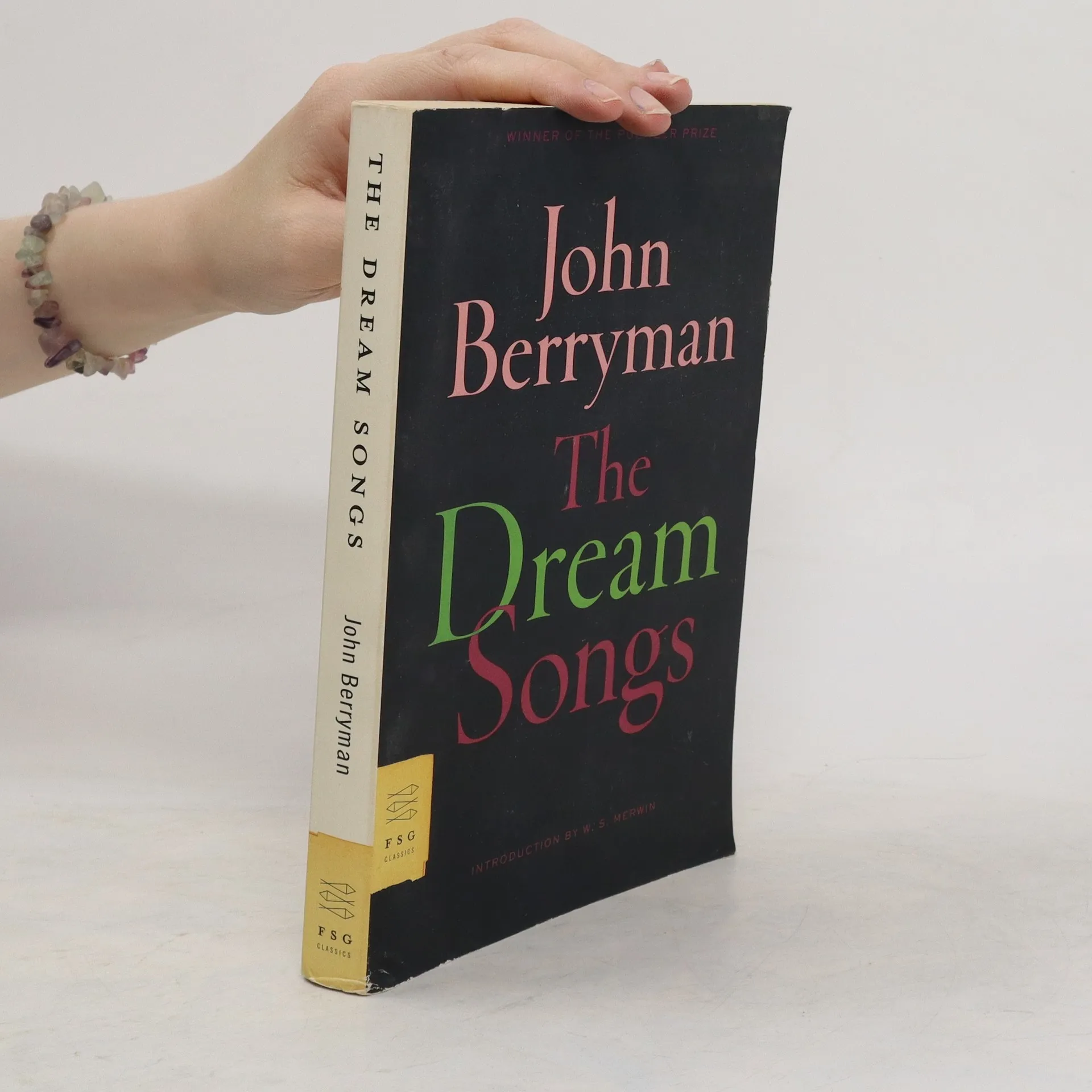
    The Dream Songs
    Collected Poems 1937-1971
    The Selected Letters of John Berryman
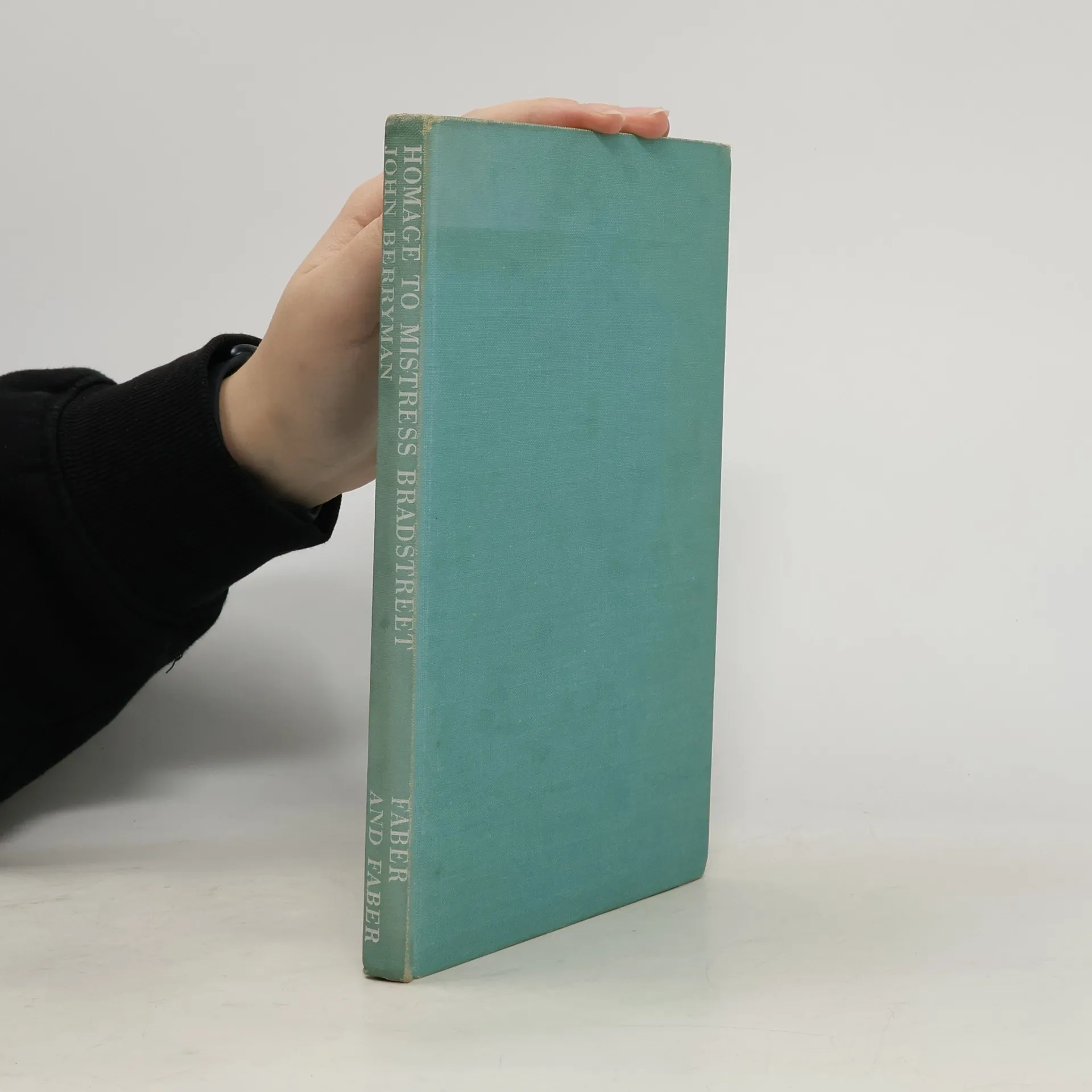
    Homage to Mistress Bradstreet
    • 4,4(12)Abgeben

      John Berryman was an energetic correspondent. Assembled here for the first time, his letters tell of generosity, ambition, and struggle. He has encouraging words for fellow poets and younger writers and is deeply engaged in literary culture. But also visible are the struggles of a working artist grappling with alcoholism and depression.

      The Selected Letters of John Berryman
    • Collected Poems 1937-1971

      • 512 Seiten
      • 18 Lesestunden
      4,3(369)Abgeben

      This volume brings together all of Berryman's poetry, except for his epic The Dream Songs, ranging from his earliest unpublished poem (1934) to those written in the last months of his life (1972). A definitive edition of one of America's most distinguished poets.

      Collected Poems 1937-1971
    • The Dream Songs

      • 427 Seiten
      • 15 Lesestunden
      4,2(6405)Abgeben

      This edition combines The Dream Songs, awarded the Pulitzer Prize for Poetry in 1965, and His Toy, His Dream, His Rest, which won the National Book Award for Poetry in 1969 and contains all 385 songs. Of The Dream Songs, A. Alvarez wrote in The Observer, "A major achievement. He has written an elegy on his brilliant generation and, in the process, he has also written an elegy on himself."The Dream Songs are eighteen-line poems in three stanzas. Each individual poem is lyric and organized around an emotion provoked by an everyday event. The tone of the poems is less surreal than associational or intoxicated. The principal character of the song cycle is Henry, who is both the narrator of the poems and referred to by the narrator in the poems.

      The Dream Songs
    • Faber are pleased to announce the relaunch of the poetry list - starting in Spring 2001 and continuing, with publication dates each month, for the rest of the year. This will involve a new jacket design recalling the typographic virtues of the classic Faber poetry covers, connecting the backlist and the new titles within a single embracing cover solution. A major reissue program is scheduled, to include classic individual collections from each decade, some of which have long been unavailable: Wallace Stevens's Harmonium and Ezra Pound's Personae from the 1920s; W.H. Auden's Poems (1930); Robert Lowell's Life Studies from the 1950s; John Berryman's 77 Dream Songs and Philip Larkin's The Whitsun Weddings from the 1960s; Ted Hughes's Gaudete and Seamus Heaney's Field Work from the 1970s; Michael Hofmann's Acrimony and Douglas Dunn's Elegies from the 1980s. Timed to celebrate publication of Seamus Heaney's new collection, Electric Light, the relaunch is intended to re-emphasize the predominance of Faber Poetry, and to celebrate a series which has played a shaping role in the history of modern poetry since its inception in the 1920s.

      77 Dream Songs
    • Poet John Berryman's foundational novel of addiction and recovery was writtenjust before his 1972 suicide and is a powerful portrayal of the protagonist'seternally indefinite attempts to free himself from the grip of addiction.

      Recovery
    • Here is a juxtaposition of the personal and inter-communal dynamics focussed on the West African experience during the pivotal decade of the 1960s, when National Independence demanded a reflexion on the definition of the new states, and how external factors have borne heavily upon their past, present and future. The author blends his experience of study and travel in the region, acknowledging his debt to the pioneering spirit of the School of Oriental and African Studies who facilitated the enterprise, with an analysis of the challenges the new entities have faced, and how they have fared, nationally and globally, in the light of Slavery, Colonialism and Black Lives Matter.

      The Apapa Six