


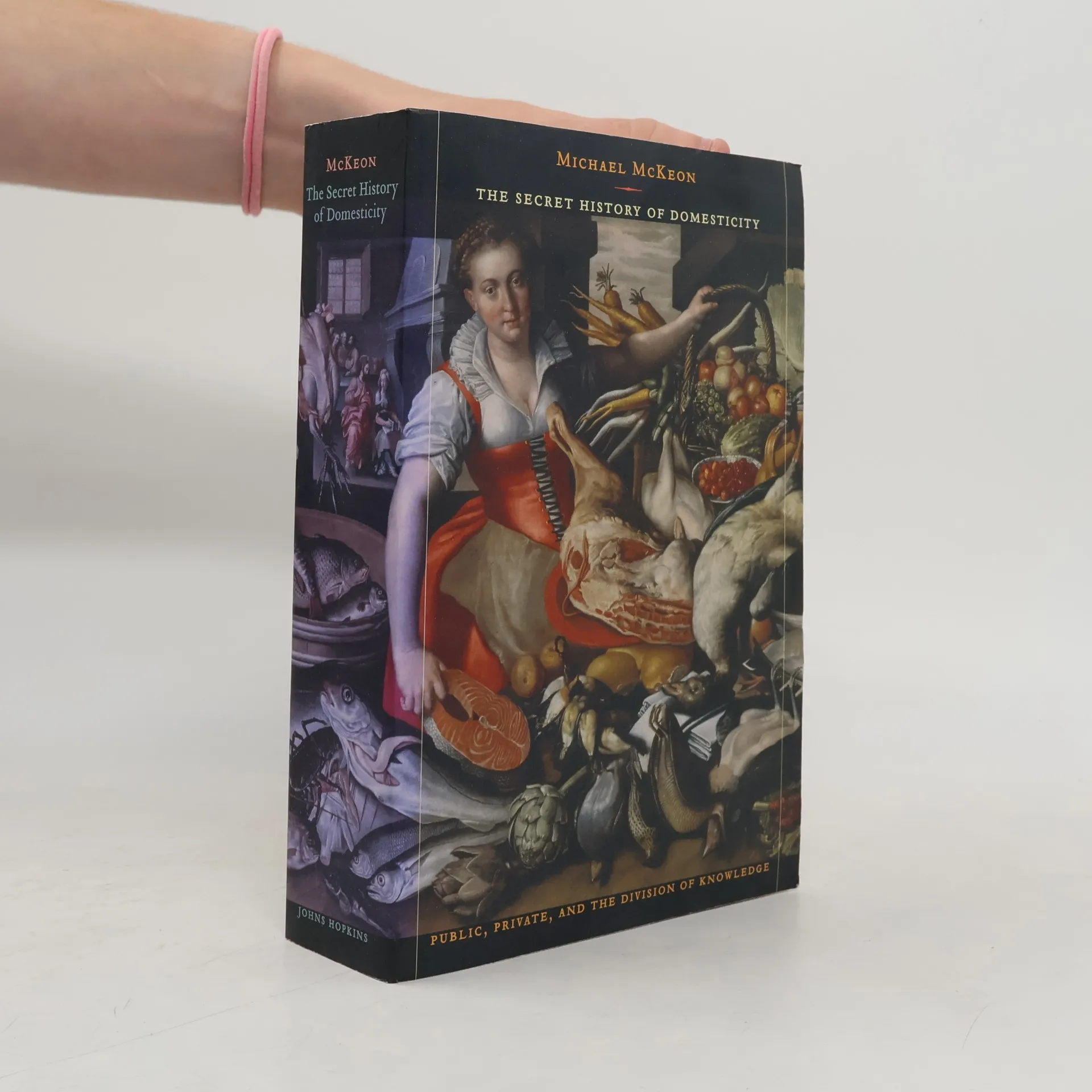
The Secret History of Domesticity
Public, Private, and the Division of Knowledge - Director's Circle Book
- 904 Seiten
- 32 Lesestunden
Taking English culture as its representative sample, this work explores the emergence of the modern public-private relation in the seventeenth and eighteenth centuries, treating it as a key instance of the modern division of knowledge. The narrative examines the pre-history of this relation and its essential component, domesticity, drawing on a wide spectrum of English experiences. At the public extreme, it discusses political developments like the formation of civil society, the rise of contractual thinking, and the shift from absolutism to individual subjectivity. The middle range includes the influence of Protestant and scientific thought, the publication of private matters, and the conceptualization of virtual publics, alongside the capitalization of production and the changing sexual division of labor. The private pole focuses on the privatization of marriage, family, and household, highlighting the complexities of femininity, interiority, subjectivity, and sexuality. McKeon illustrates how the public-private relationship became a dynamic interaction of distinct modes of being. With nearly 100 images, including paintings and architectural plans, the volume underscores the susceptibility of this relation to concrete representation. It also examines how literary forms evoke public-private dynamics through various narrative techniques. This investigation exemplifies the enriching interplay between literary interpretation and