


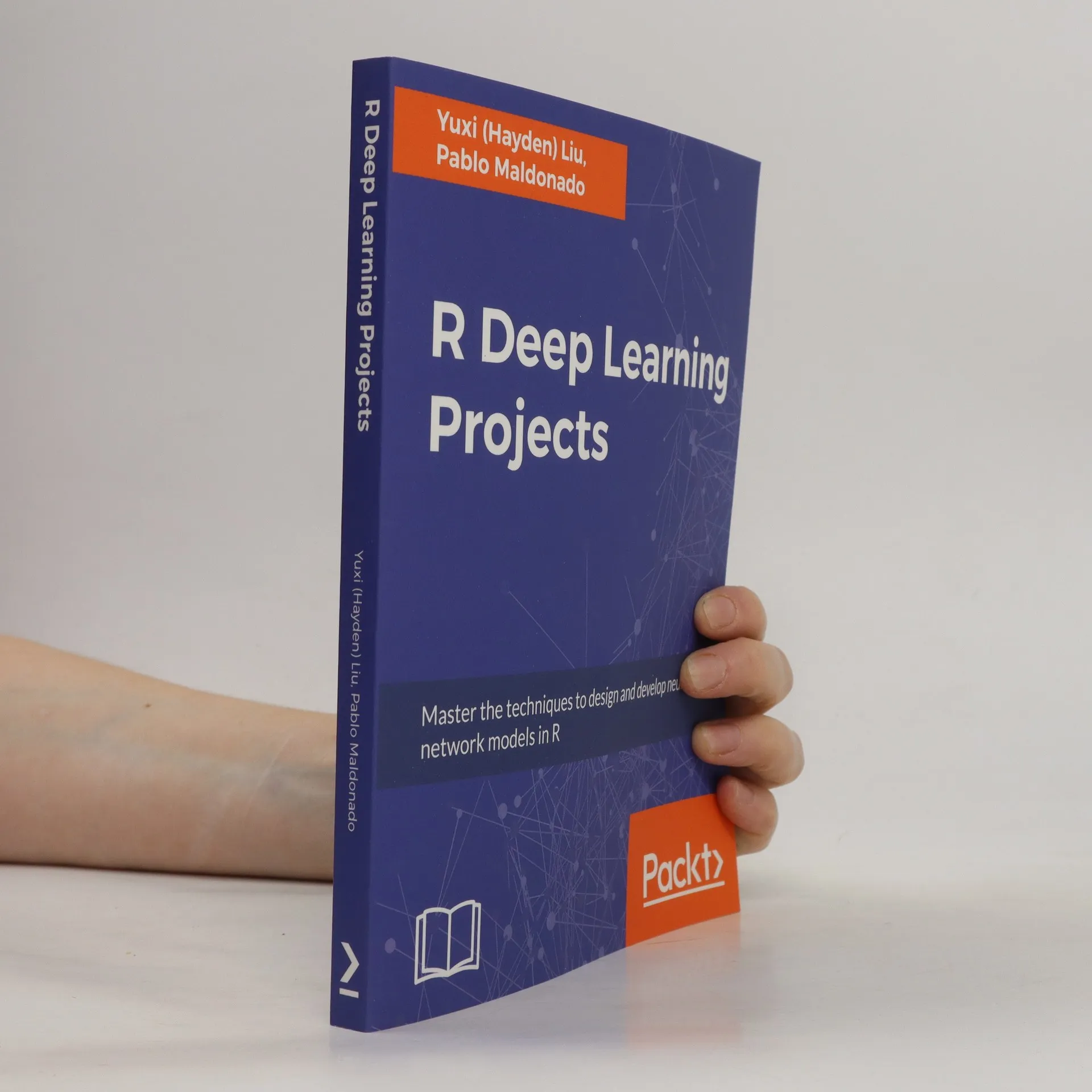
R Deep Learning Projects
- 258 Seiten
- 10 Lesestunden
This book offers five real-world projects designed to help you master deep learning concepts. It covers various paradigms and practical applications, including text generation, sentiment analysis, and fraud detection. You'll explore R's extensive range of deep learning libraries and frameworks, such as deepnet, MXNetR, TensorFlow, H2O, Keras, and text2vec. Each project provides insights into implementing different neural networks, complete with tips and best practices. Targeted at machine learning professionals and data scientists, this resource requires a basic understanding of R programming and deep learning concepts to maximize its benefits. You will learn to instrument deep learning models using various packages, apply neural networks for handwritten digit recognition, and work with CNN models and Keras for traffic sign classification. Additionally, the book covers credit card fraud detection with Autoencoders, sentiment analysis from movie reviews, and the use of bidirectional Long Short-Term Memory networks. R is a favored programming language for statistical analysis and deep learning, making this book particularly relevant as deep learning continues to gain traction across multiple domains. Through end-to-end implementations, you will train effective neural networks, including convolutional and recurrent types, and leverage GPU capabilities. By the end, you will have a solid grasp of deep learning techniques and thei