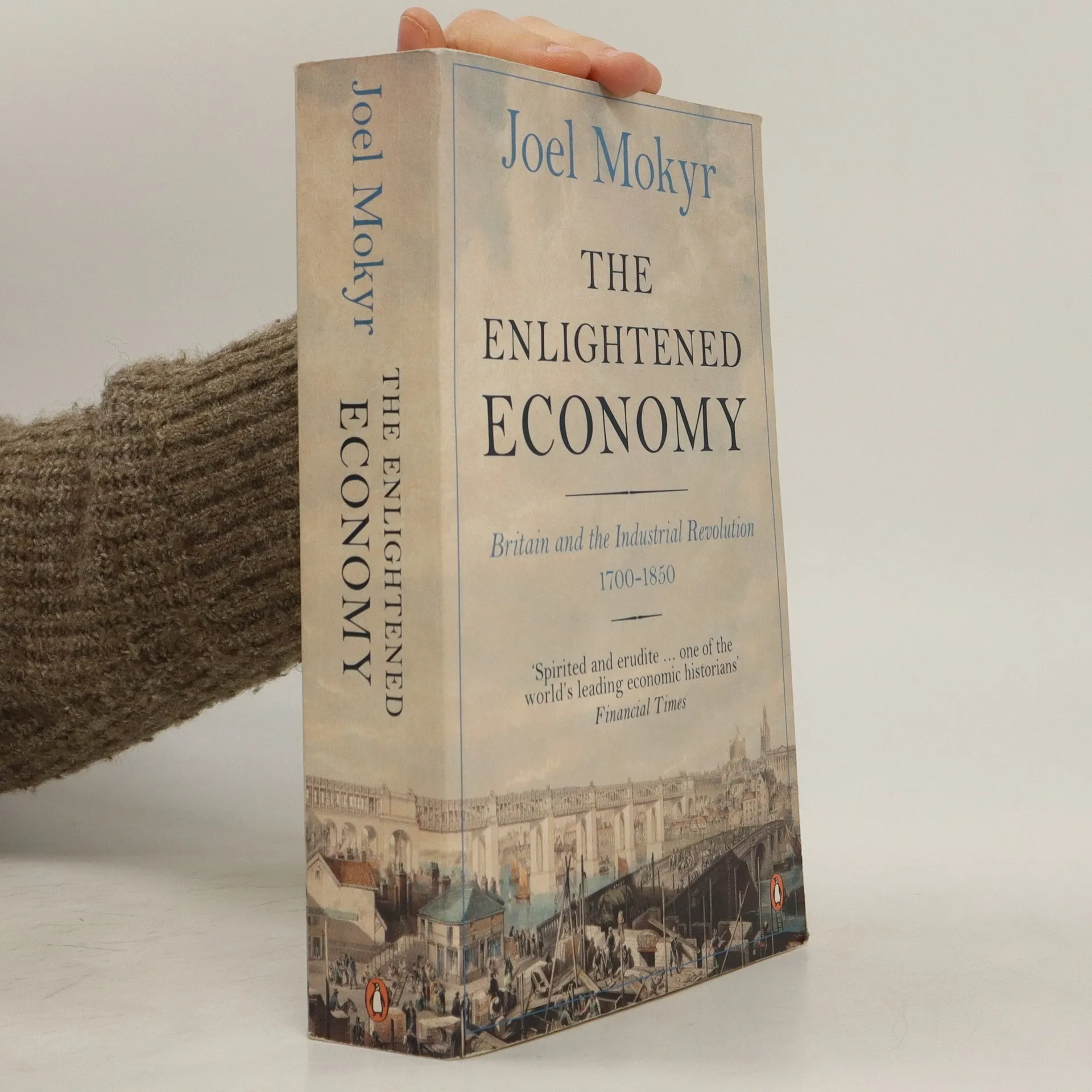
Joel Mokyr ist ein renommierter Wirtschafts historiker, dessen Werk sich mit den langfristigen Trends und Faktoren befasst, die den menschlichen Fortschritt geprägt haben. Seine Analysen konzentrieren sich darauf, wie technologischer Wandel, Institutionen und die Verbreitung von Wissen das Wirtschaftswachstum und den gesellschaftlichen Wandel über Jahrhunderte hinweg beeinflussen. Mokyr untersucht das komplexe Zusammenspiel von Wissenschaft, Technologie und Wirtschaft und deckt die komplexen Wege auf, auf denen die Menschheit Wohlstand erreicht hat. Seine umfangreiche Forschung bietet unschätzbare Einblicke in die Wurzeln der modernen Wirtschaft und die Kräfte, die sie weiterhin antreiben.
A Quantitative and Analytical History of the Irish Economy, 1800-1850
344 Seiten
13 Lesestunden
This book, first published in 2005, offers a scholarly exploration of its subject matter, providing insights and analyses that are relevant to both academics and practitioners. As part of the Routledge imprint, it reflects rigorous research and contributes to ongoing discussions in its field. The work is designed to engage readers with its comprehensive approach and is a valuable resource for those seeking to deepen their understanding of the topic.
Why did Western countries become so much wealthier than the rest of the world? And what explains the huge rise in incomes during the Industrial Revolution - and why did Britain lead the way? This title offers a perspective for understanding Britain's extraordinary rise during the Industrial Revolution.
Exploring the complexities of the Industrial Revolution, this revised edition features contributions from Joel Mokyr and four distinguished scholars who examine various interpretations and assumptions surrounding this pivotal era. Each chapter is updated to reflect new arguments and findings since its original publication in 1993. The book provides a comprehensive survey of economic history, making it essential for both economic historians and those interested in the broader historical context of Great Britain during the eighteenth and nineteenth centuries.
During the late eighteenth century, innovations in Europe triggered the
Industrial Revolution and the sustained economic progress that spread across
the globe. While much has been made of the details of the Industrial
Revolution, what remains a mystery is why it took place at all. Why did this
revolution begin in the West and not elsewhere, and why did it continue,
leading to today's unprecedented prosperity? In this groundbreaking book,
celebrated economic historian Joel Mokyr argues that a culture of growth
specific to early modern Europe and the European Enlightenment laid the
foundations for the scientific advances and pioneering inventions that would
instigate explosive technological and economic development. Bringing together
economics, the history of science and technology, and models of cultural
evolution, Mokyr demonstrates that culture- the beliefs, values, and
preferences in society that are capable of changing behavior- was a deciding
factor in societal transformations.
During the late eighteenth century, innovations in Europe sparked the Industrial Revolution, leading to unprecedented global economic progress. However, the reasons behind this revolution remain unclear. Why did it begin in the West and not elsewhere, and why did it continue to foster prosperity? Celebrated economic historian Joel Mokyr argues that a unique culture of growth in early modern Europe and the Enlightenment laid the groundwork for scientific advancements and groundbreaking inventions that fueled technological and economic development. Mokyr integrates economics, the history of science and technology, and cultural evolution models to illustrate that culture—comprising societal beliefs, values, and preferences—was crucial in driving societal transformations. He examines the period from 1500 to 1700, highlighting how Europe's political fragmentation created a competitive "market for ideas" and a desire to explore nature's secrets. Additionally, a transnational community of thinkers, the "Republic of Letters," facilitated the free exchange of ideas. This environment explains why the Industrial Revolution occurred in Europe rather than China, despite both regions having similar technological and intellectual capacities. In Europe, innovative thinkers could seek refuge in other countries, promoting cross-border ideas, while China's Enlightenment was constrained by its ruling elite. Mokyr’s insights reveal how the foundat