
Thomas Elliot Skidmore war ein amerikanischer Historiker und Gelehrter, der sich auf die brasilianische Geschichte spezialisierte. Nach der Kubanischen Revolution wandte er sich Südamerika zu, wobei sich seine postdoktorale Forschung in Harvard auf Brasilien konzentrierte. Er untersuchte Brasiliens einzigartiges Experiment mit der Demokratie und analysierte die politischen und sozialen Prozesse des Landes. Skidmores Werk beleuchtet die komplexe Geschichte Brasiliens und seinen Weg zur demokratischen Herrschaft.
Thomas E. Skidmore, a prominent expert on Brazil, analyzes over two decades of military rule in Brazil, from the 1964 overthrow of Joao Goulart to the return of democratic governance in 1985 under Jose Sarney.
Published to wide acclaim in 1974, Thomas E. Skidmore's intellectual history of Brazilian racial ideology has become a classic in the field. Available for the first time in paperback, this edition has been updated to include a new preface and bibliography that surveys recent scholarship in the field. Black into White is a broad-ranging study of what the leading Brazilian intellectuals thought and propounded about race relations between 1870 and 1930. In an effort to reconcile social realities with the doctrines of scientific racism, the Brazilian ideal of "whitening"—the theory that the Brazilian population was becoming whiter as race mixing continued—was used to justify the recruiting of European immigrants and to falsely claim that Brazil had harmoniously combined a multiracial society of Europeans, Africans, and indigenous peoples.
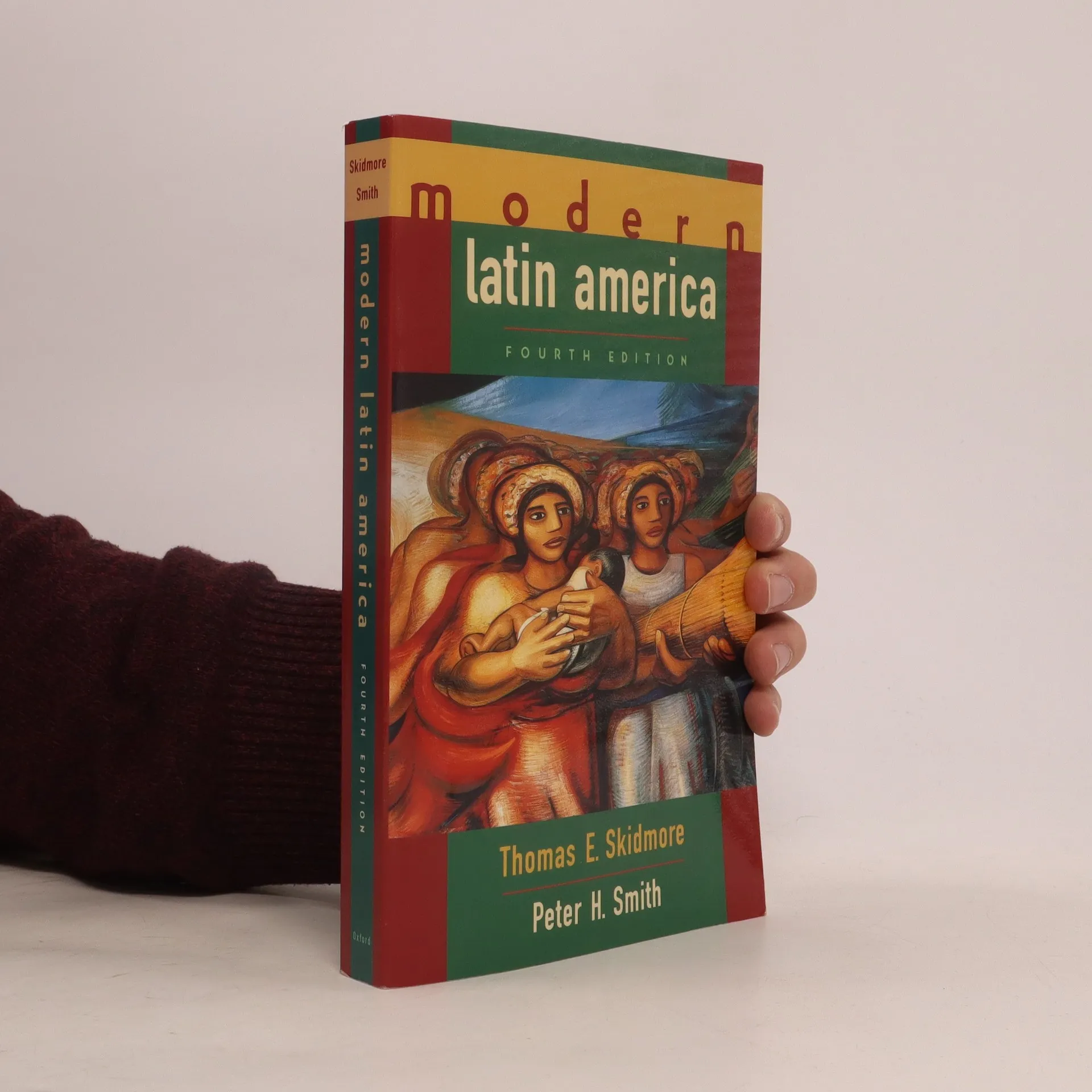
This history of Latin America includes the ongoing war against international drug trafficking, the difficulties and promises of NAFTA, the increasing trend toward democratic and pluralist politics, and the large-scale immigration of Latin Americans into the United States.
Now in its sixth edition, Modern Latin America is a lively interpretive history and the leading text in the field. Thoroughly updated and revised, the book includes a new chapter on the history of Colombia from the wars of independence to the violent conflicts of the present day. It alsoexamines such topics * the impact of 9/11 on U.S.-Latin American relations* globalization* drug trafficking* women's roles in society and politics* the fragility and uncertainty of democracy in Latin AmericaThe book features sociocultural sections and boxes in nearly every chapter, covering such diverse areas as the psychology of exile, Santería in Cuba, baseball in the Dominican Republic, and the popularity of Latin music in the U.S. All political and economic information has been updated. As inearlier editions, the authors use an in-depth case study approach that guides readers through the major countries of Latin America, highlighting central themes including European-New World interaction, racial mixtures, military takeovers, and United States intervention in the area. With aninsightful look into the future, Modern Latin America , Sixth Edition, will continue to be an exceptional text for undergraduate courses on contemporary Latin American history, society, and politics.