
Gratis Versand in ganz Österreich
Bookbot

Simon Mitton

    18. Dezember 1946
    Simon Mitton
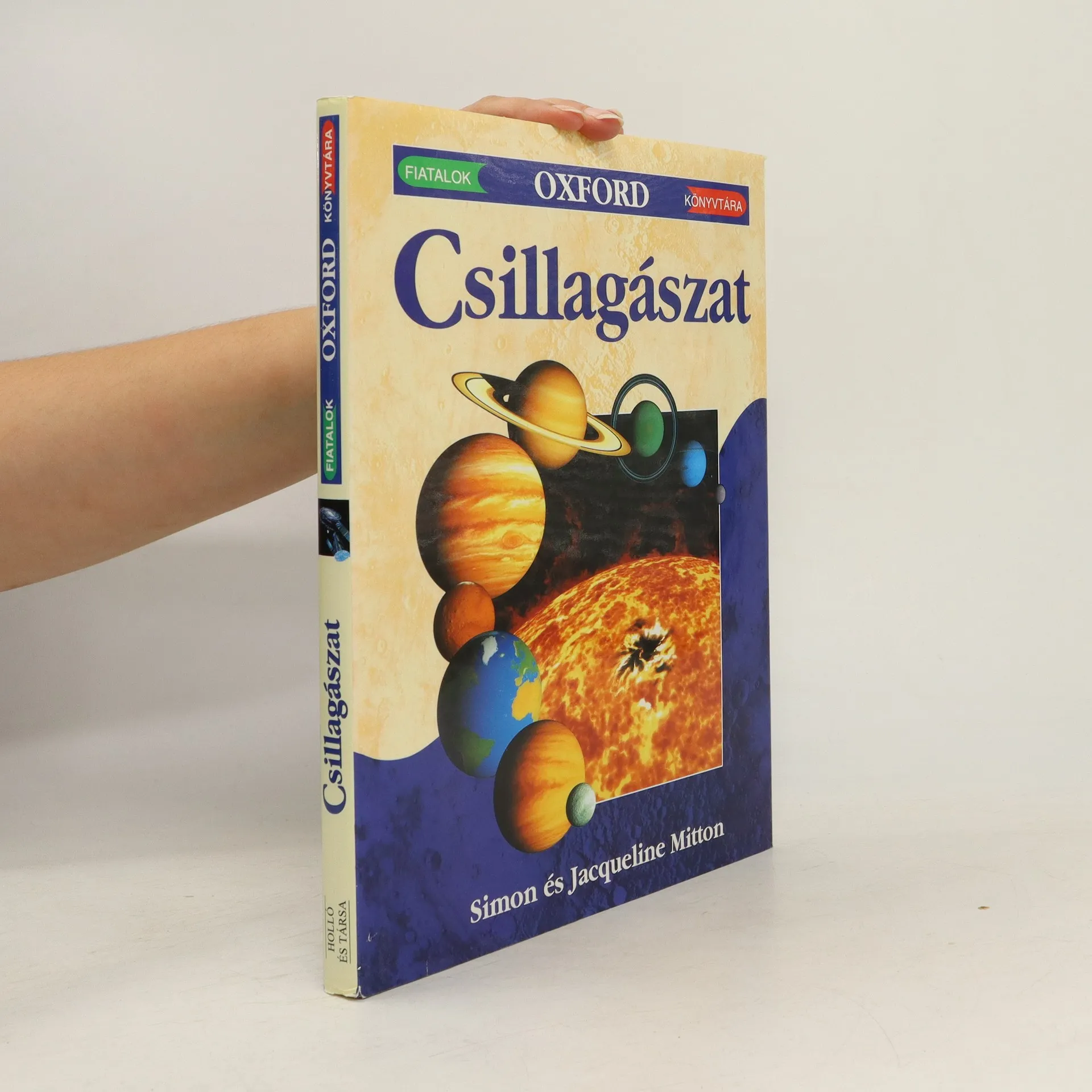
    Csillagászat
    Cambridge Scientific Minds
    Cambridge-Enzyklopädie der Astronomie
    Astronomie
    • Astronomie

      • 160 Seiten
      • 6 Lesestunden
      4,2(6)Abgeben

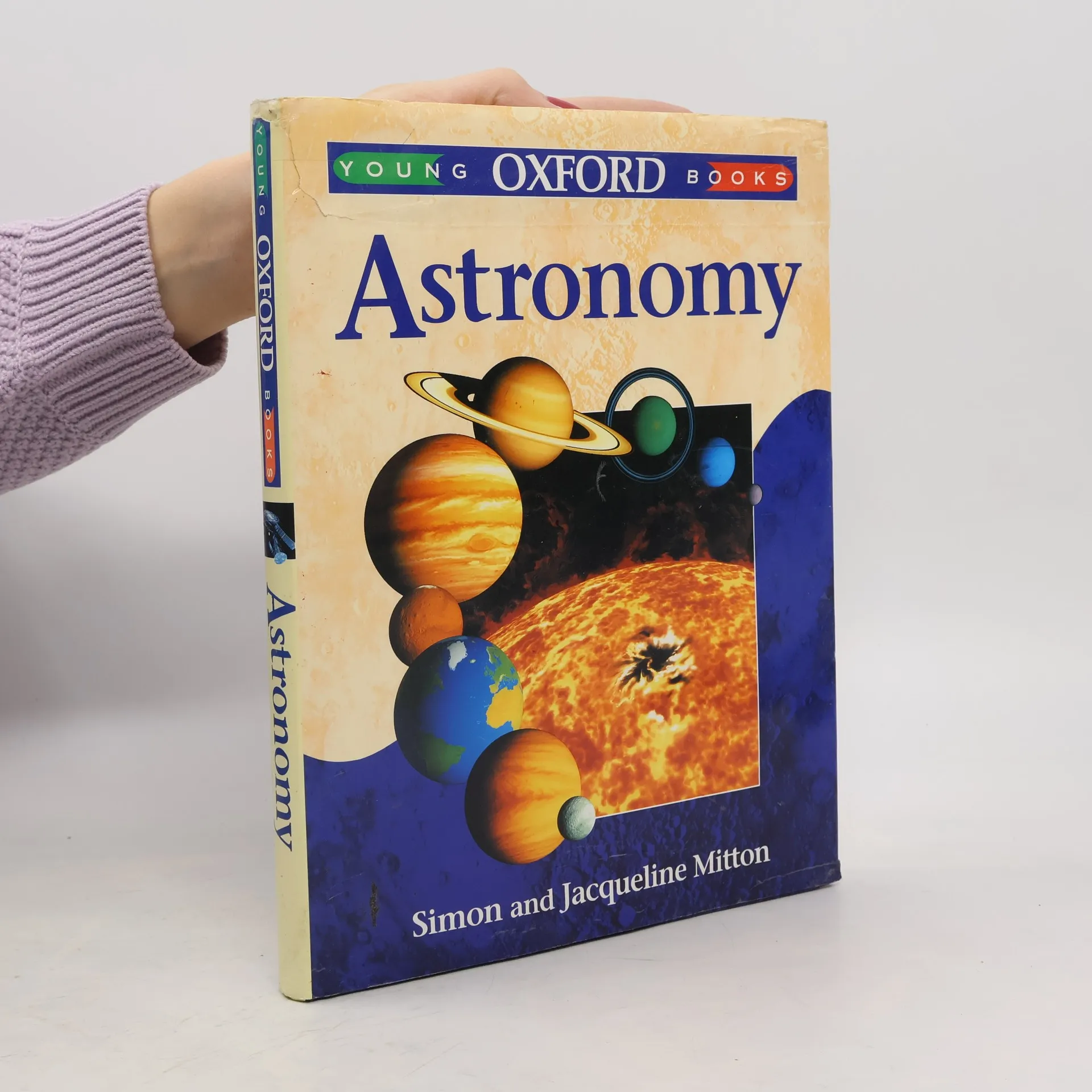
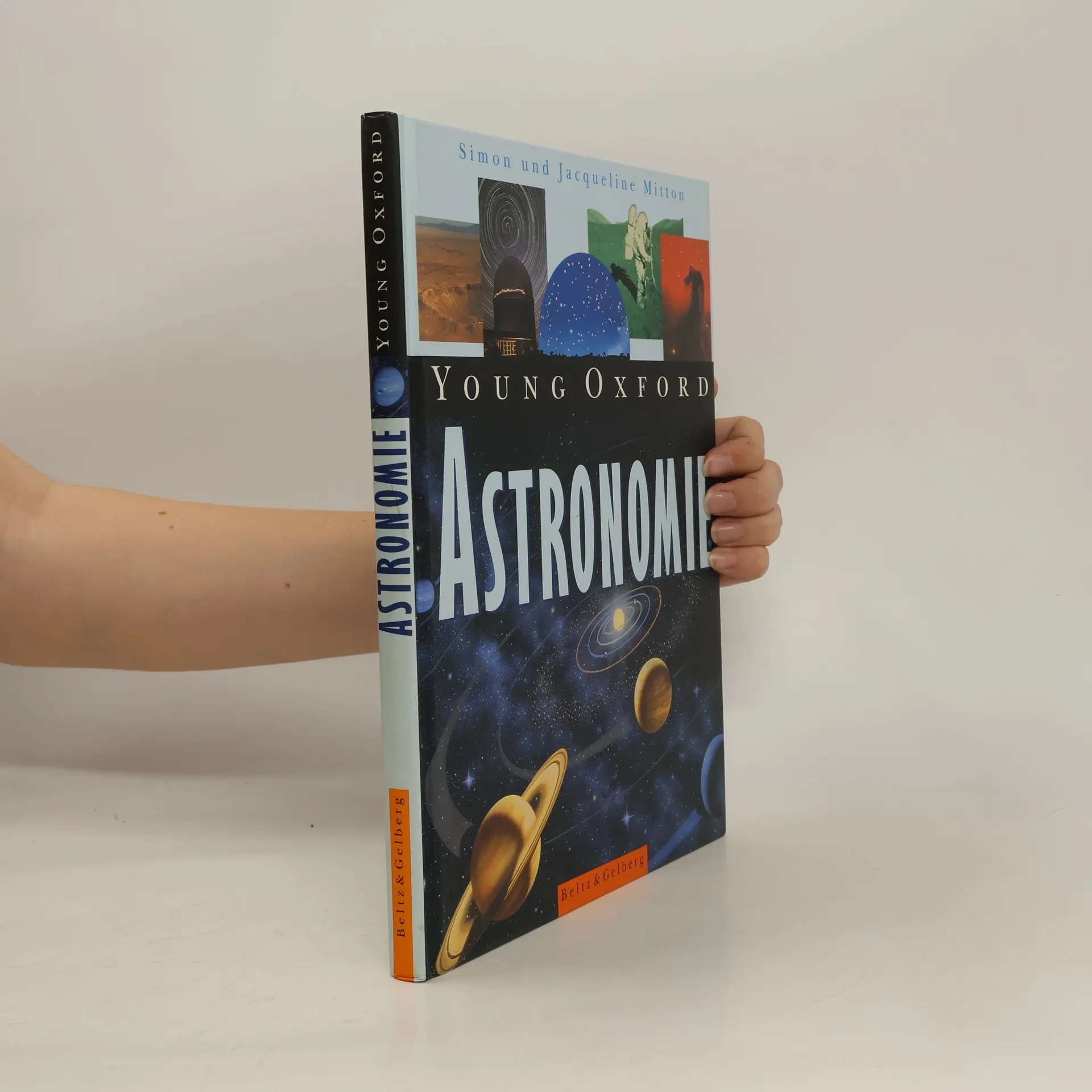
      Vom Urknall zur Zukunft des Universums - eine Einführung in die faszinierende Welt der Astronomie. Für junge Leser und alle, die spannend und leicht verständlich auf den neuesten Stand der Wissenschaft gebracht werden möchten. Was sind Rote Riesen und Weiße Zwerge? Was meinen Astronomen, wenn sie von Schwarzen Löchern reden? Wo kommen Kometen her? Wie viele Galaxien gibt es im Universum? Hat dieses Universum einen Anfang und ein Ende? - Das Young Oxford Buch der Astronomie erzählt die große Geschichte des Universums, vom Werden und Vergehen von Planeten, Sternen und Galaxien. Es berichtet klar und verständlich von der Arbeit der Astronomen, von den verblüffenden Ergebnissen ihrer Forschungen und den vielen Rätseln, die ihnen das Universum immer noch aufgibt. Die Young Oxford Bücher entstehen im Verlag der Universität von Oxford. Diese Herkunft garantiert nicht nur größte fachliche Solidität; Oxford-Autoren zählen auch unbestritten zu den Besten, wenn es darum geht, komplizierte Sachverhalte einem größeren Publikum zugänglich zu machen. Dem Autorenpaar Mitton wurde für seine Verdienste auf diesem Gebiet eine besondere Ehre zuteil: Man hat einen Asteroiden nach ihnen benannt.

      Astronomie
    • Cambridge Scientific Minds

      • 352 Seiten
      • 13 Lesestunden

      Since the scientific revolutions of the seventeenth century, a great number of distinguished scientists and mathematicians have been associated with Cambridge University. Cambridge Scientific Minds is a unique account of some of the University's most eminent thinkers over the last 400 years, including Isaac Newton, Charles Darwin, and James Clerk Maxwell. While the rapid establishment during the Newtonian era of a series of professorships for mathematics, chemistry, astronomy, anatomy, botany, geology, and geometry marked the University's scientific coming of age, this volume's chronological balance reflects on the increasing importance of science in the institution's recent history. Chapters on Paul Dirac, Alan Turing, Joseph Needham, and Stephen Hawking, among others, represent the recent intellectual efflorescence at Cambridge. Personal memoirs and historical essays, written by leading historians, scientists, and Nobel Laureates, make Cambridge Scientific Minds as enjoyable to read as it is accessible. Peter Harman is Professor of the History of Science at Lancaster University. He has published primarily on the history of physics and natural philosophy in the 18th and 19th centuries, the period from Newton to Maxwell. His previous books include Energy, Force and Matter (Cambridge, 1982), The Investigation of Difficult Things (Cambridge, 1992), After Newton: Essays on Natural Philosophy (Variorum, 1993), The Scientific Letters and Papers of James Clerk Maxwell, volume 1 (Cambridge, 1990), volume 2 (Cambridge, 1995). Simon Mitton studied physics at the University of Oxford, and received a PhD in radio astronomy at the Cavendish Laboratory, University of Cambridge. He is Senior Fellow at St. Edmund's College, Cambridge. This is his tenth book.

      Cambridge Scientific Minds