

From a leading philosopher of the mind comes this lucid, provocative argument that offers a radically new picture of human consciousness—panpsychism. Understanding how brains produce consciousness is one of the great scientific challenges of our age. Some philosophers argue that consciousness is something "extra," beyond the physical workings of the brain. Others think that if we persist in our standard scientific methods, our questions about consciousness will eventually be answered. And some even suggest that the mystery is so deep, it will never be solved. Decades have been spent trying to explain consciousness from within our current scientific paradigm, but little progress has been made. Now, Philip Goff offers an exciting alternative that could pave the way forward. Rooted in an analysis of the philosophical underpinnings of modern science and based on the early twentieth-century work of Arthur Eddington and Bertrand Russell, Goff makes the case for panpsychism, a theory which posits that consciousness is not confined to biological entities but is a fundamental feature of all physical matter—from subatomic particles to the human brain. In Galileo's Error, he has provided the first step on a new path to the final theory of human consciousness.
Philip Goff Bücher


This book takes up the question of whether past and future events exist. Two very different views are explored. According to one of these views, presentism, the present is special. According to the alternative view, eternalism, our world is a giant four-dimensional block of spacetime in which all times exist.
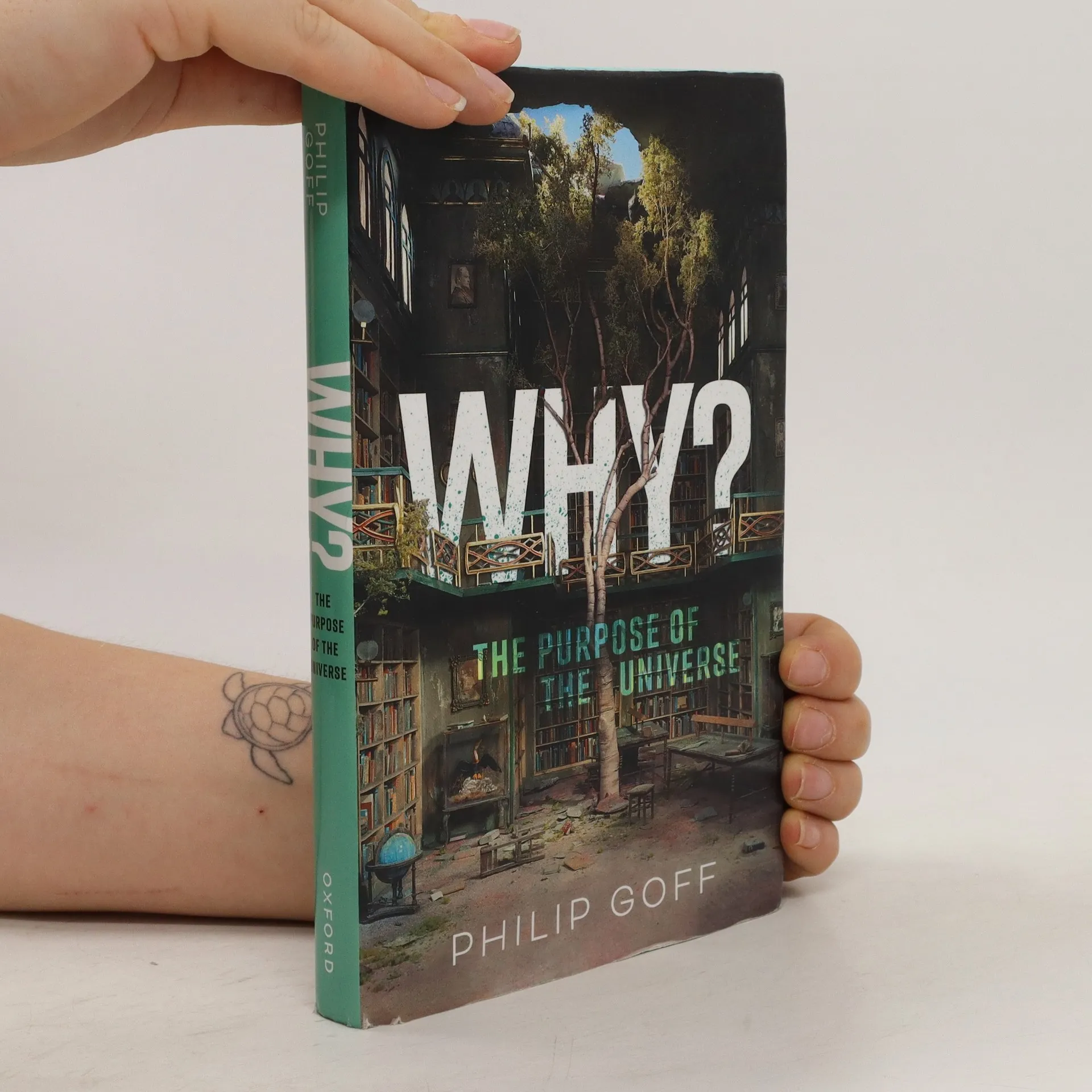
Why are we here? What's the point of existence? For those who are unsatisfied by the answers of traditional religion, and equally by the lack of answers from atheism, Philip Goff opens up a path between the two. He argues for cosmic purpose: the idea that the universe is directed towards certain goals, such as the emergence of intelligent life.
A core philosophical project seeks to uncover the fundamental nature of reality and the limited set of facts upon which all others depend. A prevalent theory in contemporary analytic philosophy is physicalism, which posits that the world is fundamentally physical. The first half of this book argues that physicalism fails to account for the undeniable reality of conscious experience, rendering it untrue. Uniquely, the author critiques well-known arguments against physicalism, such as Chalmers' zombie conceivability argument and Jackson's knowledge argument, suggesting significant modifications to these critiques. The second half explores and defends a recently revived theory of fundamental reality, known as 'Russellian monism,' inspired by Bertrand Russell's theses in "The Analysis of Matter." Russell contended that physics provides an incomplete picture of the world, revealing only extrinsic, mathematical features of material entities while obscuring their intrinsic nature. Russellian monists argue that this 'hidden' intrinsic nature of matter explains consciousness. Some adopt panpsychism, suggesting that the intrinsic natures of basic entities involve consciousness, while others propose that these entities are proto-conscious. Various forms of Russellian monism are examined, addressing key challenges. The penultimate chapter defends a cosmopsychist variant, positing that all facts are grounded in the consciousness of the uni
Jeden z wiodących filozofów umysłu przedstawia nową teorię świadomości: panpsychizm. Zrozumienie, jak mózg generuje świadomość, to jedno z największych wyzwań współczesnej nauki. Część filozofów uważa, że świadomość jest czymś nadprogramowym, inni twierdzą, że można ją wyjaśnić za pomocą dotychczasowych metod naukowych, a niektórzy sądzą, że zagadki tej nie da się rozwiązać. Philip Goff proponuje teorię, która może rozwikłać tę tajemnicę, odwołując się do filozoficznego zaplecza nowożytnej nauki oraz prac Eddingtona i Russella. Goff argumentuje, że świadomość nie jest ograniczona do istot biologicznych, lecz jest fundamentalną cechą całej fizycznej materii – od cząstek subatomowych po ludzki mózg. Książka ta jest krokiem w kierunku sformułowania ostatecznej teorii ludzkiej świadomości, prezentując współczesną dyskusję na temat natury umysłu oraz argumenty na rzecz panpsychizmu. Autor krytykuje dominujący model badań naukowych, który pomija jakościowe aspekty doświadczenia. Dyskutuje spory między różnymi formami materializmu i dualizmu, przekonując, że panpsychizm, mimo braku pełnych naukowych dowodów, stanowi właściwą ramę dla dalszych badań. Książka jest napisana w przystępnym stylu, łącząc naukową rzetelność z inspirującą treścią.