Gratis Versand in ganz Österreich
Bookbot

James Moran

    Modern Tragedy
    Modernists and the Theatre
    Torchwood
    Madness on Trial
    Doctor Who: The Fires of Pompeii (Target Collection)
    The Theatre of Fake News
    • The Theatre of Fake News

      • 250 Seiten
      • 9 Lesestunden
      4,0(1)Abgeben

      This book examines the topic of 'fake news' through the lens of theatre and drama, looking at the way in which issues of audience, authorship, and accuracy are intertwined.

      The Theatre of Fake News
    • "My masters will follow the example of Rome... our mighty empire bestraddling the whole of civilization!" It is AD 79, and the TARDIS lands in Pompeii on the eve of the town's destruction. Mount Vesuvius is ready to erupt and bury its surroundings in molten lava, just as history dictates. Or is it? The Doctor and Donna find that Pompeii is home to impossible things: circuits made of stone, soothsayers who read minds and fiery giants made of burning rock. From a lair deep in the volcano, these creatures plot the end of humanity - and the Doctor soon finds he has no way to win...

      Doctor Who: The Fires of Pompeii (Target Collection)
    • This book examines the role of civil law in determining mental capacity over a five hundred year period in England and in New Jersey. -- .

      Madness on Trial
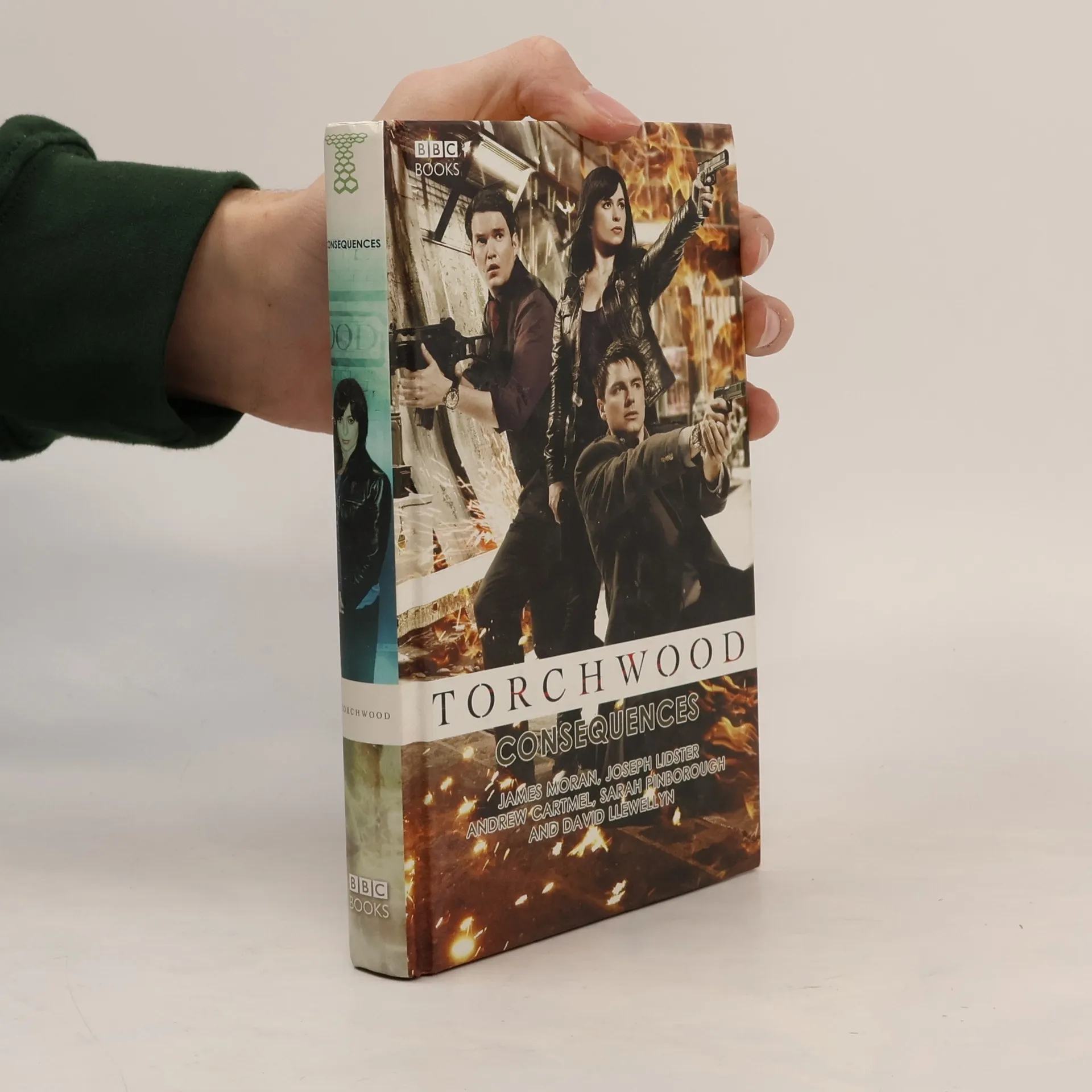
    • Torchwood

      Consequences

      Saving the planet, watching over the Rift, preparing the human race for the twenty-first century... Torchwood has been keeping Cardiff safe since the late 1800s. Small teams of heroes, working 24/7, encountering and containing the alien, the bizarre and the inexplicable.But Torchwood do not always see the effects of their actions. What links the Rules and Regulations for replacing a Torchwood leader to the destruction of a supermarket? How does a witness to an alien's reprisals against Torchwood become caught up in a night of terror in a university library? And why should Gwen and Ianto's actions at a local publisher's affect Torchwood more than a century earlier?For Torchwood, the past will always catch up with them. And sometimes the future will catch up with the past...Featuring sci-fi stories by writers for the hit Torchwood series created by Russell T Davies for BBC Television, including James Moran and Joseph Lidster, plus Andrew Cartmel, Sarah Pinborough and David Llewellyn.

      Torchwood
    • Modernists and the Theatre is the first study to examine how theories of modernism intersect with those of the theatre within the works, philosophies and literary lives of six key modernist writers. Drawing on a wealth of unfamiliar archive material and fresh readings of neglected documents, James Moran reveals how these literary figures interacted with the theatre through playwriting, by engaging in philosophical debates and participating in theatrical performances. Chapters assess W.B. Yeats's very earliest playwriting, Ezra Pound's onstage acting, the interconnections between James Joyce's and D.H. Lawrence's sense of drama, Eliot's thinking about theatre in Dublin, and the feminist politics of Virginia Woolf's small-scale theatrical experiments.While these writers valued coterie production and often made hostile comments about drama, this volume highlights the paradoxical fact that, despite their harsh words, the theatrically 'large-scale' also attracted each of these writers. The theatre event of 'restricted production' offered modernists a satisfying mode of sharing their work amongst the like-minded, and the book discloses a set of unfamiliar events of this sort that allowed these writers to act as agents of legitimation in granting cultural value.The book explores their engagements with popular drama, as well as the long-forgotten acting performances in which each of these writers personally participated. Moran uncovers how the playhouse became a key geographical space where the high-modernists could explore a tension that fascinated them, and which motivated much of their wider thinking and literary work.

      Modernists and the Theatre
    • What distinguishes modern tragedy from other forms of drama, and how does it connect to contemporary political and social conditions? This book addresses these questions, beginning with an exploration of John Millington Synge's Riders to the Sea (1904) and its expression of environmental awareness through tragic drama, motivated by our current ecocidal crisis. The second chapter analyzes Brecht's adaptation of Synge's work in his 1937 play Señora Carrar's Rifles, highlighting Brecht's critique of traditional tragedies that emotionally engage audiences but fail to promote political understanding. It discusses how Brecht's views on tragedy were shaped by Hegel and Marx, contrasting them with Samuel Beckett's Schopenhauerian perspective. The third chapter focuses on theatre makers who apply Synge's tragic narrative to postcolonial contexts, examining Derek Walcott's The Sea at Dauphin (1954) and J.P. Clark's The Goat (1961). This section reconsiders tragedy, often seen as reinforcing hegemonic assumptions, and explores how its elements resonate with the experiences and concerns of non-white authors and audiences.

      Modern Tragedy